

Pre Action Fire Sprinkler System: A Complete Guide for High-Risk, High-Value Facilities in Saudi Arabia
Introduction: Why Fire Protection Needs Precision, Not Guesswork
Fire protection in modern facilities is no longer just about stopping flames. It is about protecting assets, continuity, data, and people at the same time. As Saudi Arabia continues its rapid urban, industrial, and digital expansion, the risks associated with fire incidents have become more complex. Data centers, museums, telecom rooms, hospitals, and advanced industrial sites cannot afford accidental water discharge as much as they cannot afford fire itself.
This is where the pre action fire sprinkler system stands out among modern fire protection systems. Unlike traditional wet or deluge sprinklers, pre-action systems are designed for environments where water damage could be as costly as fire damage. They introduce a controlled, intelligent approach to automatic fire suppression, combining detection technology with sprinkler activation logic.
From an industry perspective, DARS sees growing demand for these systems across Saudi Arabia, not only due to asset sensitivity but also because of stricter fire safety compliance requirements enforced by Civil Defense, the Saudi Building Code, and NFPA fire codes. Understanding how pre-action systems work, why they matter, and where they fit is the first step toward making informed fire protection decisions.
What Is a Pre Action Fire Sprinkler System?
A pre action fire sprinkler system is a specialized type of automatic fire suppression system that keeps water out of the sprinkler pipes until a fire event is confirmed. Unlike wet systems, where pipes are constantly filled with water, pre-action systems use dry piping controlled by a pre-action valve.
The valve opens only when a separate fire detection system confirms a fire, usually through smoke or heat detection. Once the valve opens, water fills the pipes, and individual sprinkler heads activate only when exposed to sufficient heat. This dual-layer activation significantly reduces the risk of accidental discharge caused by mechanical damage, freezing, or human error.
This design makes pre-action systems particularly suitable for facilities where even minor water leaks could cause major losses. In Saudi Arabia, this includes data centers, control rooms, archives, laboratories, and high-end commercial properties. Their ability to balance fire risk mitigation with asset protection is what sets them apart in the commercial fire protection landscape.
How Pre Action Systems Fit into Modern Fire Protection Engineering
From a fire protection engineering standpoint, pre-action systems represent a shift toward intelligent risk control rather than blanket response. They are engineered to respond proportionally, activating only when multiple conditions indicate a real fire threat.
This approach aligns with international best practices promoted by organizations such as the National Fire Protection Association, particularly under NFPA 13 standards. These standards define how pre-action systems should be designed, tested, and maintained to ensure reliability without unnecessary discharge.
In Saudi Arabia, the integration of these standards with local regulations under the Saudi Building Code has made pre-action systems a preferred solution in sensitive environments. DARS’s experience across industrial fire safety and high-risk commercial projects shows that regulatory alignment is no longer optional. It is a core requirement for licensing, insurance approval, and operational continuity.
Key Components of a Pre Action Fire Sprinkler System
Understanding the system’s components helps clarify why it behaves differently from conventional sprinklers. Each part plays a role in ensuring controlled activation and system reliability.
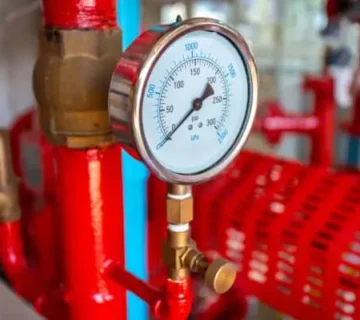
At the center of the system is the pre-action valve. This valve remains closed under normal conditions, keeping water out of the piping network. It is typically controlled electrically or pneumatically and is directly linked to the fire detection system. Once triggered, it allows water to flow into the pipes.
The detection system is equally critical. Smoke detectors, heat detectors, or a combination of both continuously monitor the protected area. In many Saudi facilities, cross-zoned detection is used, meaning more than one detector must activate before the valve opens. This further reduces false alarms and aligns with advanced fire suppression technology principles.
Finally, the sprinkler heads themselves remain closed until exposed to heat. Even after water enters the pipes, discharge only occurs where fire conditions are present. This localized response is a key advantage in environments with high-value equipment.
Why Pre Action Systems Matter in Water-Sensitive Facilities
In environments such as data centers or archival storage, water damage can cause irreversible losses. Servers, historical documents, and sensitive electronics often represent years of investment and irreplaceable value. Traditional wet sprinkler systems, while effective against fire, carry a constant risk of accidental discharge.
Pre-action systems address this challenge by introducing a verification step before water is released. This aligns well with fire risk mitigation strategies that prioritize prevention and precision. According to industry insights shared across professional fire safety forums and technical publications, this dual-trigger approach significantly reduces unintended incidents while maintaining rapid response capability.
In Saudi Arabia’s expanding digital infrastructure, this balance has become critical. Facilities supporting cloud services, fintech platforms, and smart city projects increasingly rely on pre-action systems as part of broader commercial fire protection strategies. DARS frequently advises clients to consider these systems not as an upgrade, but as a necessity for long-term operational resilience.
Regulatory Landscape in Saudi Arabia: Setting the Context
The adoption of pre action fire sprinkler systems in Saudi Arabia is not driven by technology alone. Regulatory frameworks play a major role in shaping system selection and design. Civil Defense approvals, Saudi Building Code requirements, and alignment with NFPA fire codes collectively define what is acceptable and what is not.
Under Saudi regulations, fire protection systems must be designed, installed, and maintained by approved contractors. This includes compliance with SBC provisions related to fire detection, suppression, and system integration. Facilities that fail to meet these standards risk delays in licensing, fines, or operational shutdowns.
Authoritative guidance from the Saudi Civil Defense reinforces the importance of using certified systems and conducting regular inspections. For organizations investing in high-value infrastructure, pre-action systems often provide the compliance flexibility needed to meet both international and local expectations.
This regulatory context explains why pre-action systems are increasingly specified in tender documents and project requirements across the Kingdom.
Pre Action vs Traditional Sprinkler Systems: A Strategic Choice
Choosing between a pre-action system and a conventional wet or deluge system is not a matter of preference. It is a strategic decision based on risk profile, asset value, and regulatory exposure.
Wet systems are simple and cost-effective but carry higher risk in sensitive environments. Deluge systems, which release water from all open heads simultaneously, are designed for high-hazard industrial scenarios and are unsuitable for precision protection. Pre-action systems occupy the middle ground, offering controlled response without compromising fire suppression effectiveness.
This distinction is well documented in comparative analyses such as those published by VFS Fire & Security Services, which highlight how system selection directly impacts both safety outcomes and asset protection.
Pre Action Fire Sprinkler System Configurations and System Types
As facilities grow more complex, a single pre action fire sprinkler system configuration rarely fits every scenario. Fire protection engineering treats pre-action systems as adaptable frameworks rather than fixed solutions. The choice of configuration directly affects response time, reliability, and overall fire risk mitigation, especially in high-value or mission-critical environments.
In Saudi Arabia, system selection is often influenced by the sensitivity of the protected area and the level of redundancy required by Civil Defense approvals. Understanding how these configurations differ is essential before moving into installation or system integration decisions.
Single-Interlock Pre Action Systems and Their Use Cases
Single-interlock pre-action systems are designed to activate when a fire detection event occurs. Once smoke or heat is detected, the pre-action valve opens, allowing water to fill the sprinkler piping. Actual discharge still depends on individual sprinkler heads reaching their activation temperature, which adds a layer of control beyond traditional wet systems.
This configuration is commonly used in areas where freezing is a concern or where accidental pipe damage could cause water leakage. In commercial fire protection projects across Saudi Arabia, single-interlock systems are often specified for telecom rooms, electrical spaces, and light industrial facilities that require dependable yet straightforward automatic fire suppression.
While effective, this setup still relies heavily on the accuracy of the detection system. False alarms, though rare when properly designed, can lead to unnecessary system charging. This is why detection quality and ongoing maintenance play a critical role in system reliability.
Double-Interlock Pre Action Systems for High-Sensitivity Environments
Double-interlock pre-action systems introduce an additional safeguard by requiring two separate conditions before water enters the piping network. In this setup, both fire detection activation and a loss of air pressure in the sprinkler piping must occur. Only when both conditions are met does the pre-action valve open.
This configuration is widely regarded as the gold standard for water-sensitive environments such as data centers, archives, and museums. In Saudi Arabia’s rapidly expanding digital and financial infrastructure, double-interlock systems are increasingly specified for facilities where even a minimal risk of accidental discharge is unacceptable.
Fire protection engineering principles favor this design because it dramatically reduces false activations. However, it also requires careful calibration and precise installation. DARS’s experience shows that when correctly designed and maintained, double-interlock systems deliver unmatched control without compromising response effectiveness.
Detection Technologies and System Integration
The performance of a pre action fire sprinkler system is only as strong as its detection infrastructure. Modern systems rely on advanced detection technologies that include smoke detection, heat detection, or a combination of both. In high-risk facilities, cross-zoning is often applied, requiring multiple detectors to confirm a fire event before activation.
Integration between detection systems and sprinkler control panels is a critical design consideration. These systems must communicate seamlessly to ensure rapid and accurate response. In Saudi projects, integration is often extended to building management systems, allowing facility operators to monitor fire protection systems in real time.
According to technical guidance shared by professionals on platforms like LinkedIn fire protection forums, poorly integrated detection is one of the leading causes of system inefficiency. This highlights why advanced fire suppression technology must be paired with equally advanced system coordination.
Installation Considerations in Saudi Arabia
Installing a pre action fire sprinkler system in Saudi Arabia involves more than technical execution. Regulatory compliance, site-specific risks, and approval workflows all influence the installation process. Before any physical work begins, a detailed risk assessment and system design review are typically required.
Civil Defense mandates that installation be carried out by licensed contractors using approved materials and methods. Design layouts must adhere to fire sprinkler design standards outlined under NFPA fire codes and Saudi Building Code provisions. Hydraulic calculations, pipe sizing, and valve placement are scrutinized during inspections to ensure system integrity.
DARS’s approach emphasizes early coordination between design, installation, and inspection teams. This reduces delays during approval stages and ensures the system performs as intended from day one. In high-value facilities, even minor deviations can lead to costly rework or delayed occupancy.
Commissioning and Testing: Ensuring Operational Readiness
Commissioning is a critical phase that determines whether a pre-action system will function reliably under real fire conditions. This process includes pressure testing, valve operation testing, detection response verification, and alarm signaling confirmation. Each step must be documented and submitted as part of compliance requirements.
In Saudi Arabia, Civil Defense inspections often involve witnessed testing to confirm that systems activate correctly under simulated fire scenarios. This ensures alignment with national fire safety compliance expectations and international best practices. Facilities that fail these tests may face approval delays or additional corrective requirements.
Proper commissioning also builds confidence among stakeholders. Facility owners, insurers, and regulators all rely on these tests to verify that the chosen fire protection systems can perform under pressure. This phase effectively bridges design intent and real-world performance.
Maintenance and Lifecycle Management
A pre action fire sprinkler system is not a set-and-forget solution. Its complexity demands ongoing maintenance to ensure long-term reliability. Regular inspections focus on valve functionality, detection accuracy, air pressure levels, and corrosion prevention within the piping network.
In Saudi Arabia, annual maintenance contracts are common, particularly for facilities subject to frequent audits. These contracts ensure compliance with Civil Defense requirements and reduce the risk of system degradation over time. Fire protection engineering best practices emphasize proactive maintenance as a core component of fire risk mitigation.
Industry discussions on platforms like Reddit’s fire alarm community often highlight maintenance lapses as a leading cause of system failure. This reinforces the importance of partnering with experienced service providers who understand both technical and regulatory expectations.
Common Challenges and How to Address Them
Despite their advantages, pre-action systems are not immune to challenges. Air leaks, valve malfunctions, and detection faults can compromise system performance if left unaddressed. These issues are often the result of poor installation, inadequate maintenance, or environmental factors.
Addressing these challenges requires a structured approach to system monitoring and testing. Advanced diagnostics and routine inspections help identify issues before they escalate into failures. In the Saudi context, compliance audits often serve as an additional layer of quality control, prompting corrective action where needed.
DARS’s experience across industrial fire safety projects shows that early detection of minor issues significantly reduces long-term operational risks. This proactive mindset aligns well with the broader shift toward preventive fire protection strategies in the region.
Real-World Applications of Pre Action Fire Sprinkler Systems in Saudi Arabia
As fire protection strategies mature across the Kingdom, the pre action fire sprinkler system has moved from being a niche solution to a core requirement in several sectors. Its ability to combine controlled activation with high reliability makes it particularly suited to facilities where operational downtime or asset loss is unacceptable.
Data centers remain one of the most prominent applications. With Saudi Arabia positioning itself as a regional digital hub, these facilities demand fire protection systems that support continuous uptime while meeting strict fire safety compliance. Pre-action systems allow operators to protect servers and network infrastructure without exposing them to unnecessary water damage, aligning perfectly with both technical and regulatory expectations.
Beyond data centers, pre-action systems are increasingly specified in museums, government archives, financial institutions, and advanced laboratories. In each case, the common factor is asset sensitivity. The system’s design supports precise fire risk mitigation while maintaining confidence among regulators, insurers, and stakeholders.
Industrial and Commercial Fire Protection Use Cases
While often associated with sensitive indoor environments, pre-action systems also play a role in broader industrial fire safety strategies. In manufacturing plants, aviation hangars, and oil and gas support facilities, they are used to protect control rooms, electrical zones, and specialized process areas.
These environments benefit from the system’s ability to isolate fire response to the affected area rather than triggering widespread discharge. This is particularly important in facilities where water exposure could interrupt production lines or damage high-value equipment. When integrated correctly, pre-action systems complement other automatic fire suppression methods, creating layered protection rather than relying on a single response mechanism.
Guidance from international fire protection engineering bodies emphasizes this layered approach. Publications such as those referenced by Century Fire Protection highlight how pre-action systems can coexist with foam, gas, or deluge systems to address varied risk profiles within a single facility.
Cost Considerations and Long-Term Value
One of the most common questions decision-makers ask is whether a pre action fire sprinkler system justifies its higher upfront cost compared to traditional wet systems. From a purely installation perspective, the answer may seem unclear. Pre-action systems require additional components, more complex detection integration, and specialized commissioning.
However, when viewed through a lifecycle lens, the value becomes more apparent. The potential cost of accidental water discharge in a data center, archive, or high-end commercial facility can far exceed the initial investment in advanced fire suppression technology. Business interruption, asset replacement, and reputational damage all factor into the true cost equation.
In Saudi Arabia, where large-scale projects are often designed for decades of operation, long-term resilience carries significant weight. DARS consistently advises clients to evaluate fire protection systems not only on installation cost, but on their ability to safeguard continuity and compliance over time.
Compliance, Audits, and Insurance Alignment
Another critical advantage of pre-action systems lies in their alignment with regulatory and insurance frameworks. Insurers increasingly assess fire protection engineering quality when determining coverage terms and premiums. Facilities equipped with advanced, well-maintained systems often benefit from more favorable risk profiles.
Saudi Civil Defense audits reinforce this perspective by emphasizing documented maintenance, system testing, and compliance with NFPA fire codes. Pre-action systems, when properly managed, demonstrate a proactive commitment to safety that resonates with regulators and insurers alike.
Authoritative resources such as the Saudi Building Code and international standards bodies provide clear expectations for system performance and documentation. Meeting these expectations is not only about passing inspections, but about establishing trust across the entire operational ecosystem.
Integrating Pre Action Systems into a Broader Safety Strategy
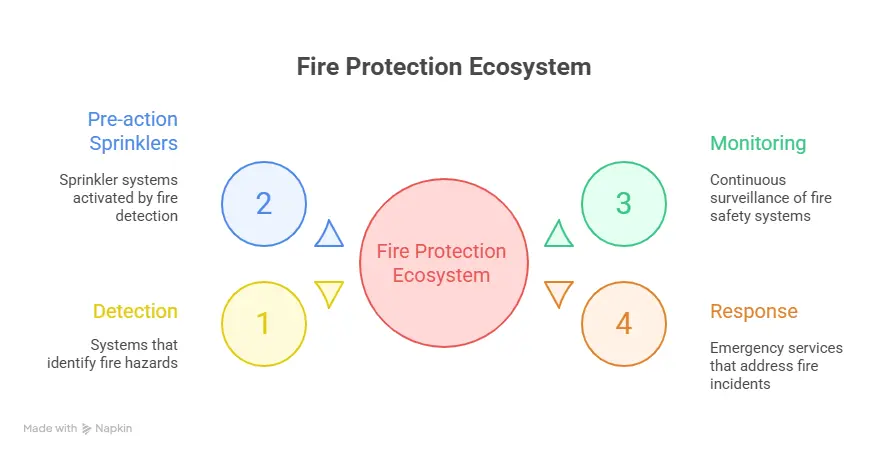
A pre action fire sprinkler system should never be viewed as a standalone solution. Its true strength emerges when integrated into a holistic fire protection strategy that includes detection, alarms, emergency response planning, and ongoing risk assessment.
In modern facilities, system data is often connected to centralized monitoring platforms, enabling faster response and better decision-making. This integration supports a shift from reactive fire protection to predictive and preventive models. As Saudi Arabia continues to adopt smart infrastructure principles, this level of integration is becoming the norm rather than the exception.
DARS’s project experience shows that facilities achieving the highest safety performance are those that treat fire protection as an evolving system. Regular reviews, technology updates, and staff training ensure that systems remain aligned with both operational needs and regulatory changes.
Choosing the Right Partner for Implementation
The effectiveness of a pre-action system depends as much on the implementation partner as it does on the technology itself. Design interpretation, installation quality, and maintenance discipline all influence long-term performance. In Saudi Arabia, working with approved and experienced contractors is not only a regulatory requirement, but a strategic necessity.
Facilities that prioritize expertise over cost alone tend to experience fewer issues during inspections and operations. This approach reduces rework, minimizes downtime, and ensures consistent compliance with evolving fire safety standards. It also simplifies coordination with Civil Defense and other authorities throughout the facility lifecycle.
DARS’s role in this ecosystem focuses on delivering systems that meet technical requirements while supporting business objectives. This balance between safety, compliance, and operational continuity is what defines effective commercial fire protection in today’s environment.
Conclusion: Precision Fire Protection for a High-Growth Future
The pre action fire sprinkler system represents a refined approach to fire safety, one that acknowledges the complexity of modern facilities and the value of the assets they protect. By combining intelligent detection with controlled suppression, these systems offer a level of precision that traditional solutions cannot match.
In the Saudi context, their relevance is amplified by rapid development, stricter regulations, and rising expectations around safety and resilience. From data centers to industrial control rooms, pre-action systems have proven their ability to support growth without compromising protection.
As fire risks evolve and compliance standards advance, investing in the right fire protection systems becomes a strategic decision rather than a technical one. For organizations seeking reliable, compliant, and future-ready solutions, pre-action systems stand out as a cornerstone of modern fire protection engineering.