

Types of Maintenance: A Practical Guide for Fire Safety Systems in Saudi Arabia
Introduction: Why Understanding the Types of Maintenance Is No Longer Optional
In high-risk environments, maintenance is not a background activity. It is a core operational function that determines whether systems perform when they are needed most. This is especially true in fire safety, where failure is measured not in downtime, but in damage, liability, and human life. For facilities operating in Saudi Arabia, understanding the different types of maintenance is directly tied to compliance, inspection readiness, and long-term asset protection.
From commercial towers and hospitals to industrial plants and logistics hubs, Saudi regulations require a structured maintenance approach aligned with Saudi Civil Defense requirements, the Saudi Building Code, and international standards such as NFPA. Maintenance is no longer reactive or ad hoc. It is planned, documented, and increasingly audited. This shift has pushed organisations to rethink how they maintain fire protection systems across their full lifecycle.
Maintenance as a System, Not an Action
Maintenance is often misunderstood as a series of isolated checks or repairs. In reality, it is a structured system designed to preserve functionality, extend equipment lifespan, and reduce risk. When approached correctly, maintenance becomes part of broader asset lifecycle management, ensuring that systems perform consistently from installation through decommissioning.
For fire safety equipment, this system-based view is essential. Fire extinguishers, alarms, pumps, and suppression systems are idle most of the time, yet expected to operate instantly under extreme conditions. Without a defined maintenance framework, reliability becomes a matter of chance rather than assurance. This is why Saudi regulators emphasise routine inspection, certified servicing, and recordkeeping as mandatory practices rather than best-effort recommendations.
How Regulations Shape Maintenance Practices in Saudi Arabia
Maintenance requirements in Saudi Arabia are shaped by a combination of national and international standards. The Saudi Building Code (SBC 801), SASO technical regulations, and Civil Defense inspection protocols work together to define what must be maintained, how often, and by whom. These frameworks align closely with globally recognised standards such as NFPA 10, which governs portable fire extinguishers.
The importance of this alignment becomes clear during inspections. Facilities that lack proper maintenance logs or rely on unlicensed service providers often fail audits, regardless of whether equipment appears visually intact. According to guidance from Saudi Civil Defense, maintenance documentation is as critical as the physical condition of the system itself. This regulatory emphasis reinforces the need for structured maintenance planning rather than informal or reactive practices.
Preventive Maintenance as the First Line of Defence
Preventive maintenance is the most widely applied and most frequently misunderstood maintenance type. At its core, it refers to routine actions performed to prevent failures before they occur. In fire safety, this typically includes scheduled visual inspections, pressure checks, seal verification, and ensuring equipment accessibility.
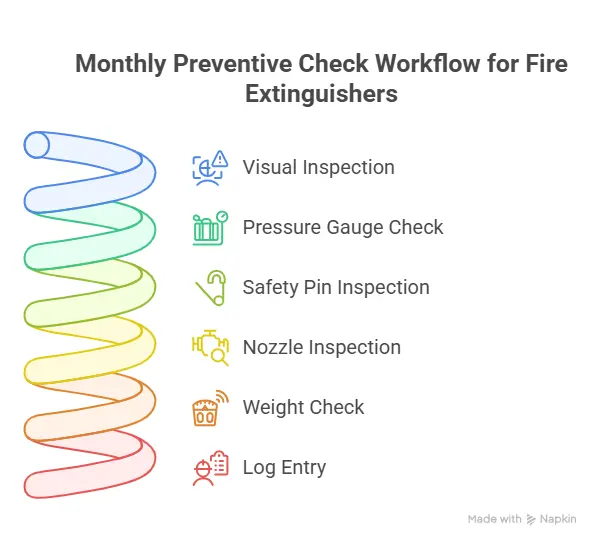
In Saudi Arabia, preventive maintenance is not optional. Monthly in-house inspections for fire extinguishers are required under Civil Defense guidelines, with findings recorded in inspection logs. These checks reduce the likelihood of discovering faults only during emergencies or annual audits. From an operational perspective, preventive maintenance improves equipment reliability while reducing the long-term cost of repairs and replacements.
The value of preventive maintenance is supported by international safety bodies such as the National Fire Protection Association, which consistently highlight routine inspection as a critical factor in system performance. When integrated into daily facility management routines, preventive maintenance becomes a low-cost, high-impact risk control measure.
Corrective Maintenance and the Cost of Delay
Corrective maintenance occurs after a fault has been identified or a system has been used. In fire safety contexts, this often follows extinguisher discharge, failed inspections, or physical damage. While corrective maintenance is sometimes seen as unavoidable, excessive reliance on it is usually a sign of weak preventive practices.
Saudi regulations mandate that corrective actions be carried out by licensed contractors approved by Civil Defense. This includes refilling extinguishers, replacing damaged components, or decommissioning units that no longer meet safety standards. Delays in corrective maintenance can result in inspection failures, fines, or temporary shutdowns of facilities, particularly in regulated sectors such as healthcare, hospitality, and manufacturing.
From a business perspective, corrective maintenance tends to be more expensive and disruptive than planned interventions. It also introduces uncertainty into compliance timelines, making it harder for facilities to demonstrate consistent operational readiness.
Predictive Maintenance and the Shift Toward Data-Driven Safety
Predictive maintenance represents a more advanced approach, using data, usage patterns, and system indicators to anticipate failures before they occur. While traditionally associated with heavy industrial equipment, predictive maintenance is increasingly relevant to fire safety systems, particularly in large-scale or high-risk facilities.
In sectors such as oil and gas, predictive models are already being used to monitor pressure systems, pumps, and alarms. These practices align with broader digital transformation efforts encouraged under Saudi Vision 2030. By reducing unexpected downtime and optimising service intervals, predictive maintenance improves operational efficiency while supporting regulatory compliance.
Authoritative industry analyses from organisations such as ISO highlight predictive maintenance as a key contributor to risk reduction in safety-critical systems. Although adoption is still emerging in fire protection, the direction is clear: maintenance is becoming smarter, not just more frequent.
Scheduled and Periodic Maintenance in Fire Safety
Scheduled maintenance, often referred to as periodic maintenance, involves predefined service intervals conducted by certified professionals. In fire safety, this typically includes annual servicing, internal inspections, and certification tagging. These activities go beyond visual checks and require technical expertise, calibrated tools, and formal documentation.
Saudi Civil Defense inspections rely heavily on evidence of scheduled maintenance. Annual service tags, maintenance certificates, and historical logs are reviewed alongside physical inspections. Guidance from SASO technical regulations reinforces the requirement for traceable service records, particularly for fire extinguishers and alarm systems.
Scheduled maintenance bridges the gap between daily preventive checks and long-term system integrity. It ensures that minor issues identified during routine inspections are addressed professionally and in line with regulatory expectations.
Emergency Maintenance and High-Risk Scenarios
Emergency maintenance refers to immediate actions taken to restore system functionality following sudden failure or damage. In fire safety, this may occur after accidental discharge, vandalism, or inspection failure that poses immediate risk. While unavoidable in some cases, emergency maintenance is the most disruptive and least cost-effective maintenance type.
Facilities that rely heavily on emergency maintenance often struggle with compliance consistency. Regulators view repeated emergency interventions as indicators of inadequate planning. This reinforces the importance of balanced maintenance strategies that prioritise prevention and scheduling over reaction.
Insights from regional safety consultancies such as Arabian Tool consistently show that organisations with structured maintenance programmes experience fewer emergency incidents and smoother inspection outcomes.
Connecting Maintenance Types to Compliance Outcomes
Understanding the types of maintenance is not an academic exercise. Each type plays a distinct role in achieving compliance, reducing risk, and protecting assets. Preventive maintenance supports daily readiness, corrective maintenance restores functionality, predictive maintenance anticipates risk, scheduled maintenance validates compliance, and emergency maintenance acts as a last resort.
When these types are integrated into a single maintenance framework, facilities are better positioned to meet Saudi regulatory requirements and maintain inspection readiness year-round. This integrated approach also creates a foundation for continuous improvement, setting the stage for more advanced maintenance models explored in the next part of this series.
Applying the Types of Maintenance to Fire Safety Equipment in Practice
From Theory to Real-World Fire Safety Operations
Understanding the types of maintenance at a conceptual level is only the first step. The real challenge for facilities across Saudi Arabia lies in translating these maintenance approaches into consistent, auditable practices that satisfy regulators and protect occupants. Fire safety equipment operates under unique conditions, remaining dormant for long periods yet expected to perform flawlessly in seconds. This operational reality makes disciplined maintenance execution essential rather than optional.
In practice, maintenance decisions are influenced by building type, risk classification, occupancy levels, and regulatory scrutiny. A warehouse storing flammable materials, for example, faces different maintenance pressures than a commercial office tower. However, the underlying principle remains the same: every fire protection asset must be maintained according to a defined strategy that balances safety, compliance, and cost control.
Preventive Maintenance at Equipment Level
Preventive maintenance takes on a very practical form when applied to fire safety equipment. For portable fire extinguishers, it involves regular visual inspections to confirm pressure levels, physical condition, accessibility, and proper placement. These checks are typically carried out monthly by trained in-house staff and documented in inspection logs that are reviewed during audits.
What makes preventive maintenance particularly valuable is its role in early detection. Small issues such as pressure loss, missing seals, or corrosion often go unnoticed until equipment is needed or inspected formally. Preventive routines reduce this risk significantly, strengthening equipment reliability and ensuring that more intensive servicing is not triggered prematurely. Guidance from specialists such as Lifeco UK reinforces the importance of routine checks in extending extinguisher service life.
Corrective Maintenance and Post-Inspection Failures
Corrective maintenance becomes unavoidable when faults are identified during inspections or following system use. In Saudi Arabia, corrective actions must be performed by licensed contractors authorised by Civil Defense, particularly when dealing with extinguishers that have been discharged or systems that fail inspection criteria. This requirement protects system integrity and ensures accountability.
From an operational standpoint, corrective maintenance often exposes weaknesses in preventive routines. Facilities that experience frequent corrective interventions usually lack consistent monitoring or documentation. Over time, this reactive pattern increases costs and introduces compliance risk. Industry documentation from licensed service providers such as CSL Saudi Arabia highlights how delayed corrective action can escalate minor faults into full equipment replacement scenarios.
Corrective maintenance plays an important role, but it is most effective when it supports, rather than replaces, structured preventive programmes.
Predictive Maintenance in Large-Scale Facilities
Predictive maintenance is gaining relevance in large or high-risk Saudi facilities where fire safety systems are complex and interconnected. Rather than relying solely on time-based schedules, predictive approaches analyse system data to anticipate failures. This is particularly valuable for pumps, alarms, and suppression systems integrated into central monitoring platforms.
Although predictive maintenance is still emerging within fire protection, its alignment with operational efficiency and digital transformation makes it increasingly attractive. Sensors, pressure monitors, and system alerts provide early indicators of degradation, allowing maintenance teams to intervene before failure occurs. International standards bodies such as ISO recognise predictive maintenance as a cornerstone of modern asset management, especially in safety-critical environments.
In Saudi Arabia’s industrial and infrastructure sectors, predictive maintenance supports the scale and complexity of Vision 2030 developments, where downtime and safety incidents carry significant economic and reputational consequences.
Scheduled Maintenance and Annual Certification
Scheduled maintenance represents the formal backbone of fire safety compliance. Annual servicing of fire extinguishers, alarms, and suppression systems must be conducted by certified professionals using approved procedures. This includes internal inspection, pressure testing where applicable, refilling, part replacement, and certification tagging.
Saudi Civil Defense inspections place heavy emphasis on evidence of scheduled maintenance. Inspectors review service tags, certificates, and historical logs to verify continuity. According to Saudi Civil Defense guidance, incomplete records are grounds for non-compliance even if equipment appears functional.
Scheduled maintenance also supports long-term asset lifecycle management, ensuring that systems are serviced, tested, and eventually replaced in line with manufacturer and regulatory expectations rather than after failure.
Hydrostatic Testing and Long-Term Integrity
Beyond annual servicing, certain fire extinguishers are subject to hydrostatic testing at defined intervals, typically every five to twelve years depending on type. This process verifies the structural integrity of the cylinder under pressure and is mandatory under Saudi and international standards.
Hydrostatic testing represents a critical intersection between safety and compliance. Units that fail testing must be decommissioned, regardless of external condition. Regulatory references within SASO technical regulations underline the importance of this process in preventing catastrophic failure during use.
For facility managers, planning for hydrostatic testing is part of effective maintenance planning, ensuring that aging assets are identified and addressed before they become liabilities.
Documentation, Logs, and Inspection Readiness
Across all types of maintenance, documentation is the unifying requirement. Preventive checks, corrective actions, predictive insights, and scheduled services must be recorded accurately and retained for inspection. In Saudi Arabia, maintenance logs are not internal records but regulatory evidence.
Facilities that maintain consistent documentation demonstrate control and accountability, reducing inspection stress and operational disruption. Digital maintenance systems are increasingly used to centralise records, schedule services, and generate compliance reports. Insights from occupational safety authorities such as GOSI reinforce the link between documentation discipline and workplace safety outcomes.
Common Application Challenges in Saudi Facilities
Despite clear regulations, many facilities struggle with implementation. Common challenges include reliance on unlicensed service providers, inconsistent inspection routines, and fragmented recordkeeping. These issues often surface during audits, resulting in fines or mandatory corrective actions.
The root cause is rarely lack of awareness. More often, it is the absence of a unified maintenance strategy that aligns preventive, corrective, predictive, and scheduled activities into a single operational framework. Without this integration, maintenance becomes reactive, fragmented, and difficult to defend during inspections.
Building a Sustainable Maintenance Strategy for Fire Safety Systems
Moving from Compliance to Long-Term Control
By this stage, the types of maintenance are no longer abstract concepts. Preventive, corrective, predictive, scheduled, and emergency maintenance each play a defined role in keeping fire safety systems functional and compliant. The final challenge for organisations is turning these individual practices into a sustainable maintenance strategy that holds up under inspections, operational pressure, and future growth.
In Saudi Arabia, sustainability in maintenance is closely tied to consistency. Facilities that pass inspections year after year are rarely doing anything extraordinary. They are doing the basics exceptionally well, with clear planning, disciplined execution, and accountability across all maintenance activities. This is where strategy replaces improvisation.
Maintenance Planning as a Strategic Function
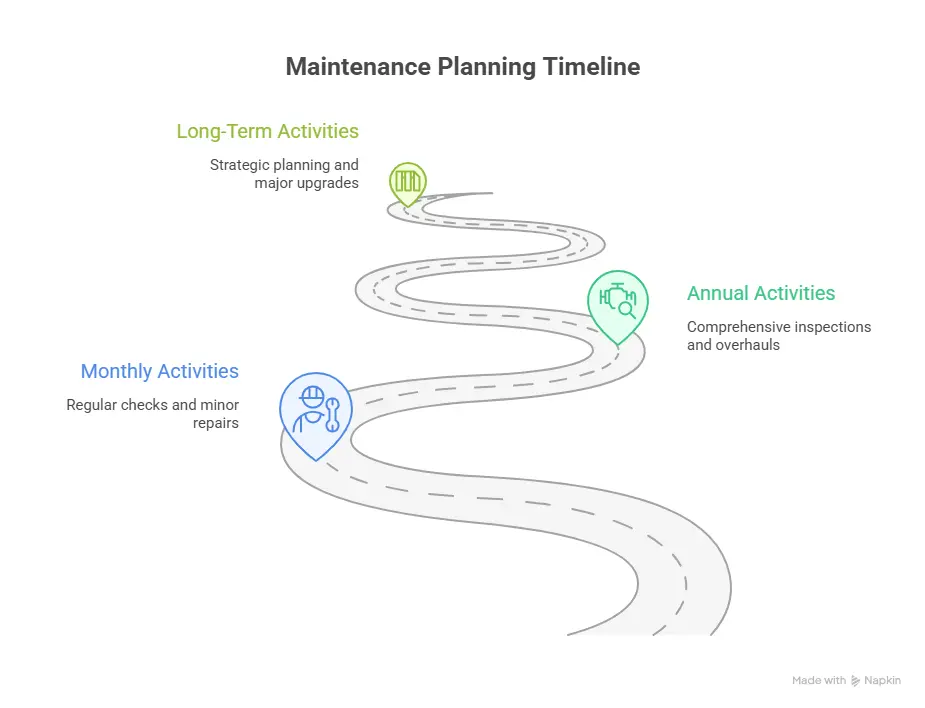
Effective maintenance planning starts with acknowledging that fire safety assets are long-term investments, not one-time installations. Extinguishers, alarms, pumps, and suppression systems all follow predictable lifecycles, and maintenance strategies must align with those lifecycles from day one. Planning defines inspection frequencies, assigns responsibilities, and schedules professional servicing well in advance.
In regulated environments, planning also protects operational continuity. When maintenance is planned rather than reactive, facilities avoid last-minute corrective actions triggered by failed inspections. This proactive approach improves operational efficiency and allows facility teams to focus on core activities rather than compliance firefighting. Guidance from international safety frameworks such as NFPA standards consistently links structured planning to lower incident rates and stronger audit outcomes.
Integrating Maintenance Types into One Framework
A mature maintenance strategy does not treat maintenance types as separate silos. Preventive routines feed into corrective actions, predictive insights refine schedules, and scheduled servicing validates system health. When integrated, these activities create a continuous loop of improvement rather than isolated tasks.
This integrated approach is especially important for large or multi-site facilities common in Saudi Arabia’s commercial and industrial sectors. Without integration, records become fragmented and responsibilities unclear. With integration, maintenance becomes traceable, defensible, and scalable. This alignment supports asset lifecycle management, ensuring that decisions around repair, replacement, or upgrade are data-driven rather than reactive.
Facilities that adopt integrated maintenance frameworks are also better positioned to adopt digital tools, including centralised maintenance systems that track inspections, certificates, and service history in one place.
The Role of Professional Maintenance Partners
One of the most critical strategic decisions a facility can make is choosing the right maintenance partner. Saudi regulations require that many fire safety maintenance activities be performed by licensed contractors approved by Civil Defense. Beyond compliance, experienced partners bring structure, technical expertise, and regulatory insight that internal teams often lack.
Professional maintenance providers help facilities interpret evolving regulations, prepare for inspections, and implement best practices across all maintenance types. They also play a key role in documentation discipline, ensuring that service records meet audit expectations. Working with a qualified contractor shifts maintenance from a risk exposure to a managed process.
Organisations seeking long-term compliance often formalise these relationships through annual maintenance contracts, creating predictability in cost, service quality, and inspection readiness.
Maintenance Documentation as Risk Management
Throughout this series, documentation has appeared repeatedly, and for good reason. In Saudi Arabia, documentation is not administrative overhead. It is legal and operational protection. Inspection logs, service certificates, and maintenance records form the evidence base that regulators rely on to assess compliance.
From a strategic perspective, documentation also enables accountability. It clarifies who inspected what, when actions were taken, and whether issues were resolved. This clarity reduces disputes during audits and supports internal decision-making. Resources from occupational safety authorities such as GOSI emphasise documentation as a core pillar of workplace safety governance.
Aligning Maintenance with Saudi Vision 2030
Fire safety maintenance does not exist in isolation from national priorities. Saudi Vision 2030 places strong emphasis on infrastructure resilience, industrial safety, and operational excellence across public and private sectors. Maintenance strategies that rely solely on reactive fixes are increasingly incompatible with these goals.
Modern maintenance approaches, particularly predictive and data-supported models, align with the Kingdom’s push toward smarter, safer, and more efficient operations. Facilities that invest in structured maintenance frameworks are not only meeting current regulations but also future-proofing their operations against tighter standards and higher expectations.
This alignment reinforces the strategic value of maintenance as a contributor to national safety and economic resilience, rather than a cost centre.
From Maintenance Tasks to Organisational Culture
The most effective maintenance strategies are embedded into organisational culture. Fire safety becomes everyone’s responsibility, from facility managers to on-site staff conducting routine checks. Training, awareness, and clear procedures ensure that maintenance is performed consistently, even as teams change over time.
Cultural integration reduces dependence on individual knowledge and protects organisations from gaps caused by staff turnover. It also supports continuous improvement, as feedback from inspections and incidents feeds back into planning and execution. Over time, this creates a self-reinforcing system where compliance and safety become standard operating conditions.
DARS’s Perspective on Sustainable Fire Safety Maintenance
From DARS’s experience working with facilities across Saudi Arabia, the difference between passing and failing inspections is rarely equipment quality alone. It is almost always the strength of the maintenance strategy behind that equipment. Structured planning, certified execution, and disciplined documentation consistently deliver better outcomes than reactive fixes.
Organisations looking to strengthen their maintenance programmes often start by reassessing their current practices, identifying gaps, and aligning them with regulatory and operational requirements. Resources available through DARS’s services and articles sections provide further guidance on building compliant, future-ready fire safety systems.
Conclusion: Rethinking the Types of Maintenance as a Unified Strategy
The types of maintenance are not competing approaches. They are complementary tools that, when used together, create resilient fire safety systems capable of meeting Saudi Arabia’s regulatory and operational demands. Preventive maintenance builds readiness, corrective maintenance restores function, predictive maintenance anticipates risk, scheduled maintenance validates compliance, and emergency maintenance remains a last resort.
When these elements are integrated into a single, well-planned framework, maintenance becomes a strategic asset rather than a recurring problem. For organisations operating in high-risk or highly regulated environments, this shift is no longer optional. It is essential for protecting lives, assets, and long-term operational continuity.