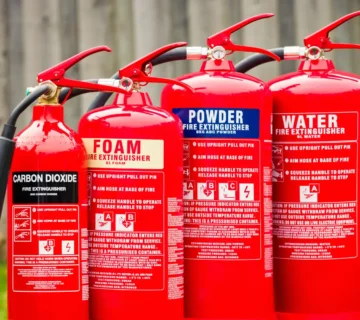

Fire Extinguisher Classes: The Foundation of Effective Fire Protection in Saudi Arabia
Fire extinguisher classes are not just technical labels printed on red cylinders. In Saudi Arabia, they form the backbone of safe fire response, regulatory compliance, and inspection readiness across homes, offices, industrial facilities, and high-risk sites. Understanding these classes is a practical necessity, not an optional detail, especially in a market governed by Civil Defense requirements and Saudi Building Code SBC 801.
From the perspective of DARS, fire extinguisher classes sit at the intersection of fire safety training, regulatory alignment, and real-world risk mitigation. When organisations choose the wrong extinguisher or fail to train teams on proper use, the result is not only operational risk but also failed inspections and avoidable damage. This article begins by establishing what fire extinguisher classes mean, why they exist, and how they apply specifically to Saudi facilities.
Why Fire Extinguisher Classes Matter More Than Ever
Fire extinguisher classes exist to match the extinguisher to the fuel causing the fire. This distinction is critical because fire behaves differently depending on what is burning. Applying the wrong extinguishing agent can intensify flames, spread fire, or put lives at risk. In regulated environments like Saudi Arabia, misuse also translates into non-compliance during Civil Defense inspections.
What makes this especially relevant locally is the diversity of risk environments. A Riyadh office tower, a Dammam manufacturing plant, and a commercial kitchen in Jeddah each face different fire scenarios. Fire extinguisher classes provide a universal system that allows safety managers to align equipment, training, and emergency response procedures across all these settings.
This is why most fire safety regulations globally, including NFPA standards adopted locally, start with fire classification before addressing equipment selection or placement.
How Fire Classes Are Defined and Standardised
Fire classes categorise fires based on the type of fuel involved. Internationally, these classifications are defined by the National Fire Protection Association (NFPA), with adaptations enforced locally through Saudi standards and SASO certification. Saudi Civil Defense requires extinguishers to clearly display class ratings in Arabic and English, ensuring clarity during emergencies.
Each class represents a different combustion behavior and therefore requires a specific extinguishing approach. This system removes guesswork during high-pressure situations, which is essential for workplace fire safety in environments where response time determines outcomes.
Class A Fires: Ordinary Combustibles in Daily Environments
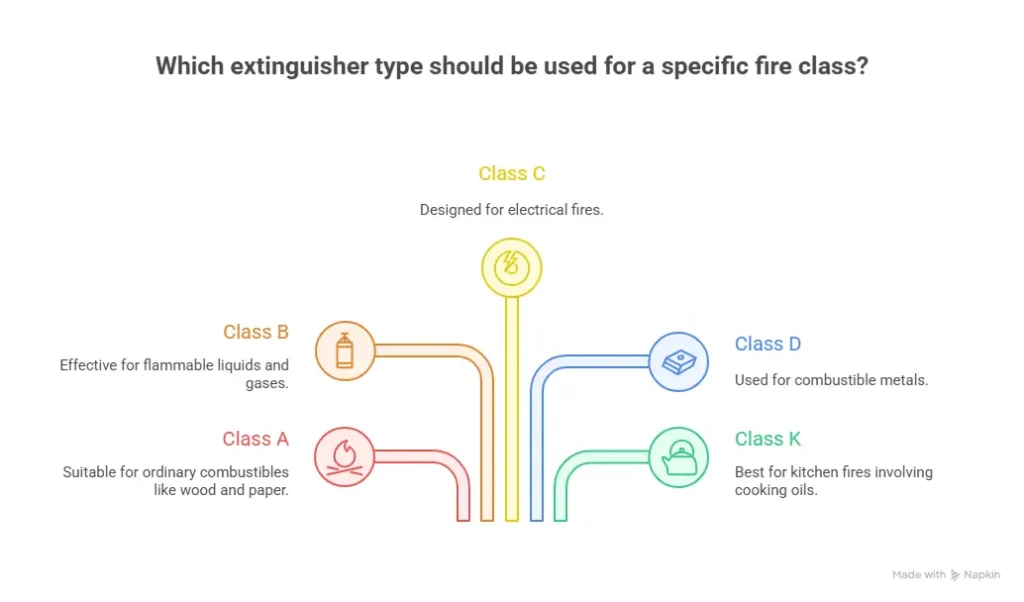
Class A fires involve ordinary combustible materials such as wood, paper, textiles, and certain plastics. These are the most common fire types in residential buildings, offices, schools, and administrative facilities across the Kingdom.
The defining characteristic of Class A fires is that they leave ash and require cooling to fully extinguish. Water-based or foam extinguishers are typically used because they reduce heat below ignition temperature. In Saudi offices, Class A risks are often underestimated because they appear low-risk, yet most workplace fires originate from these materials.
From a compliance standpoint, Civil Defense inspectors expect Class A coverage in any facility containing combustible furnishings or paper storage. DARS typically addresses this through correctly rated extinguishers combined with staff-level fire safety training to ensure confident first response.
Class B Fires: Flammable Liquids and Industrial Risk
Class B fires involve flammable liquids such as petrol, diesel, oils, paints, and solvents. These fires are particularly relevant in Saudi Arabia due to the prevalence of industrial operations, workshops, fuel storage areas, and oil-related facilities.
Unlike Class A fires, Class B fires cannot be extinguished by cooling alone. They require smothering to cut off oxygen supply. Foam, dry chemical powder, and CO₂ extinguishers are commonly used depending on the environment. Water is dangerous in these scenarios as it can spread burning liquids.
In high-risk facilities, fire risk assessment processes must identify Class B hazards early. This assessment informs extinguisher selection, placement density, and inspection frequency. Failure to address Class B risks is one of the most common causes of inspection non-compliance in industrial zones.
Class C Fires: Electrical and Gas-Related Hazards
Class C fires involve energized electrical equipment or flammable gases. These fires are particularly dangerous because electrical conductivity and explosion risk add layers of complexity. In modern Saudi workplaces filled with servers, control panels, and electrical infrastructure, Class C risk is unavoidable.
CO₂ and dry chemical extinguishers are preferred for Class C fires because they do not conduct electricity and leave minimal residue. This makes them suitable for server rooms, data centers, and control rooms. Using water-based extinguishers in such environments poses severe electrocution risks and can permanently damage equipment.
Saudi fire safety compliance frameworks require Class C extinguishers wherever energized equipment is present. This is closely tied to fire extinguisher inspection routines, where inspectors verify suitability, labeling, and accessibility.
How Fire Classes Shape Extinguisher Selection
Fire extinguisher classes directly determine which extinguisher types are appropriate for a facility. This is why most Saudi commercial sites rely on multi-purpose ABC dry powder extinguishers. These units provide coverage across Class A, B, and C fires, offering flexibility without compromising safety.
However, versatility does not replace proper planning. Facilities with kitchens, laboratories, or metal processing areas still require class-specific extinguishers. DARS approaches this by zoning facilities according to hazard type rather than relying on a single extinguisher solution.
This selection process is part of a broader fire prevention strategy that integrates equipment, signage, and emergency response procedures into a single compliance framework.
Fire Classes and Saudi Regulatory Expectations
In Saudi Arabia, fire extinguisher classes are embedded into regulatory enforcement. Civil Defense inspections evaluate not only whether extinguishers are present, but whether they are correctly matched to identified hazards. SBC 801, alongside NFPA-aligned standards, requires extinguishers to be certified, correctly rated, and strategically placed.
Arabic labeling, visibility, and accessibility are non-negotiable. Facilities that fail inspections often do so not because extinguishers are missing, but because the wrong class coverage was installed. This is why DARS integrates class analysis into every compliance and consulting engagement.
Setting the Stage for Advanced Fire Classes
Understanding Classes A, B, and C lays the groundwork for addressing more specialised fire risks. As Saudi Arabia continues expanding in industrial manufacturing, hospitality, and large-scale infrastructure, Classes D and K are becoming increasingly relevant.
These advanced fire classes introduce new extinguishing agents, stricter training requirements, and higher inspection scrutiny. They also highlight why fire extinguisher classes should never be treated as static knowledge, but as part of an evolving safety strategy aligned with Vision 2030 development goals.
Class D Fires: Combustible Metals in Industrial Environments
Class D fires involve combustible metals such as magnesium, sodium, potassium, aluminium powder, and titanium. While these fires are less common than Classes A, B, or C, they carry extreme risk due to their high combustion temperatures and violent reactions with water or standard extinguishing agents. In Saudi Arabia, Class D hazards are typically found in manufacturing plants, metal processing facilities, and certain energy-related operations.
What makes Class D fires particularly dangerous is that incorrect response can trigger explosions rather than suppression. Water, foam, or CO₂ can react chemically with burning metals, worsening the situation instantly. For this reason, Class D extinguishers use specialised dry powders designed to absorb heat and isolate the metal from oxygen without reacting with it.
From a regulatory standpoint, Saudi Civil Defense expects any facility handling combustible metals to explicitly address Class D risks during fire risk assessment. DARS often encounters facilities that underestimate this class, leading to compliance gaps that only surface during inspections or incidents.
Class K Fires: Commercial Kitchens and Cooking Oils
Class K fires are associated with cooking oils and fats, which burn at extremely high temperatures and can re-ignite even after appearing extinguished. This class has become increasingly important in Saudi Arabia due to the rapid growth of the hospitality, food service, and catering sectors across major cities.
Unlike liquid fuel fires in Class B, cooking oils require a wet chemical extinguishing agent that cools the fire while creating a soapy layer on the oil’s surface. This process, known as saponification, prevents re-ignition and ensures long-term suppression. Using water or powder on a Class K fire is one of the most common and dangerous mistakes in kitchens.
Saudi fire safety regulations require dedicated Class K extinguishers in commercial kitchens, regardless of whether ABC extinguishers are present elsewhere. Fire safety compliance in this sector is closely monitored, making Class K understanding essential for restaurant owners and facility managers alike.
Fire Extinguisher Types Mapped to Fire Classes
Once fire classes are understood, extinguisher types become easier to evaluate. Each extinguisher is engineered to interrupt one or more elements of the fire triangle depending on the class involved. In Saudi facilities, selection must balance versatility, residue concerns, and inspection requirements.
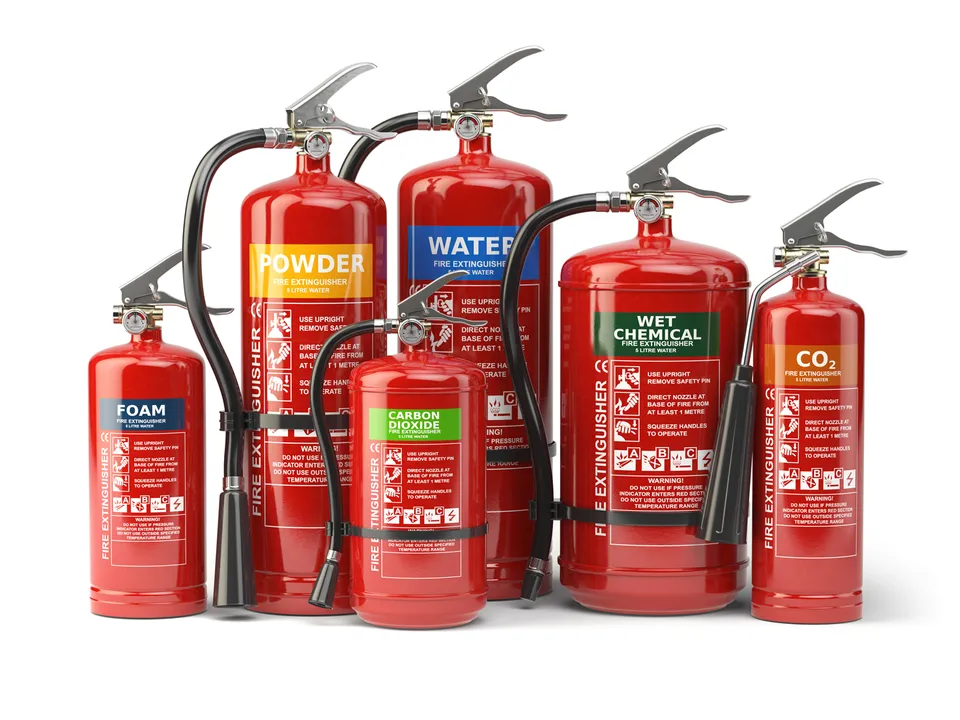
Water and foam extinguishers are primarily used for Class A fires where cooling is the priority. Dry chemical powder extinguishers, particularly ABC-rated units, dominate commercial and office environments due to their multi-class coverage. CO₂ extinguishers are favoured in electrical areas because they leave no residue, protecting sensitive equipment.
Wet chemical extinguishers are reserved for Class K risks, while specialised powder units address Class D hazards. DARS’s approach is to treat extinguisher selection as a system design decision rather than a procurement task, ensuring alignment with operational realities and emergency response procedures.
Why ABC Extinguishers Dominate Saudi Workplaces
ABC dry powder extinguishers are widely used across Saudi Arabia because they provide coverage for the most common fire classes encountered in offices, retail spaces, and mixed-use facilities. They are effective against ordinary combustibles, flammable liquids, and electrical fires, making them suitable for environments with varied risk profiles.
However, reliance on ABC extinguishers alone can create blind spots. Powder residue can damage electronics, and ABC units are ineffective against cooking oil or combustible metal fires. Saudi inspectors often flag facilities that use ABC extinguishers in kitchens or metal workshops without class-specific alternatives.
This is where structured fire safety training becomes critical. Staff must understand not only how to use an extinguisher, but when not to use one. Proper classification knowledge prevents hesitation, misuse, and escalation during emergencies.
Fire Classes and Workplace Fire Safety Strategy
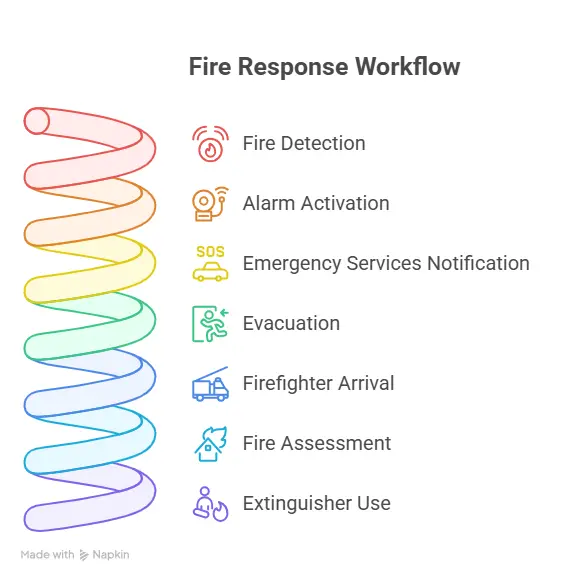
Fire extinguisher classes influence more than equipment selection. They shape how workplaces design evacuation routes, position signage, and train personnel. A facility that understands its dominant fire classes can tailor emergency response procedures to realistic scenarios rather than generic drills.
For example, electrical rooms with Class C risk require different response protocols than storage areas with Class A materials. Commercial kitchens must train staff specifically on Class K response, including when to shut down power or gas supplies before deploying extinguishers.
DARS integrates class-based planning into broader workplace fire safety programs, ensuring that extinguishers, alarms, and human response work together as a single system rather than isolated components.
Inspection and Maintenance by Fire Class
Fire extinguisher classes also affect inspection and maintenance requirements. While general inspection intervals are standardised under Saudi regulations, class-specific extinguishers often require additional checks due to their specialised agents and usage environments.
For example, wet chemical extinguishers in kitchens must be inspected for nozzle blockages caused by grease buildup. Class D extinguishers require verification that the correct powder type is present for the specific metal hazard. CO₂ units must be checked for pressure loss, especially in high-temperature environments.
Civil Defense inspections assess whether extinguishers are suitable for the identified fire classes, not just whether inspection tags are present. This makes class awareness essential for passing audits and maintaining operational continuity.
The Cost of Getting Fire Classes Wrong
Misunderstanding fire extinguisher classes carries real financial and operational consequences. Using the wrong extinguisher can cause fire spread, equipment damage, or injury, increasing downtime and liability. From a compliance perspective, incorrect class coverage often results in failed inspections, fines, or forced shutdowns.
In Saudi Arabia’s evolving regulatory environment, particularly under Vision 2030 development projects, enforcement is becoming more consistent and data-driven. Facilities are expected to demonstrate proactive compliance rather than reactive correction.
DARS positions fire class education as a cost-control measure as much as a safety requirement. Proper classification reduces incident severity, simplifies inspections, and protects long-term asset value.
Preparing for Strategic Fire Safety Planning
With a clear understanding of all fire extinguisher classes and how they map to extinguisher types, the next step is strategic integration. Fire classes should inform facility layout decisions, procurement planning, and long-term safety investments rather than being treated as static labels.
Strategic Selection of Fire Extinguishers by Class
By the time all fire extinguisher classes are understood, selection becomes a strategic decision rather than a technical checklist. In Saudi facilities, the goal is not to install the maximum number of extinguishers, but to install the right extinguishers in the right locations based on realistic fire scenarios. This approach aligns safety outcomes with inspection success and operational efficiency.
DARS typically begins this process by mapping fire classes to specific zones within a facility. Office areas dominated by paper and furnishings require a different solution than server rooms, workshops, or kitchens. When extinguisher classes are aligned with physical layouts, response time improves and misuse decreases during real incidents.
This strategy also simplifies procurement. Instead of overloading a site with redundant equipment, facilities can invest in targeted solutions that satisfy Civil Defense requirements while remaining practical for daily operations.
Fire Safety Training and Class-Based Readiness
Even the best extinguisher selection fails without proper human response. Fire extinguisher classes play a central role in effective fire safety training because they define decision-making under pressure. When staff understand what type of fire they are facing, they can act confidently instead of hesitating or reacting incorrectly.
In Saudi workplaces, inspectors increasingly assess whether training aligns with actual hazards, not just whether training occurred. This means a kitchen team must understand Class K response, while electrical maintenance staff must be familiar with Class C risks. Generic training programs are no longer sufficient for complex facilities.
DARS’s training philosophy focuses on scenario-based learning tied directly to extinguisher classes. This approach strengthens emergency response procedures and reduces the likelihood of escalation during the critical first moments of a fire.
Integrating Fire Classes into Compliance and Inspections
Fire extinguisher classes are deeply embedded in Saudi fire safety compliance frameworks. Civil Defense inspections evaluate whether extinguishers match identified hazards, whether signage reflects correct classifications, and whether placement distances comply with SBC 801 guidelines.
Facilities that proactively integrate fire class logic into their compliance documentation tend to pass inspections more smoothly. This includes updated fire risk assessment reports, accurate floor plans, and maintenance logs that reflect class-specific requirements. Inspectors look for consistency between what is documented and what is physically installed.
DARS supports this integration by aligning extinguisher classes with compliance systems, ensuring that documentation, equipment, and training tell the same story during inspections.
Long-Term Maintenance and Lifecycle Planning
Fire extinguisher classes also influence long-term maintenance planning. Different extinguishing agents age differently, react to environmental conditions, and require varying inspection depths. Treating all extinguishers as identical assets leads to overlooked risks and unexpected failures.
For example, wet chemical extinguishers in high-use kitchens may require more frequent servicing than ABC units in low-traffic office corridors. CO₂ extinguishers in hot environments can lose pressure faster, while Class D units must remain sealed and uncontaminated to function safely.
By planning maintenance schedules around extinguisher classes, facilities improve reliability while avoiding unnecessary servicing costs. This lifecycle-based approach reflects a mature fire safety mindset rather than reactive compliance.
Fire Classes as Part of a Layered Safety System
Fire extinguisher classes should never exist in isolation. They are one layer within a broader fire protection ecosystem that includes detection systems, alarms, suppression networks, and evacuation planning. When these layers are designed around consistent class logic, overall safety performance improves.
For instance, areas with high Class B risk may require both specialised extinguishers and enhanced spill containment measures. Kitchens with Class K hazards benefit from automatic suppression systems that complement manual extinguishers. Electrical rooms may combine Class C extinguishers with early smoke detection.
DARS emphasises this layered approach to ensure that extinguisher classes support, rather than replace, other fire prevention methods.
Common Misconceptions Around Fire Extinguisher Classes
One of the most persistent misconceptions is that multi-purpose extinguishers eliminate the need to understand fire classes. While ABC extinguishers offer flexibility, they do not remove the risks associated with specialised fires. Another common assumption is that extinguisher placement alone guarantees safety, regardless of staff knowledge.
In reality, misunderstanding fire classes is one of the leading causes of ineffective first response. Facilities often comply on paper but fail in practice because employees cannot identify the fire type quickly. This gap between equipment and awareness is where most preventable damage occurs.
Addressing these misconceptions requires ongoing education, not one-time installation. Fire extinguisher classes must become part of daily safety culture rather than emergency-only knowledge.
Aligning Fire Classes with Saudi Arabia’s Growth Landscape
As Saudi Arabia continues expanding its industrial, commercial, and hospitality sectors, fire risks are becoming more diverse. Mega-projects, advanced manufacturing, and large-scale food operations introduce fire classes that were previously limited to niche environments.
This evolution places greater importance on accurate classification, proper extinguisher selection, and advanced training. Facilities that adapt early benefit from smoother inspections, reduced incidents, and stronger operational resilience. Those that rely on outdated assumptions face increasing compliance pressure.
DARS views fire extinguisher classes as a future-proofing tool, allowing organisations to scale safely alongside national development goals.
Conclusion: Fire Extinguisher Classes as a Safety Foundation
Fire extinguisher classes are not technical jargon reserved for safety manuals. They are the foundation of effective fire response, regulatory compliance, and risk reduction in Saudi Arabia. From Class A office fires to Class K kitchen hazards and specialised industrial risks, correct classification shapes every safety decision that follows.
When facilities understand fire extinguisher classes, they select equipment more intelligently, train teams more effectively, and navigate inspections with confidence. More importantly, they protect lives, assets, and operational continuity in moments where every second matters.
For organisations seeking to strengthen their fire safety posture, treating fire extinguisher classes as a strategic framework rather than a compliance checkbox is the most reliable path forward.