
Fire Extinguisher Types and Uses: A Practical Guide for Saudi Arabia
Introduction: Why Fire Extinguisher Types and Uses Matter More Than Ever
Understanding fire extinguisher types and uses is no longer a basic safety checkbox. In Saudi Arabia, it has become a regulatory, operational, and financial necessity. As cities expand, industrial zones grow, and mixed-use developments multiply under Vision 2030, the margin for error in fire preparedness continues to shrink. A single incorrect extinguisher choice can escalate a controllable incident into a major loss.
From an industry perspective, fire extinguishers are not standalone tools. They are a frontline component of broader fire protection systems, designed to stop fires at the earliest possible stage. When selected and used correctly, they protect people, assets, and business continuity. When mismatched, they can worsen fires, expose occupants to danger, and trigger compliance violations during Civil Defense inspections.
Fire Extinguishers as Emergency Response Equipment
Fire extinguishers are classified as emergency response equipment, meaning they are intended for immediate, first-response action before fire spreads beyond control. Their role is not to replace fire suppression systems or emergency services, but to buy time and prevent escalation during the critical first moments.
In both industrial fire safety and residential fire safety, statistics consistently show that early intervention dramatically reduces damage. However, early intervention only works when the extinguishing agent matches the fire source. This is where knowledge gaps often appear, particularly in facilities that install extinguishers without conducting a proper fire risk assessment.
Fire risk assessment evaluates ignition sources, fuel types, occupancy behavior, and environmental conditions. The outcome directly informs which extinguisher types should be installed, where they should be placed, and how many units are required. Without this process, even well-maintained equipment may fail its purpose.
Understanding Fire Classes Before Choosing Extinguishers
Before discussing extinguisher types, it is essential to understand fire classes. Fire classes categorize fires based on the fuel involved, not the location. This classification system is aligned with NFPA standards and adopted locally through Saudi Building Code SBC 801.
Class A fires involve solid combustible materials such as wood, paper, textiles, and plastics. These are common in offices, schools, and residential buildings. Class B fires involve flammable liquids like fuel, oils, and solvents, often present in workshops and industrial facilities. Class C fires are electrical fires involving energized equipment. Class D fires involve combustible metals, while Class K fires occur in commercial kitchens using cooking oils and fats.
The importance of classification lies in prevention of misuse. Applying the wrong extinguishing agent can intensify combustion, spread flames, or create secondary hazards. This risk is a frequent cause of workplace fire hazards in facilities that rely on generic extinguisher placement rather than targeted planning.
Water Fire Extinguishers: Simple but Limited
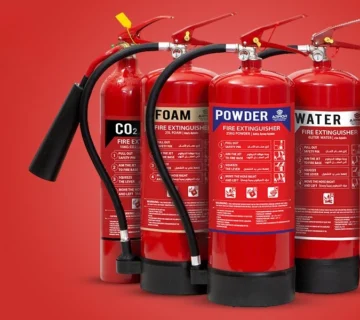
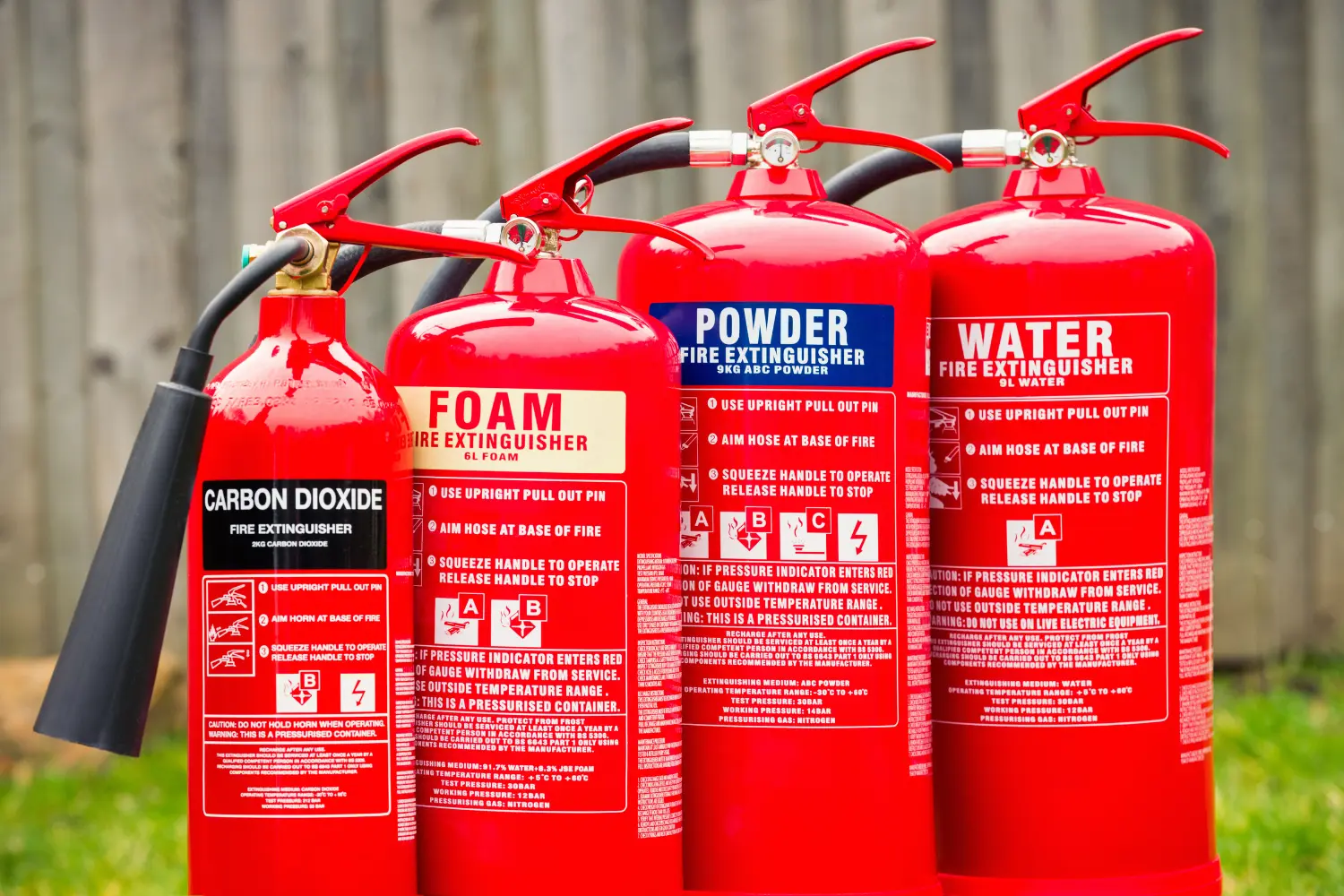
Water fire extinguishers are among the oldest and most widely recognized types. Their extinguishing mechanism relies on cooling the burning material below its ignition temperature. This makes them effective exclusively for Class A fires involving solid combustibles.
In residential fire safety, water extinguishers are commonly used in low-risk environments such as stairwells or storage areas containing paper products. However, their limitations are significant. Water must never be used on electrical fires or flammable liquids, as it can conduct electricity or cause burning liquids to spread rapidly.
In Saudi Arabia, Civil Defense inspectors closely review water extinguisher placement to ensure they are not installed near electrical rooms or fuel storage areas. Improper placement is often flagged during audits under safety regulations compliance, particularly in mixed-use facilities.
Foam Fire Extinguishers and Their Industrial Role
Foam extinguishers are designed to combat both Class A and Class B fires. They work by forming a blanket over burning liquids, cutting off oxygen while also providing a cooling effect. This dual action makes them highly effective in industrial and commercial environments.
In industrial fire safety, foam extinguishers are commonly installed in warehouses, fuel handling areas, and manufacturing facilities. They are particularly valuable where flammable liquids are present but electrical exposure is limited or controlled.
However, foam extinguishers still pose risks when misused. Applying foam to live electrical equipment can result in shock hazards. For this reason, proper signage, staff training, and integration into broader fire prevention strategies are essential.
Saudi standards require foam extinguishers to be SASO-certified and correctly labeled. DARS often advises clients during risk assessments to combine foam extinguishers with other agents rather than relying on a single solution across all areas.
Dry Powder (ABC) Fire Extinguishers Explained
Dry powder extinguishers, commonly labeled as ABC, are among the most versatile portable fire extinguishers available. They work by interrupting the chemical reaction of fire, effectively smothering flames across multiple fire classes.
Their ability to handle Class A, B, and C fires makes them a popular choice in offices, factories, and commercial buildings. In Saudi Arabia, ABC extinguishers are frequently recommended to meet baseline fire safety compliance, particularly in general-use areas.
Despite their versatility, dry powder extinguishers have drawbacks. They leave residue that can damage sensitive equipment and reduce visibility during discharge. This is why their use in server rooms or control centers is typically discouraged in favor of cleaner agents.
CO₂ Fire Extinguishers for Electrical and Liquid Fires
Carbon dioxide extinguishers are designed specifically for Class B and Class C fires. They work by displacing oxygen and suffocating the fire without leaving residue. This makes them ideal for electrical rooms, laboratories, and server environments.
In facilities with high-value electronics, CO₂ extinguishers protect assets while minimizing post-incident cleanup. Their non-conductive nature makes them essential for electrical safety, especially in data-driven environments supporting Saudi Arabia’s digital transformation goals.
However, CO₂ extinguishers also require careful handling. In confined spaces, oxygen displacement can pose risks to occupants. Training and signage are therefore integral to safety regulations compliance, not optional additions.
Authoritative fire safety bodies such as the Saudi Standards, Metrology and Quality Organization emphasize proper application and certification of CO₂ units to prevent misuse.
Wet Chemical Extinguishers and Commercial Kitchens
Wet chemical extinguishers are engineered specifically for Class K fires involving cooking oils and fats. Their extinguishing agent reacts chemically with hot oils, creating a soapy layer that suppresses flames and prevents re-ignition.
Commercial kitchens are among the highest-risk environments for fire incidents. In Saudi Arabia, restaurants, hotels, and food production facilities are required to install wet chemical extinguishers as part of Civil Defense approval processes.
Failure to install the correct extinguisher type in kitchens is one of the most common compliance issues identified during inspections. DARS frequently supports clients in correcting these gaps during pre-inspection audits, ensuring alignment with SBC 801 and operational safety goals.
For further regulatory insight, international fire safety guidance from organizations such as the UK Life Safety Fire Council provides useful comparative context that aligns closely with Saudi requirements.
Fire Extinguisher Placement in Saudi Facilities: From Theory to Practice
Once the correct fire extinguisher types are selected, the next challenge is placement. In Saudi Arabia, placement is not a matter of convenience or visual symmetry. It is a regulated requirement tied directly to fire safety compliance and Civil Defense approval. An otherwise compliant facility can fail inspection if extinguishers are poorly positioned or inaccessible.
Placement must consider human behavior during emergencies. In real fire scenarios, panic reduces reaction time and decision-making capacity. Extinguishers must therefore be visible, clearly marked, and located along normal escape routes rather than hidden inside rooms or behind doors. This principle applies equally to residential fire safety and high-risk industrial environments.
Saudi Building Code SBC 801 defines maximum travel distances, mounting heights, and coverage areas based on risk classification. These requirements are enforced during inspections, and DARS regularly encounters facilities that underestimate how closely these details are reviewed.
Positioning Extinguishers Based on Hazard Zones
Effective placement begins with understanding hazard zones within a building. A single facility often contains multiple risk profiles, each requiring a different approach. Electrical rooms, kitchens, storage areas, and open offices should never be treated as identical spaces.
In environments exposed to workplace fire hazards, extinguishers must be positioned near the risk source but never so close that access becomes dangerous during a fire. For example, placing an extinguisher directly above a fryer defeats its purpose if flames block access. Instead, units should be installed along exit paths, allowing users to fight the fire while maintaining a clear escape route.
This zoning logic is a direct extension of the fire risk assessment process discussed earlier. DARS typically maps these zones visually during site surveys to ensure that extinguisher distribution aligns with both human movement and regulatory expectations.
Labeling, Signage, and Visibility Requirements
Even the best-placed extinguisher becomes ineffective if occupants cannot identify it quickly. Saudi regulations require clear, standardized signage in both Arabic and English, ensuring comprehension across diverse workforces.
Labels must clearly indicate the extinguisher type, fire classes covered, and basic usage instructions. This is particularly important for portable fire extinguishers, which are often used by non-specialists during emergencies. Confusion at this stage can delay response or lead to incorrect application.
Visibility also extends to lighting conditions. Emergency lighting should highlight extinguisher locations during power outages, especially in industrial or underground facilities. Civil Defense inspectors frequently assess this integration when evaluating fire protection systems as a whole, not as isolated components.
Guidance from organizations such as the National Fire Protection Association reinforces this emphasis on visual clarity, aligning international best practices with local enforcement.
Inspection and Approval by Saudi Civil Defense
Civil Defense approval is a critical milestone for any facility operating in Saudi Arabia. During inspections, extinguishers are evaluated not only for type and placement but also for certification, condition, and documentation.
Extinguishers must be SASO-approved and clearly traceable to certified suppliers. Missing approval marks or mismatched specifications can result in rejection, regardless of whether the extinguisher itself is functional. This is a common oversight in facilities that prioritize cost over compliance.
DARS often supports clients through pre-inspection readiness checks, identifying gaps before official reviews. These checks ensure alignment with safety regulations compliance, reducing delays, penalties, and operational disruptions.
Maintenance as a Compliance and Safety Obligation
Fire extinguishers are not install-and-forget equipment. Ongoing maintenance is mandatory under Saudi regulations and directly tied to compliance status. Inspectors routinely check service tags, pressure gauges, and physical condition during site visits.
Monthly visual inspections ensure that extinguishers remain accessible and undamaged. Annual servicing by certified providers verifies internal components and agent integrity. After any use, even partial discharge, extinguishers must be refilled or replaced immediately.
Neglecting maintenance undermines fire prevention strategies and exposes organizations to legal liability. DARS treats maintenance as an extension of system reliability, not an administrative task. This approach aligns with international standards such as those outlined by UL Listed fire safety guidelines.
Training Occupants to Use Fire Extinguishers Correctly
Correct equipment and placement mean little if occupants do not know how to respond during an emergency. Training transforms extinguishers from passive objects into effective emergency response equipment.
In Saudi workplaces, basic fire response training is increasingly expected during inspections, particularly in industrial and high-occupancy environments. Training typically covers extinguisher identification, appropriate use, and decision-making under pressure.
The globally recognized PASS method remains the simplest operational framework, but training should also emphasize when not to intervene. Fires that grow beyond initial stages require evacuation rather than engagement. DARS integrates these principles into client training programs to balance confidence with caution.
Common Compliance Mistakes in Saudi Facilities
Despite clear regulations, several recurring issues appear across facilities of all sizes. One frequent problem is over-reliance on a single extinguisher type across diverse risk areas. While ABC extinguishers are versatile, they are not universally appropriate.
Another issue is improper mounting height or blocked access due to furniture, storage, or renovations. These changes often occur after initial approval and go unnoticed until reinspection. Documentation gaps, such as missing service records, also pose significant compliance risks.
These mistakes are rarely intentional. They usually result from fragmented responsibility between contractors, facility managers, and maintenance teams. DARS addresses this by positioning fire safety as a system-level responsibility rather than a checklist item.
Cost Considerations and Long-Term Value
Cost is often cited as a barrier to full compliance, but this perspective overlooks long-term value. While certified extinguishers and professional servicing may carry higher upfront costs, they reduce risk exposure, insurance premiums, and operational downtime.
In Saudi Arabia, extinguisher pricing varies based on type, capacity, and certification. However, the real cost lies in non-compliance. Fines, delayed approvals, and reputational damage far outweigh the investment required for proper implementation.
DARS emphasizes value-based planning, helping clients balance budget constraints with regulatory obligations. This approach ensures sustainable compliance without compromising safety outcomes.
Integrating Fire Extinguishers into Comprehensive Fire Protection Systems
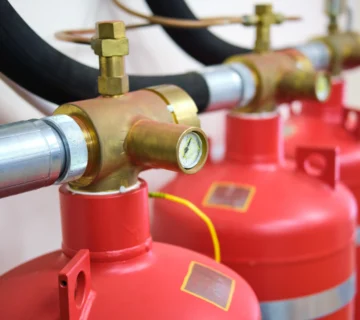
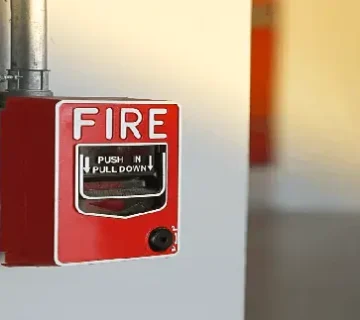
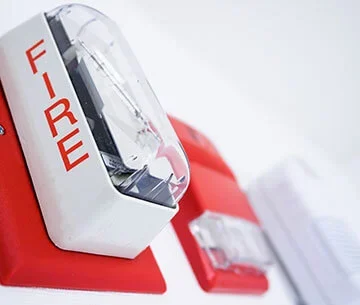
Fire extinguishers should never be viewed in isolation. In mature safety environments, they function as one layer within integrated fire protection systems that include detection, alarms, suppression, evacuation planning, and ongoing monitoring. Their effectiveness depends on how well they are coordinated with these other elements.
In Saudi facilities, integration is not only a best practice but an expectation during Civil Defense reviews. Inspectors increasingly assess how extinguishers complement alarms, emergency lighting, and exit planning rather than evaluating each component independently. This systems-based approach reflects a broader shift toward proactive fire prevention strategies rather than reactive measures.
DARS applies this perspective when designing and implementing safety solutions. Fire extinguishers are positioned and specified based on how occupants will respond once alarms activate, ensuring a logical flow from detection to response to evacuation.
Fire Extinguishers Within the Emergency Response Chain
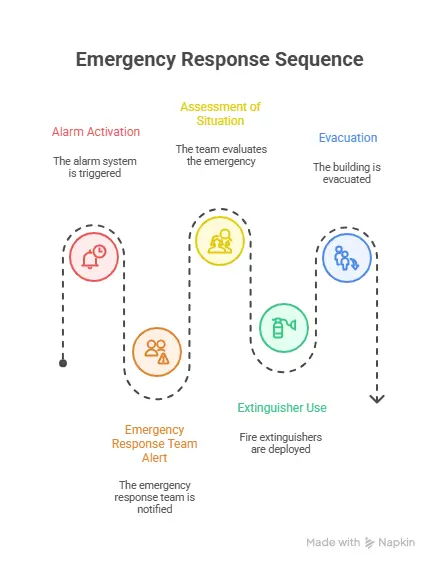
During a fire incident, response unfolds in seconds. Alarms alert occupants, emergency lighting guides movement, and extinguishers provide the first opportunity to control the situation. Any breakdown in this chain reduces the chance of successful intervention.
For emergency response equipment to perform its role, occupants must trust that systems will work together. An extinguisher placed far from alarmed zones or disconnected from evacuation logic creates hesitation. This hesitation often leads to delayed action or unsafe decisions.
By aligning extinguisher placement with alarm coverage and exit routes, facilities improve response confidence. DARS often highlights this alignment during audits, showing how extinguishers support the overall emergency narrative rather than acting as standalone tools.
Scaling Fire Safety for Growing Saudi Organizations
As businesses expand under Vision 2030, fire safety requirements evolve. A facility that was compliant at launch may fall short after expansion, change of use, or increased occupancy. This is especially true in mixed-use developments and industrial zones.
Growth introduces new workplace fire hazards, from additional electrical loads to expanded storage of combustible materials. Fire extinguisher types and quantities must be reassessed whenever operational changes occur. Relying on legacy layouts is a common compliance risk.
DARS advises organizations to treat fire safety reviews as part of change management. Any renovation, process change, or capacity increase should trigger a new fire risk assessment to ensure extinguishers remain fit for purpose.
Regulatory Evolution and Staying Ahead of Compliance
Saudi fire safety regulations continue to evolve, driven by urban density, industrial diversification, and global alignment. Updates to SBC standards and SASO technical regulations are not theoretical changes; they directly affect inspection outcomes and operational approvals.
Organizations that wait for inspection feedback often face costly retrofits. In contrast, proactive monitoring of regulatory updates allows for gradual, planned adjustments. This approach supports ongoing safety regulations compliance without operational disruption.
DARS closely tracks regulatory developments and translates them into practical guidance for clients. This includes updating extinguisher specifications, revising placement plans, and adjusting maintenance schedules in line with new expectations.
Authoritative guidance from international safety bodies such as the International Fire Safety Standards Coalition often informs these updates and reinforces alignment between global and local practices.
Auditing Fire Extinguisher Effectiveness Beyond Compliance
Compliance alone does not guarantee effectiveness. A facility may pass inspection yet still face elevated risk due to behavioral or operational factors. This is where internal audits play a critical role.
Effective audits assess whether extinguishers are actually usable in real conditions. This includes checking visibility during peak occupancy, accessibility during normal operations, and staff confidence in using equipment. These factors often fall outside formal inspection checklists.
DARS incorporates behavioral assessment into its audit methodology, bridging the gap between documented compliance and real-world readiness. This approach strengthens residential fire safety and industrial preparedness alike, particularly in high-turnover environments.
Technology, Sustainability, and Emerging Trends
The fire safety industry is gradually adopting cleaner agents, smart monitoring, and data-driven maintenance models. In Saudi Arabia, this shift aligns with sustainability goals and digital transformation initiatives.
Modern extinguishers increasingly feature environmentally friendly agents and tracking technologies that signal maintenance needs automatically. While adoption is still emerging, these innovations reduce downtime and support predictive maintenance strategies.
DARS evaluates new technologies cautiously, balancing innovation with regulatory acceptance. Any new solution must meet SASO certification requirements and integrate seamlessly into existing fire protection systems to deliver real value.
Long-Term Value of Strategic Fire Extinguisher Planning
Strategic planning transforms fire extinguishers from regulatory obligations into operational assets. When selected, placed, and maintained correctly, they protect lives, safeguard investments, and support uninterrupted operations.
For decision-makers, this perspective reframes cost discussions. Fire extinguishers are not expenses to minimize but safeguards that reduce long-term risk exposure. This mindset shift is increasingly evident among organizations seeking resilience rather than minimum compliance.
DARS positions fire safety as part of organizational maturity, where preparedness reflects leadership responsibility and operational excellence rather than mere obligation.
Conclusion: Turning Knowledge into Action
Mastering fire extinguisher types and uses requires more than memorizing classifications. It demands an understanding of context, regulation, human behavior, and system integration. In Saudi Arabia’s rapidly evolving environment, this knowledge is essential for both compliance and protection.
From selection and placement to maintenance and training, each decision shapes the effectiveness of the overall response. Organizations that approach fire safety strategically gain more than inspection approvals; they gain confidence, continuity, and trust.
DARS continues to support this journey by translating standards into practical solutions, ensuring that fire extinguishers serve their true purpose when it matters most.