
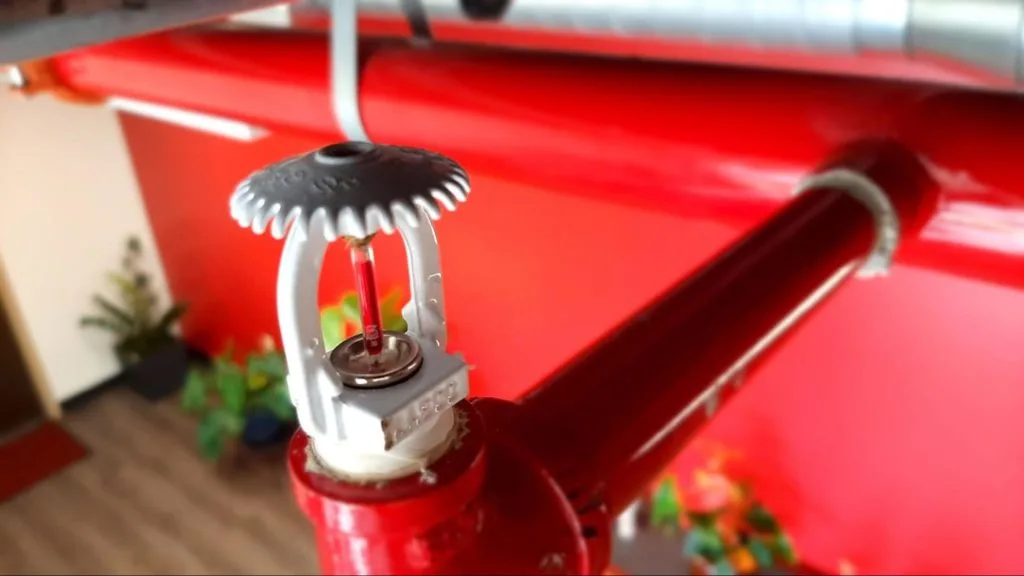
Why fire risk looks different in high-value Saudi facilities
In many Saudi Arabian facilities today, fire risk is no longer just about flames and smoke. It is about data loss, operational downtime, regulatory exposure, and the cost of recovering sensitive assets after a single incident. As digital infrastructure, industrial automation, and high-value environments expand across the Kingdom, fire protection systems must do more than simply extinguish a fire. They must do so with precision.
This is where the pre action sprinkler system enters the conversation. Unlike conventional automatic sprinkler systems, pre action solutions are designed to reduce the likelihood of accidental water discharge while still delivering reliable water-based fire suppression when a real fire event occurs. For environments where water damage can be as devastating as fire itself, this balance is critical.
At DARS, discussions around pre action fire sprinkler systems usually begin with one central question: is the added complexity justified by the level of risk? Answering that question requires a clear understanding of how these systems work, how they differ from other sprinkler types, and where they truly add value within Saudi projects. This article breaks that down, starting with the fundamentals.
What Is a Pre Action Sprinkler System?
A pre action sprinkler system is a specialized form of fire protection that keeps water out of the sprinkler piping until specific conditions are met. In simple terms, it introduces an extra verification step before water is allowed to enter the system and discharge through sprinkler heads. This design is intended to reduce unintended water release caused by mechanical damage, human error, or false alarms.
According to guidance from the National Fire Protection Association, pre action systems are commonly used where sensitive equipment protection is a priority and accidental water damage carries significant consequences. Unlike wet pipe systems, where water is always present in the pipes, pre action systems rely on detection and control logic to confirm a fire condition before activation.
In Saudi Arabia, this approach has become increasingly relevant in data centers, control rooms, telecom facilities, pharmaceutical environments, and certain industrial applications where business continuity is critical. The system is not about delaying fire response, but about controlling how and when water is introduced into the protected space.
How a Pre Action Sprinkler System Works
The two-stage activation concept
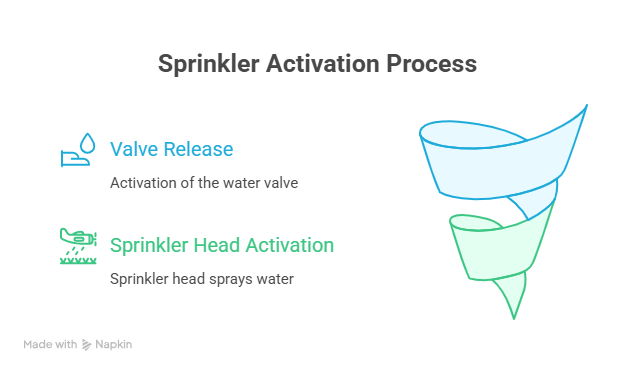
At the heart of every pre action sprinkler system is a two-stage logic. First, a fire detection event must occur. This can be smoke detection, heat detection, or a combination of both, depending on the design intent. Once the detection system confirms a fire condition, a signal is sent to the releasing control panel.
The releasing panel then activates the pre action valve, allowing water to fill the sprinkler piping. However, water does not discharge immediately. Actual discharge only happens when a sprinkler head opens due to heat at the fire location. This separation between detection and discharge is what differentiates pre action systems from standard wet pipe arrangements.
Core components of the system
A properly designed pre action system integrates several critical elements. These include the pre action valve assembly, a listed releasing control panel, detection devices, supervisory air or nitrogen supply, and alarm and monitoring interfaces. Each component plays a role in ensuring the system remains dry under normal conditions while staying ready to respond instantly during a fire event.
Manufacturers such as Reliable Sprinkler outline how releasing logic, supervision, and valve trim must work together to maintain system integrity. Any weakness in this chain can compromise performance or increase the risk of false activation.
Pre Action vs Wet, Dry, and Deluge Systems
Understanding where pre action systems fit requires a clear comparison with other automatic sprinkler systems. Each type serves a specific purpose, and misapplication is one of the most common design mistakes seen in the field.
Wet pipe systems remain the simplest and most widely used solution. Water is constantly present in the piping, allowing for fast response and minimal mechanical complexity. For standard commercial spaces, this approach is often the most reliable and cost-effective.
Dry pipe systems are typically used where freezing temperatures are a concern. The piping is filled with air or nitrogen, and water only enters after a sprinkler head opens. While useful in cold environments, dry systems still allow water to flow immediately once a head operates.
Deluge systems take a completely different approach. All sprinkler heads are open, and water discharges simultaneously across the protected area when the deluge valve opens. These systems are used in high-hazard scenarios where rapid fire spread is expected.
Pre action sprinkler systems sit between these options. They combine dry piping with detection-based control to limit water release unless a confirmed fire event occurs. According to fire safety engineering guidance, this makes them ideal for high-risk fire protection where water sensitivity is a key concern, but not a universal replacement for simpler systems.
Types of Pre Action Sprinkler Systems
Single interlock pre action systems
In a single interlock configuration, the detection system alone is responsible for opening the pre action valve. Once detection confirms a fire condition, water fills the piping. Discharge still depends on sprinkler head activation by heat. This setup is commonly used in environments where detection reliability is high and the risk of mechanical damage is relatively low.
Double interlock pre action systems
Double interlock systems add another layer of confirmation. In this configuration, both a detection signal and a loss of supervisory pressure are required before the valve opens. This design is often used in freezer rooms or cold storage facilities, where accidental flooding combined with freezing could cause severe damage.
Non-interlock configurations
Non-interlock systems allow either a detection signal or loss of air pressure to open the valve. While this can speed up water delivery, it also increases sensitivity to air system issues. For this reason, non-interlock designs require strong maintenance discipline and careful supervision strategies. MeyerFire guidance on selecting pre action types
Where Pre Action Systems Make Sense in Saudi Arabia
In the Saudi market, pre action sprinkler systems are most justified where water damage presents a serious operational or financial risk. Data centers are a prime example. Many facilities rely on clean agent suppression as a first line of defense, with pre action systems serving as a secondary layer of water-based fire suppression if the fire grows beyond the initial response.
Museums, archives, and libraries also benefit from this approach, as accidental discharge can cause irreversible damage to stored materials. Pharmaceutical and laboratory environments, where production processes and equipment must remain uncontaminated, are another strong fit.
However, industry experts consistently caution against using pre action systems as a default choice. In standard office spaces or retail environments, the added complexity often outweighs the benefits. As highlighted in professional fire protection discussions, selecting pre action without a clear risk justification can increase lifecycle cost without improving safety outcomes.
False Trips and Accidental Discharge: A Real Concern
One of the most discussed topics around pre action sprinkler systems is false activation. While these systems are designed to reduce accidental water release, they are not immune to it. Engineering forums and field data show that most false trips are not caused by the concept itself, but by poor design, improper detection selection, or weak maintenance practices.
Issues such as air leaks, incorrect cross-zoning logic, and misconfigured releasing panels are frequently cited causes. Research shared by fire protection engineers shows that disciplined testing, proper supervision, and realistic commissioning procedures significantly reduce these risks.
Detection Strategy and Cross-Zoning
Detection plays a defining role in pre action system performance. Smoke detection offers early warning but can be sensitive to dust or environmental conditions. Heat detection is more robust but reacts later in the fire development stage. Selecting the correct combination depends on the risk profile and operational conditions of the facility.
Cross-zoning is often used to improve reliability. This approach requires two independent detection signals before the releasing panel opens the valve. While effective in reducing nuisance activations, poor cross-zoning design can delay water introduction if not carefully engineered.
System Monitoring, Supervision, and Why It Matters More Than Many Expect
As pre action sprinkler systems grow in complexity, supervision becomes just as important as suppression itself. Unlike basic automatic sprinkler systems, a pre action setup relies on continuous monitoring to confirm that every component is in the correct state before an incident occurs. If supervision fails, the system may either trip unintentionally or fail to operate when it is genuinely needed.
Monitoring typically covers valve position, air or nitrogen pressure, detection circuits, power supply status, and waterflow signals. These signals are transmitted to a fire alarm control panel and, in most Saudi projects, onward to a supervising station. Fire safety engineering guidance consistently stresses that supervision is not optional. It is the mechanism that turns a complex system into a reliable one.
When supervision is poorly implemented or ignored during operations, small issues such as gradual air leaks or disabled detection zones can quietly undermine system readiness. Over time, this creates a false sense of security that only becomes visible during testing or, worse, during a real fire event.
Alarms, Signals, and Operational Awareness
In a pre action sprinkler system, not all alarms carry the same meaning. Fire alarms, supervisory signals, and trouble signals each serve a different purpose, and confusion between them is a common operational weakness. Fire alarms indicate confirmed events requiring immediate response, while supervisory signals warn of abnormal conditions that could impair system performance.
In well-managed Saudi facilities, supervisory signals are treated as high-priority maintenance alerts rather than background noise. This approach aligns with best practices promoted by professional fire protection organizations, which emphasize that responding early to supervision alerts prevents system impairment and unplanned downtime.
From an operational perspective, clarity in alarm priorities supports better decision-making during emergencies. When facility teams understand what each signal represents, they can respond confidently rather than hesitating or overreacting. This clarity becomes especially important in environments where fire detection and suppression are tightly integrated with business continuity plans.
Air Versus Nitrogen: A Growing Conversation in Saudi Projects
One of the most actively discussed topics around pre action sprinkler systems today is the choice between compressed air and nitrogen for supervisory pressure. While both serve the same basic function, their long-term impact on system reliability can differ significantly.
Compressed air contains oxygen and moisture, both of which contribute to internal pipe corrosion over time. In dry and pre action systems, residual water trapped after testing or activation combines with oxygen to accelerate corrosion processes. This issue has gained attention in Saudi facilities where long pipe runs and high ambient temperatures can intensify degradation.
Nitrogen, by contrast, is an inert gas that significantly reduces oxygen levels inside the piping. Research published by global insurers and engineering bodies highlights nitrogen’s effectiveness in slowing corrosion and extending pipe life. However, nitrogen is not a cure-all. Poor drainage, improper installation, or neglected maintenance can still lead to localized corrosion regardless of the supervisory gas used.
Testing and Maintenance: The Reality Behind Compliance
Testing and maintenance requirements for pre action sprinkler systems are often underestimated during the design stage. While the system may appear similar to other water-based fire suppression solutions, its reliance on detection, releasing panels, and supervisory components introduces additional inspection and testing obligations.
Guidance from NFPA 25 frames maintenance as an owner responsibility rather than a one-time commissioning task. Regular inspections, functional tests, and documented corrective actions are essential to maintaining system reliability. In Saudi Arabia, these records are frequently reviewed during audits and authority inspections, making proper documentation just as important as the technical work itself.
Disruption is a common concern raised by facility operators. While testing does require coordination, experienced contractors structure maintenance plans to minimize operational impact. When planned correctly, routine testing becomes a predictable process rather than a disruptive event.
Maintenance in Practice Across Saudi Facilities
In real-world Saudi projects, the most successful maintenance programs are those integrated into broader facility management workflows. Rather than treating the pre action fire sprinkler as a standalone system, leading operators align inspection schedules with other life safety systems, ensuring consistent oversight.
Common field experience shows that issues such as valve tampering, disabled supervision, or unnoticed air pressure loss often stem from poor handover at project completion. When operations teams are not properly trained, even a well-designed system can quickly drift out of compliance. This is why structured handover, including clear operating procedures and basic system education, is critical to long-term performance.
From a commercial fire safety solutions perspective, maintenance maturity is often a deciding factor in whether pre action systems deliver their intended value. Facilities with disciplined maintenance cultures consistently experience fewer impairments and lower lifecycle costs.
Compliance and Approval Pathways in Saudi Arabia
Fire protection compliance in Saudi Arabia is closely tied to authority expectations and documentation quality. While international standards such as NFPA provide the technical foundation, approval processes often involve additional local requirements and procedural reviews.
Saudi Civil Defense plays a central role in preventive supervision, with expectations around design documentation, testing records, and system performance. Projects that align early with these expectations tend to move more smoothly through approval stages, while late-stage changes can lead to costly delays.
The Saudi Building Code framework, particularly its fire protection provisions, reinforces the importance of proper system selection and verification. For pre action sprinkler systems, this means demonstrating not only compliance with technical standards but also clarity in cause-and-effect logic and system intent.
Documentation That Actually Matters
From DARS’s experience, the most effective compliance submissions are those that tell a clear technical story. Drawings, calculations, and equipment data sheets must align with the system’s operational logic. Any inconsistency between detection strategy, releasing logic, and sprinkler layout can trigger authority queries.
Cause-and-effect matrices have become particularly important for pre action systems. These documents translate technical design into understandable sequences of operation, helping reviewers confirm that detection, valve activation, alarms, and supervision behave as intended. When prepared carefully, they reduce ambiguity and speed up approval.
Commissioning records and as-built documentation complete the picture. These records demonstrate that the system installed on site matches the approved design and performs correctly under test conditions. For facility owners, they also serve as a foundation for ongoing maintenance and future audits.
Cost and Lifecycle Considerations
Cost discussions around pre action sprinkler systems often focus on upfront installation. While it is true that these systems typically cost more than wet pipe alternatives, this view alone misses the broader lifecycle perspective. Detection devices, releasing panels, and supervisory equipment all contribute to higher initial investment.
However, lifecycle cost must also consider risk exposure. In environments where accidental water discharge could result in major financial loss or extended downtime, the added investment may be justified. Professional analyses consistently emphasize that pre action systems offer value when aligned with clear operational priorities rather than applied indiscriminately.
In Saudi projects, lead time for specialized components and coordination with multiple stakeholders can also influence cost. Early planning and clear scope definition are key to avoiding budget surprises later in the project lifecycle.
Common Design and Implementation Pitfalls
Despite clear guidance, several recurring mistakes continue to appear in pre action system projects. One of the most common is selecting pre action simply because a space is perceived as “important,” without fully evaluating whether water sensitivity truly demands it. This can result in unnecessary complexity and maintenance burden.
Other pitfalls include poorly coordinated detection layouts, inadequate drainage provisions, and incomplete supervision wiring. These issues often stem from fragmented design responsibilities or rushed installations. Industry commentary consistently shows that many false trips and impairments can be traced back to these early-stage decisions.
Operational mistakes also play a role. Ignoring supervisory signals, deferring maintenance, or modifying system components without proper review can erode system reliability over time. These risks underline the importance of viewing pre action sprinkler systems as living systems that require ongoing attention.
Making the Right Decision: When a Pre Action Sprinkler System Is the Right Choice
By the time Saudi facility owners reach the decision stage, the question is rarely whether a pre action sprinkler system works. The real question is whether it is the most appropriate solution for the specific risk profile of the space. Pre action systems are not premium upgrades by default. They are targeted tools designed for particular environments where the balance between fire risk and water damage risk must be carefully managed.
In practical terms, the strongest candidates are spaces with high-value assets, low tolerance for accidental water release, and mature operational teams. Data centers, mission-critical control rooms, archival spaces, and specialized industrial processes often meet these criteria. In contrast, areas with standard occupancy, predictable fire loads, and limited operational oversight usually benefit more from simpler automatic sprinkler systems.
This distinction matters because complexity always comes with responsibility. A pre action fire sprinkler solution only delivers value when the organization operating it is prepared to manage detection, supervision, and maintenance with discipline.
Pre Action and Clean Agent Systems: Layered Protection, Not Competition
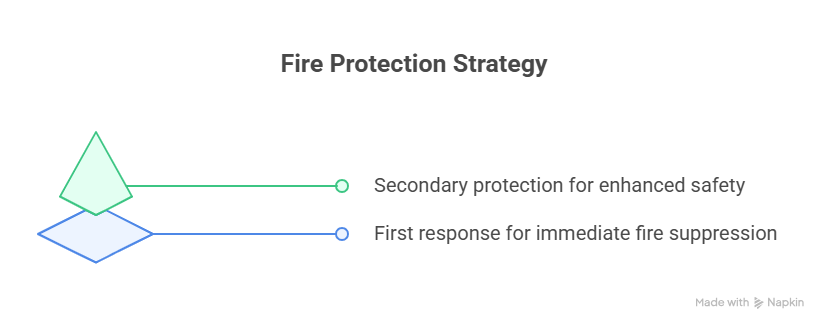
One common misconception in Saudi projects is that pre action systems compete with clean agent suppression. In reality, the two are often designed to work together as part of a layered fire protection strategy. Clean agents provide fast, residue-free suppression for early-stage fires, while pre action systems serve as a robust backup if the fire grows beyond the clean agent’s design envelope.
This approach is especially common in data centers, where the priority is to control a fire quickly without disrupting operations. Industry guidance shows that combining clean agent suppression with water-based fire suppression creates resilience rather than redundancy. The pre action system remains dry under normal conditions, ready to activate only when detection confirms that the clean agent alone is no longer sufficient.
Evaluating Organisational Readiness
Technical suitability is only one side of the decision. Organisational readiness plays an equally important role in determining success. Facilities with clear maintenance structures, trained staff, and established response procedures are far better positioned to manage pre action systems effectively.
In contrast, sites with limited technical oversight often struggle to keep supervisory signals active and maintenance schedules current. Over time, this gap erodes the very advantage pre action systems are meant to provide. Fire safety engineering literature repeatedly emphasizes that system reliability is closely tied to human processes, not just hardware quality.
From DARS’s perspective, early conversations with facility management teams are critical. Understanding how the system will be operated after handover helps shape design decisions that align with real-world capabilities rather than ideal assumptions.
Risk, Downtime, and Return on Investment
When evaluating return on investment, it is tempting to focus solely on installation cost. However, the true value of a pre action sprinkler system lies in risk mitigation rather than direct savings. The cost of a single accidental discharge in a sensitive environment can far exceed the additional investment required for a properly designed pre action solution.
Downtime is another major consideration. In many Saudi facilities, even short interruptions can have cascading effects on operations, reputation, and contractual obligations. By reducing certain failure modes associated with water discharge, pre action systems support continuity in environments where interruption carries high consequences.
That said, this value only materializes when the system is designed, installed, and maintained correctly. Without that foundation, the return on investment quickly diminishes.
Aligning Early With Authorities and Stakeholders
One of the most consistent lessons from Saudi projects is the importance of early alignment. Engaging authorities, consultants, and facility stakeholders at the concept stage reduces uncertainty later in the project. Pre action systems involve more interfaces than simpler fire protection systems, making coordination essential.
Clear documentation, well-defined cause-and-effect narratives, and realistic commissioning plans help build confidence among reviewers. When authorities understand not just what the system is, but why it was selected and how it will operate, approvals tend to proceed more smoothly.
This proactive approach also benefits owners. It ensures that expectations around testing, maintenance, and long-term operation are understood before the system is installed, rather than discovered after handover.
The Long View: Performance Over the System’s Life
A pre action sprinkler system should be evaluated over its entire lifespan, not just at commissioning. Over time, changes in occupancy, equipment, or operations can alter the risk profile of a space. Periodic reviews help ensure that detection strategies, releasing logic, and maintenance plans remain aligned with current conditions.
Corrosion control, particularly in dry and pre action systems, also requires ongoing attention. Decisions around nitrogen use, drainage improvements, and inspection frequency have long-term implications for system integrity. Professional insurer guidance consistently links proactive corrosion management with reduced impairment rates and extended system life.
Bringing It All Together
A pre action sprinkler system is neither a universal solution nor an unnecessary luxury. It is a strategic tool designed for environments where fire risk, water sensitivity, and operational continuity intersect. When applied thoughtfully, it enhances protection without introducing unnecessary exposure.
Success depends on more than selecting the right valve or detection device. It requires clear intent, sound fire safety engineering, disciplined maintenance, and realistic operational planning. Facilities that approach pre action systems with this mindset consistently achieve better outcomes than those that treat them as a default upgrade.
For Saudi facility owners, the path forward is clear. Evaluate risk honestly, align early with stakeholders, and choose complexity only when it serves a defined purpose. When these principles guide decision-making, pre action sprinkler systems become a powerful part of a resilient fire protection strategy rather than a source of ongoing concern.
Final Note
This series has examined the pre action sprinkler system from fundamentals through operation and strategic decision-making. From understanding how the system works, to managing supervision and maintenance, to evaluating long-term value, the goal has been clarity rather than promotion.
At DARS, the most effective fire protection solutions are those grounded in context, compliance, and operational reality. Pre action systems are no exception. When selected for the right reasons and supported over time, they play a vital role in protecting assets, operations, and people across Saشudi Arabia.