
Conventional Fire Alarm System: A Practical Guide for Saudi Buildings
Introduction: Why Conventional Fire Alarm Systems Still Matter
A conventional fire alarm system remains one of the most widely adopted fire detection solutions across Saudi Arabia, especially in small to medium-sized buildings where simplicity, reliability, and regulatory alignment matter more than advanced complexity. Despite rapid innovation in building technologies, these systems continue to play a central role in safeguarding people and property in offices, schools, clinics, warehouses, and low-rise commercial facilities.
From a market perspective, the relevance of conventional systems is closely tied to Saudi Civil Defense requirements and the broader safety objectives aligned with Vision 2030. As urban expansion accelerates in cities such as Riyadh, Jeddah, and Dammam, authorities are placing greater emphasis on structured fire detection systems that support early fire detection without imposing excessive cost burdens on building owners. This balance between compliance and affordability explains why conventional systems remain a practical choice rather than a legacy solution.
At DARS, long-standing experience in building fire protection has shown that many decision-makers are not looking for the most complex system available. Instead, they want clarity, reliability, and confidence that their facility meets regulatory expectations while remaining easy to operate and maintain. Understanding how a conventional fire alarm system works is the first step toward making that informed decision.
Understanding the Conventional Fire Alarm System Concept
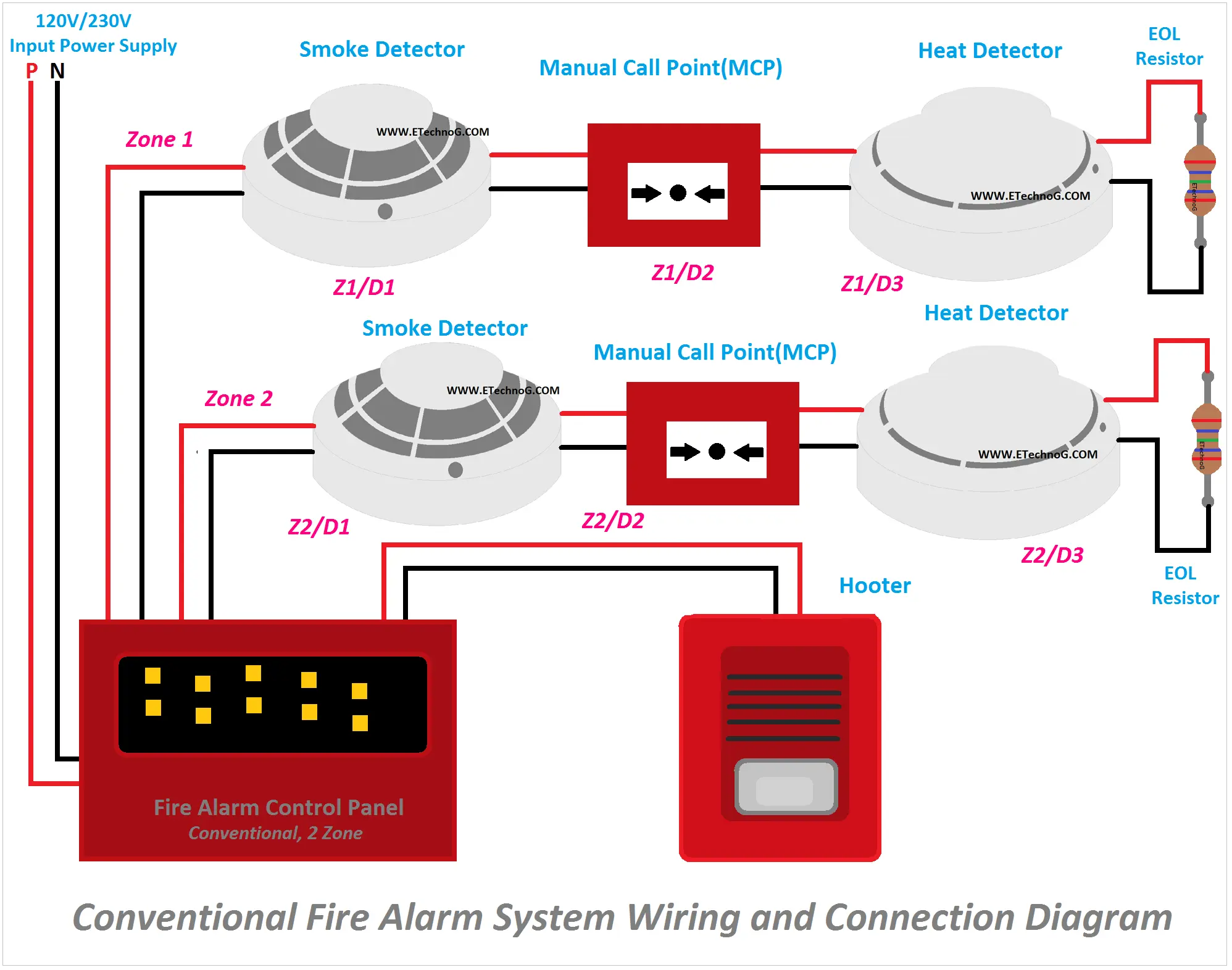
A conventional fire alarm system is designed around the principle of zoning. Instead of identifying the exact device that detects smoke or heat, the system divides a building into defined zones, each connected to the fire alarm control panel through a shared circuit. When a detector is triggered, the panel indicates which zone is affected, allowing occupants and responders to identify the general location of the incident.
This approach makes conventional fire detection systems particularly suitable for smaller structures where the distance between rooms is limited and pinpoint accuracy is not essential. In many Saudi facilities, this zoning method aligns well with architectural layouts and regulatory inspection processes, which prioritize clear area-based identification during emergencies.
The simplicity of this system is not a limitation but a design choice. By reducing system complexity, conventional setups minimize potential points of failure and make fault detection more straightforward during routine inspections or emergency scenarios. This is one of the reasons they continue to be approved and recommended in a wide range of Saudi building categories.
Core Components That Power the System
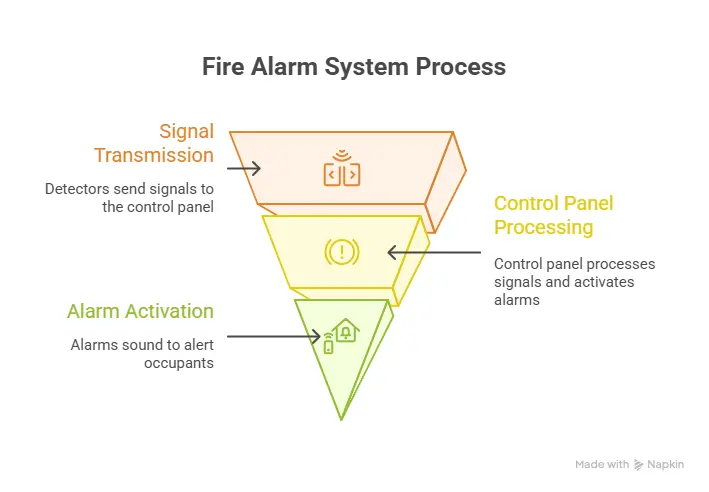
Every conventional fire alarm system relies on a carefully coordinated set of components working together to ensure fast detection and effective alerting. At the center of this setup is the fire alarm control panel, which acts as the system’s brain, receiving signals from detectors and activating alerts when required.
Smoke and heat detectors are distributed across zones based on risk assessment and space usage. These devices are calibrated to respond to specific environmental changes, providing reliable early fire detection in areas such as corridors, offices, electrical rooms, and storage spaces. Manual call points add an additional layer of control, allowing occupants to raise an alarm instantly if a fire is spotted before automatic detection occurs.
Once a signal reaches the control panel, emergency notification systems such as sounders and visual indicators are activated. These alerts are designed to be immediately noticeable, ensuring rapid evacuation and response. Power continuity is maintained through backup batteries, which keep the system operational during electrical outages, a critical requirement under Saudi Civil Defense guidelines.
Conventional vs. Addressable Systems: Setting the Context
One of the most common questions raised by facility owners is how a conventional fire alarm system compares to an addressable alternative. While both serve the same fundamental purpose, their operational philosophy differs significantly. Conventional systems report alarms by zone, while addressable systems identify the exact device that has been triggered.
In practice, this means conventional systems are often preferred for projects with tighter budgets, simpler layouts, or limited expansion plans. They offer dependable performance without the higher upfront costs associated with addressable panels and intelligent devices. In Saudi Arabia, this distinction is particularly relevant for small commercial fire alarm systems where regulatory compliance does not require device-level identification.
Addressable systems, on the other hand, are better suited to complex environments such as hospitals, airports, or high-rise developments. The key is not which system is superior in theory, but which system aligns best with the building’s scale, risk profile, and operational needs. This decision-making process is where professional consultation becomes essential.
Regulatory Framework in Saudi Arabia
Fire safety compliance is not optional in the Kingdom. Any conventional fire alarm system must meet the requirements set by Saudi Civil Defense, the Saudi Building Code, and applicable international standards such as those outlined by the National Fire Protection Association. These regulations define everything from detector placement to wiring methods and alarm audibility levels.
Authorities require that systems be installed using approved components and executed by certified contractors. Inspections are conducted at multiple stages, including design review, installation verification, and final commissioning. Failure to meet these standards can result in delayed occupancy permits, fines, or operational shutdowns.
DARS’s approach to fire alarm installation is shaped by deep familiarity with these regulatory pathways. By aligning system design and execution with local approval processes from the outset, unnecessary delays and compliance risks are significantly reduced. This regulatory awareness is a critical factor when selecting a contractor, especially in time-sensitive commercial projects.
Why Conventional Systems Fit the Saudi Market
The continued demand for conventional fire alarm systems in Saudi Arabia is not accidental. These systems align well with the Kingdom’s building typologies, regulatory expectations, and economic considerations. Many facilities prioritize reliable detection and straightforward maintenance over advanced analytics or digital integrations.
Another key factor is long-term operational sustainability. Conventional systems are easier to maintain, require less specialized training, and offer predictable performance over time. This makes fire alarm maintenance more manageable, particularly for facilities with limited technical staff or remote locations.
As Saudi Arabia advances toward smarter cities and enhanced safety standards, conventional systems continue to serve as a foundational layer of protection. They often coexist with other safety measures such as sprinklers, suppression systems, and risk management strategies, forming a cohesive building fire protection framework rather than operating in isolation.
Setting the Stage for Installation Decisions
Choosing a conventional fire alarm system is not simply about selecting equipment. It involves understanding zoning logic, regulatory obligations, building usage patterns, and future expansion plans. The early planning phase is where many projects succeed or fail, depending on how well these variables are aligned.
Professional site assessments help determine the optimal number of zones, detector types, and notification devices. These decisions directly influence system performance, approval timelines, and long-term reliability. When done correctly, the result is a fire detection system that functions quietly in the background yet responds decisively when needed.
Conventional Fire Alarm Installation in Saudi Arabia: What Really Happens on Site
The installation phase is where a conventional fire alarm system moves from theory into real-world protection. In Saudi Arabia, this stage is closely monitored because it directly affects approval from Saudi Civil Defense and the building’s readiness for occupancy. A well-installed system is not just functional, it is predictable, inspectable, and resilient under pressure.
Installation typically begins after a detailed site assessment that translates architectural drawings into practical fire detection zones. Each zone is planned to represent a logical area of the building, making it easier for responders to identify where an incident has occurred. This zoning logic must reflect actual usage patterns, not just floor plans, which is why experienced contractors place heavy emphasis on pre-installation surveys.
At DARS, this stage is treated as a strategic exercise rather than a technical formality. Decisions made here determine how reliable the system will be over its entire lifecycle, from daily operation to emergency response and long-term fire alarm maintenance.
Zoning Strategy and Detector Placement
Zoning is the backbone of any conventional fire alarm system. Each zone groups multiple devices under one circuit, meaning a single activation will signal that a fire-related event has occurred somewhere within that defined area. While this may sound simple, effective zoning requires careful judgment.
In Saudi commercial buildings, zones are often aligned with fire compartments, usage types, or evacuation routes. For example, office areas, storage rooms, and electrical spaces are typically separated to avoid confusion during an alarm event. Smoke and heat detectors are selected based on environmental conditions, ensuring accurate detection without unnecessary false alarms caused by dust, humidity, or temperature fluctuations.
The goal is early fire detection without operational disruption. When zoning and detector placement are done correctly, the system provides timely alerts while remaining quiet and stable during normal building activity.
Wiring, Panels, and System Integration
Once zoning is defined, physical installation begins with structured cabling and panel configuration. Conventional systems rely on radial wiring, where each zone connects directly to the fire alarm control panel. This approach simplifies troubleshooting and ensures that faults are isolated quickly during inspections.
The control panel is typically installed in an accessible, monitored location such as a security room or reception area. It must be clearly labeled, audibly distinct, and compliant with local standards. Integration with emergency notification systems, including sounders and visual alarms, follows strict audibility and visibility requirements to ensure alerts are effective across all occupied spaces.
In many Saudi facilities, conventional systems are also integrated with other building fire protection measures such as sprinklers or suppression systems. While the systems operate independently, coordinated signaling ensures a unified response during emergencies, reinforcing overall safety performance.
Testing, Commissioning, and Civil Defense Approval
Installation alone is not enough. A conventional fire alarm system must undergo comprehensive testing before it can be approved for use. This process verifies that every detector, call point, and alarm device responds correctly and communicates accurately with the control panel.
Commissioning is typically carried out in the presence of consultants or regulatory representatives. Each zone is tested individually to confirm correct identification, alarm activation, and fault reporting. Backup power systems are also tested to ensure continued operation during electrical failures, a critical requirement under Saudi regulations.
Civil Defense approval is granted only after all test results meet the required standards. This approval is not a one-time milestone but a confirmation that the system has been installed according to fire safety compliance expectations. Any deviation can result in rework, delays, or additional inspections, underscoring the importance of precision during installation.
The Role of Documentation and Handover
A frequently overlooked aspect of installation is documentation. Yet, for a conventional fire alarm system, accurate records are essential for both compliance and ongoing operation. As-built drawings, zone charts, test reports, and operation manuals form the backbone of future inspections and maintenance activities.
Building owners and facility managers rely on this documentation to understand how the system behaves during alarms or faults. Clear zone labeling and user training ensure that on-site teams can respond appropriately without hesitation. This transparency also simplifies future upgrades or expansions, as the system’s structure is clearly defined.
DARS emphasizes structured handover processes because a system that is not properly understood is more likely to be misused or neglected. Long-term reliability depends as much on knowledge transfer as it does on technical quality.
Fire Alarm Maintenance as a Strategic Requirement
After commissioning, the focus shifts to fire alarm maintenance. In Saudi Arabia, regular inspection and servicing are mandatory, not optional. Authorities require periodic testing to ensure systems remain functional and compliant throughout their operational life.
Maintenance activities include detector cleaning, panel diagnostics, battery testing, and verification of alarm audibility. Over time, environmental factors such as dust or humidity can affect detector sensitivity, making proactive servicing essential for maintaining early fire detection capabilities.
Annual maintenance contracts are a common approach, providing structured schedules and compliance documentation. From a risk management perspective, consistent maintenance reduces false alarms, prevents system failures, and protects building owners from regulatory penalties or operational disruptions.
Common Installation Challenges and How They Are Addressed
Despite careful planning, challenges can arise during installation. Poor coordination with other trades, late design changes, or underestimated building conditions can all impact system performance. In conventional systems, wiring faults or incorrect zoning can affect entire areas rather than individual devices.
Experienced contractors mitigate these risks through staged inspections and cross-discipline coordination. Early identification of issues prevents costly corrections later and ensures smoother approval processes. In the Saudi market, where project timelines are often tight, this proactive approach is a major differentiator.
Understanding these challenges helps building owners set realistic expectations and choose partners who prioritize quality over speed. The effectiveness of a conventional fire alarm system is ultimately shaped by how well these complexities are managed on site.
Preparing for Long-Term System Performance
Installation and maintenance form the operational core of any conventional fire alarm system, but long-term performance also depends on strategic foresight. Buildings evolve, usage patterns change, and regulatory standards continue to develop. Systems that are installed with flexibility in mind are better positioned to adapt without complete replacement.
Lifecycle Thinking and Long-Term Value of Conventional Systems
When evaluating a conventional fire alarm system, many building owners focus heavily on installation costs and approval timelines, yet the real value of the system is revealed over its full lifecycle. From initial commissioning to years of operation, performance stability and maintenance predictability often outweigh marginal savings achieved during procurement.
In Saudi Arabia, lifecycle planning is especially important because regulatory inspections are recurring, not one-off events. A system that performs reliably year after year reduces operational risk, avoids repeated corrective work, and supports uninterrupted business continuity. This is where conventional systems continue to prove their relevance, offering durability without unnecessary technical complexity.
At DARS, lifecycle value is viewed as part of building fire protection strategy rather than a standalone technical consideration. A well-maintained conventional system becomes a long-term safety asset rather than a recurring compliance burden.
Cost Factors and Budget Realities in the Saudi Market
Cost remains one of the strongest drivers behind the adoption of conventional fire alarm systems. Compared to addressable alternatives, conventional systems typically require lower upfront investment, simpler components, and less specialized configuration. This makes them particularly attractive for small to mid-sized commercial fire alarm systems across the Kingdom.
However, cost should never be assessed in isolation. Factors such as the number of zones, approved device brands, wiring complexity, and ongoing fire alarm maintenance contracts all influence total ownership cost. Import regulations, certification requirements, and local availability of spare parts also play a role in shaping budgets.
What experienced decision-makers recognize is that predictable costs often matter more than the lowest initial quote. A stable system with consistent servicing requirements supports better financial planning and fewer operational surprises over time.
Addressing Common Misconceptions About Conventional Systems
A frequent misconception is that conventional fire alarm systems are outdated or unsuitable for modern buildings. In reality, their design philosophy is intentionally straightforward, prioritizing clarity and reliability over advanced data granularity. For many building types, this simplicity is a strength rather than a weakness.
Another misunderstanding is that conventional systems are harder to manage. In practice, their zone-based alerts make them easier for non-technical staff to interpret during emergencies. When paired with proper documentation and training, these systems reduce confusion and support faster response times.
Finally, some assume that conventional systems cannot coexist with modern safety infrastructure. On the contrary, they integrate effectively with sprinklers, suppression systems, and broader emergency notification systems, forming a cohesive safety framework when properly designed.
Regulatory Trends and the Vision 2030 Context
Saudi Arabia’s regulatory environment continues to evolve alongside Vision 2030 objectives, with increased emphasis on public safety, risk reduction, and operational accountability. Fire detection systems are a critical part of this shift, as authorities seek consistent enforcement across both new developments and existing facilities.
Conventional fire alarm systems remain firmly embedded within approved regulatory pathways. As long as they meet Saudi Civil Defense requirements and align with recognized standards such as those outlined by the National Fire Protection Association, they continue to receive approval across a wide range of projects. This regulatory stability provides reassurance to investors and facility managers alike.
By staying aligned with these frameworks, building owners ensure that their systems remain compliant even as inspection processes become more structured and data-driven in the coming years.
When Upgrading or Transitioning Makes Sense
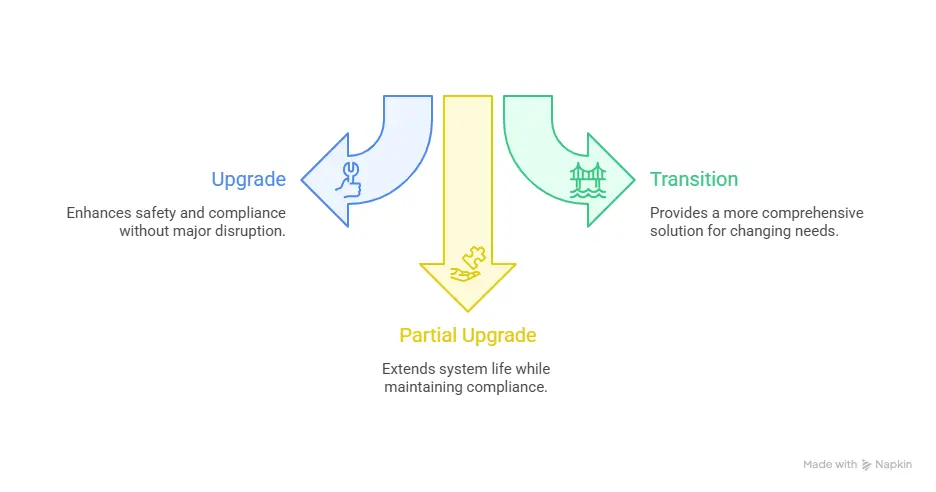
While conventional systems are highly effective in their intended scope, there are scenarios where upgrades or transitions may become necessary. Building expansions, changes in occupancy type, or increased risk profiles can all justify reconsidering system architecture.
The key is timing. Proactive evaluations allow owners to plan upgrades strategically rather than reacting to regulatory pressure or system limitations. In some cases, partial upgrades or hybrid approaches can extend system life while maintaining compliance.
DARS often supports clients through these transition decisions, ensuring that upgrades enhance safety without disrupting operations or invalidating existing approvals.
Choosing the Right Partner for Long-Term Safety
Selecting a contractor for a conventional fire alarm system is not just a procurement decision. It is a long-term partnership that influences compliance, reliability, and operational confidence. Experience with local regulations, certified components, and inspection protocols is essential in the Saudi market.
Beyond technical capability, transparency and documentation discipline are what sustain system performance over time. Clear communication, structured maintenance plans, and proactive compliance management separate reliable systems from problematic ones.
For building owners, working with a partner that understands both the technical and regulatory landscape ensures that fire detection systems serve their intended purpose without becoming an operational liability.
Conclusion: A System Built on Practical Safety
A conventional fire alarm system continues to hold a vital place in Saudi Arabia’s fire safety ecosystem. Its zone-based design, regulatory compatibility, and predictable performance make it a practical solution for many buildings seeking reliable early fire detection without unnecessary complexity.
When designed, installed, and maintained correctly, these systems support fire safety compliance while protecting lives and property. Their enduring relevance lies not in technological trends, but in their ability to meet real-world needs consistently and effectively.