

Fire Protection in Saudi Arabia: The Strategic Foundation of Safer Buildings
Understanding Fire Protection Beyond Equipment
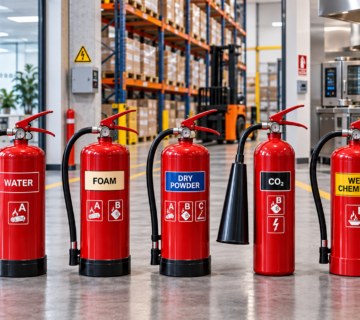
Fire protection is often misunderstood as a collection of standalone tools such as extinguishers or alarms. In reality, it is a complete safety ecosystem designed to protect lives, assets, and operational continuity. In markets like Saudi Arabia, where urban growth is accelerating and projects are scaling vertically and industrially, fire protection has become a strategic requirement rather than a regulatory formality.
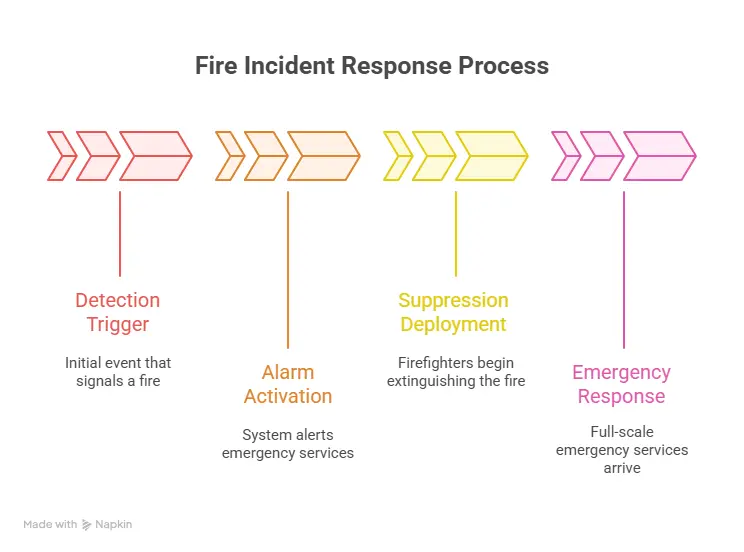
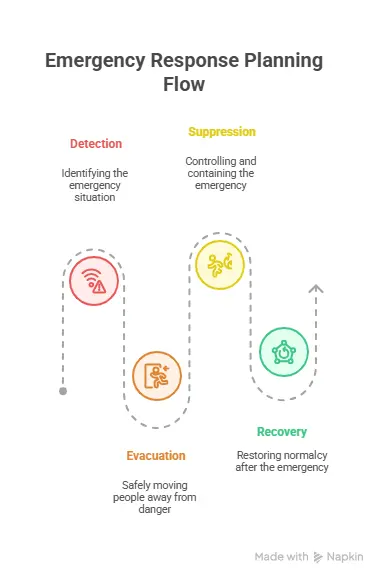
At its core, fire protection integrates prevention, detection, suppression, and response planning into one coordinated framework. This integration ensures that risks are identified early, incidents are controlled quickly, and damage is limited to the smallest possible scope. For businesses operating under Saudi Vision 2030, effective fire protection is closely tied to sustainability, resilience, and long-term viability.
As Saudi cities continue to expand with high-rise developments, logistics hubs, and industrial zones, the role of professional fire protection systems becomes central to how safely these environments function.
The Role of Fire Protection in a Rapidly Urbanising Saudi Arabia
Saudi Arabia’s construction boom has reshaped the safety landscape. Large-scale developments in Riyadh, Jeddah, and emerging economic cities have introduced complex building typologies that demand advanced fire protection planning. These environments include mixed-use towers, data centres, hospitals, factories, and mega malls, each with distinct fire risk profiles.
Fire protection supports these developments by aligning safety design with local enforcement requirements such as the Saudi Building Code and Saudi Civil Defense regulations. More importantly, it ensures that buildings remain operational after incidents, preventing costly shutdowns and reputational damage.
According to guidance highlighted by the Saudi Building Code authority and reinforced through updates aligned with international benchmarks like the NFPA, fire protection is now expected to be proactive, integrated, and continuously maintained. This shift places responsibility not only on design but also on long-term system performance and monitoring.
Core Pillars of Modern Fire Protection
Prevention as the First Line of Defence
Fire protection begins long before any alarm sounds. Prevention focuses on reducing ignition sources, managing combustible materials, and designing spaces that limit fire spread. This includes layout planning, electrical load management, and material selection.
In Saudi commercial and industrial buildings, prevention is reinforced through strict adherence to building fire codes and documented fire risk assessment processes. These assessments evaluate potential hazards and recommend controls that align with operational realities. Prevention reduces incident probability, which is always more cost-effective than post-incident recovery.
Detection That Enables Early Intervention
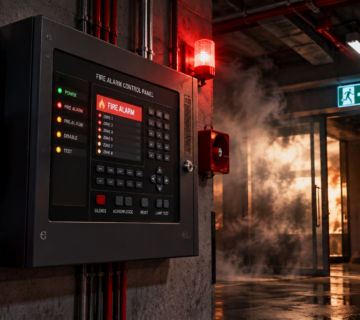
Fire detection solutions play a critical role in identifying threats at the earliest possible stage. Smoke detectors, heat sensors, flame detectors, and addressable fire alarm systems are designed to trigger alerts before conditions escalate.
Modern facilities increasingly rely on intelligent detection systems capable of pinpointing exact locations and transmitting alerts to central monitoring platforms. In large complexes, this precision can mean the difference between a controlled incident and a large-scale emergency.
Detection systems also form the backbone of emergency response planning, as they initiate evacuation protocols and activate suppression systems automatically.
Suppression Systems That Control the Threat
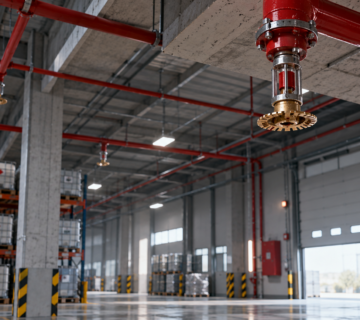
Once a fire is detected, fire suppression systems act to contain or extinguish it. These systems range from traditional sprinklers to advanced gas-based and water mist solutions used in data centres, control rooms, and industrial environments.
Saudi regulations require suppression systems to be selected based on building use, occupancy type, and risk level. For example, warehouses and factories often require different suppression strategies compared to residential towers or healthcare facilities.
Active and Passive Fire Protection: A Complementary Approach
Active Fire Protection Systems
Active systems respond dynamically when a fire occurs. These include fire alarm systems, sprinklers, hydrants, and clean agent suppression technologies. Their effectiveness depends on rapid activation and proper maintenance.
In Saudi Arabia, active systems must be approved by the Saudi Civil Defense and installed according to strict technical standards. Inspections ensure these systems remain operational throughout the building’s lifecycle.
Passive Fire Protection Measures
Passive fire protection works silently in the background. Fire-rated walls, doors, floors, and firestopping systems are designed to contain fire and smoke, slowing spread and protecting escape routes.
Passive fire protection is particularly important in high-rise buildings, where evacuation time is longer and compartmentation is essential. Without passive measures, even the most advanced active systems may struggle to control fire progression.
Fire Safety Compliance as a Business Imperative
Fire safety compliance is not only about passing inspections. It is about ensuring continuous readiness. In Saudi Arabia, compliance is enforced through certification, inspections, and periodic audits conducted by the Saudi Civil Defense.
Facilities that fail to comply face serious consequences, including fines, project delays, and operational suspension. More critically, non-compliance exposes occupants and assets to unacceptable risk.
Organisations that prioritise fire safety compliance often benefit from smoother approvals, stronger stakeholder trust, and improved insurance positioning. Compliance also reflects a commitment to life safety standards that extend beyond minimum legal obligations.
Aligning Fire Protection with International Life Safety Standards
Saudi regulations increasingly align with international frameworks such as NFPA standards, adapting them to local conditions. This alignment ensures consistency, reliability, and global best practices across projects.
Life safety standards focus on occupant protection, safe evacuation, and system reliability. They influence everything from exit design to alarm audibility and emergency lighting performance.
By aligning fire protection systems with these standards, facilities achieve a higher level of safety while remaining compliant with local enforcement requirements.
Technology’s Growing Role in Fire Protection
The fire protection industry is evolving rapidly with the integration of smart technologies. IoT-enabled panels, real-time monitoring, and predictive analytics are becoming more common, especially in industrial and high-value facilities.
These technologies support faster decision-making and allow maintenance teams to address issues before failures occur. They also generate valuable data that supports compliance documentation and long-term planning.
Fire Protection as an Ongoing Process, Not a One-Time Installation
A common misconception is that fire protection ends once systems are installed and approved. In reality, system performance depends heavily on inspection, testing, and maintenance.
Routine checks, documented servicing, and staff awareness ensure systems perform when needed. This operational mindset transforms fire protection from a compliance task into a risk management strategy.
Organisations that treat fire protection as an ongoing process are better positioned to adapt to regulatory updates and evolving risk profiles.
Fire Protection Compliance in Saudi Arabia: From Regulation to Execution
Navigating Saudi Civil Defense Requirements with Clarity
After understanding fire protection as a strategic system rather than isolated equipment, the next critical layer is compliance. In Saudi Arabia, fire protection compliance is governed primarily by the Saudi Civil Defense, operating under the Saudi Building Code, with SBC 801 forming the backbone of fire and life safety regulation.
Compliance is not optional, nor is it flexible. It is a structured, enforceable process designed to ensure that every occupied building meets minimum life safety standards. What distinguishes the Saudi market is the level of enforcement. Fire protection systems are not only reviewed during construction but continuously monitored throughout the building’s operational life.
This makes compliance an ongoing responsibility, not a milestone that can be checked off and forgotten.
The Fire Safety Certification Journey
From Design Review to Final Approval
The certification process begins at the design stage. Fire protection drawings and system layouts must be submitted for review and approval before any installation begins. These submissions are evaluated to ensure alignment with building fire codes, occupancy type, and risk classification.
Once approved, installation must strictly follow the reviewed designs using Saudi Civil Defense–approved equipment. Any deviation, even if technically sound, can result in rejection during inspection. This is where many projects face delays, not because systems are inadequate, but because documentation and execution are misaligned.
Final approval is only granted after on-site inspections verify that systems are installed, tested, and fully operational. Only then is the Fire Safety Certificate issued, allowing the building to be occupied legally.
Renewal and Continuous Compliance
Fire protection certification in Saudi Arabia is not permanent. Certificates must be renewed periodically, with renewal dependent on maintenance records, testing reports, and system condition.
This requirement reinforces the importance of structured maintenance programs. Fire alarm systems, fire suppression systems, and passive fire protection elements are all subject to review. Missing records or delayed servicing can trigger non-compliance, even if systems are physically intact.
For organisations, this means fire protection must be embedded into operational planning rather than treated as a one-time capital expense.
Building-Specific Fire Protection Obligations
High-Rise and Mixed-Use Developments
High-rise buildings represent one of the most regulated categories under Saudi fire protection standards. Their height, occupancy density, and evacuation complexity introduce risks that demand advanced fire protection systems.
These buildings typically require addressable fire alarm systems, pressurised staircases, smoke management systems, and integrated emergency response planning. Passive fire protection plays a critical role here, ensuring fire-rated compartments maintain structural integrity long enough for safe evacuation.
Fire risk assessment for high-rise projects is particularly rigorous, as a single failure point can compromise multiple floors simultaneously.
Industrial and Logistics Facilities
Industrial sites and warehouses face a different risk profile. The presence of flammable materials, machinery, and high electrical loads increases fire probability and severity.
Saudi regulations often mandate external hydrant networks, zoned suppression systems, and enhanced detection solutions for these environments. In logistics facilities, fire protection must also consider operational continuity, as downtime can disrupt supply chains at scale.
Here, fire protection systems are closely tied to business resilience, not just safety compliance.
Fire Risk Assessment as a Decision-Making Tool
Fire risk assessment is not merely a regulatory formality. It is the analytical foundation upon which effective fire protection strategies are built. In the Saudi context, risk assessments evaluate ignition sources, fuel loads, occupancy behaviour, and evacuation complexity.
These assessments inform system selection, zoning strategies, and response planning. Without them, fire protection systems risk being either over-engineered or dangerously insufficient.
Organisations that invest in thorough fire risk assessment benefit from clearer system design, smoother approvals, and stronger alignment between safety measures and real operational risks.
Maintenance, Testing, and Operational Readiness
Fire protection systems are only as reliable as their maintenance regimes. Saudi Civil Defense places strong emphasis on inspection, testing, and maintenance schedules, often requiring documented evidence during audits.
Fire alarm systems must be tested for audibility and signal accuracy. Suppression systems require pressure testing, valve inspections, and functional checks. Passive fire protection elements must be visually inspected to ensure penetrations and seals remain intact.
Operational readiness also extends to people. Staff awareness and emergency response planning are essential components of compliance, ensuring occupants know how to act when systems activate.
Consequences of Non-Compliance
Non-compliance carries tangible risks. Financial penalties, project shutdowns, and delayed certifications are immediate consequences. However, the long-term impact is often more severe.
A non-compliant facility faces higher insurance premiums, reputational damage, and increased liability exposure. In the event of an incident, lack of compliance can shift legal responsibility entirely onto the building owner or operator.
In a market where regulatory oversight continues to strengthen, proactive fire safety compliance is a strategic safeguard rather than a reactive obligation.
Integrating Compliance into Business Operations
The most resilient organisations integrate fire protection compliance into their operational frameworks. This includes assigning responsibility, maintaining digital records, and aligning maintenance schedules with regulatory timelines.
Technology increasingly supports this integration. Digital platforms track inspections, generate alerts for upcoming renewals, and store compliance documentation securely. This reduces administrative risk and ensures readiness during audits.
When compliance becomes part of daily operations, fire protection shifts from a cost centre to a value-preserving system.
Preparing for Evolving Standards
Saudi fire protection regulations continue to evolve, reflecting global trends and local needs. Updates aligned with international life safety standards and emerging technologies are shaping how future projects will be approved and operated.
Organisations that monitor regulatory updates and adapt early face fewer disruptions. Those that delay often find themselves retrofitting systems under pressure, at significantly higher cost.
Future-Proofing Fire Protection in Saudi Arabia
From Compliance to Strategic Resilience
By this stage, fire protection is no longer viewed as a regulatory checkbox. It has evolved into a strategic layer of business resilience, particularly in Saudi Arabia’s fast-moving construction and industrial landscape. As regulations mature and enforcement tightens, organisations are expected to move beyond minimum compliance and adopt forward-looking fire protection strategies.
This shift aligns closely with Saudi Vision 2030, where safety, sustainability, and operational continuity are core pillars of national development. Fire protection now supports not only life safety but also economic stability, investor confidence, and long-term asset value.
The Rise of Smart Fire Protection Systems
Technology is reshaping how fire protection systems operate and how risks are managed. Traditional standalone systems are being replaced by connected platforms capable of real-time monitoring and predictive analysis.
Smart fire alarm systems can now identify fault patterns, anticipate component failure, and notify maintenance teams before performance is compromised. In industrial and commercial facilities, this level of visibility significantly reduces downtime and compliance risk.
Industry insights shared by organisations such as the International Fire and Safety Journal highlight how Saudi Arabia is accelerating adoption of intelligent fire detection solutions across giga-projects and critical infrastructure, reflecting a broader global trend toward data-driven safety systems.
Sustainability and Fire Protection Are Now Interconnected
Sustainability is no longer separate from fire protection design. Material selection, system efficiency, and lifecycle impact are now part of the conversation, especially in projects seeking green building certifications.
Passive fire protection solutions such as intumescent coatings and fire-rated assemblies are gaining traction due to their durability and low operational footprint. These materials enhance compartmentation while supporting sustainability goals by reducing reliance on water- or chemical-heavy suppression systems.
Specialist analysis published by Atlantis Contracting demonstrates how passive fire protection contributes to both building safety and environmental performance in the Saudi market, particularly in large-scale developments.
Designing Fire Protection for Vision 2030 Projects
Mega and giga projects demand a different approach to fire protection. Scale, complexity, and long-term operation require systems that are adaptable and resilient.
In these environments, fire protection systems must integrate seamlessly with building management systems, security platforms, and emergency response frameworks. This integration ensures that incidents are managed holistically rather than through isolated responses.
Saudi authorities continue to align local requirements with international benchmarks such as NFPA standards, reinforcing consistency across projects while maintaining strict local oversight through Saudi Civil Defense enforcement.
Operational Excellence Through Proactive Planning
Fire protection excellence is achieved through planning, not reaction. Organisations that perform regular fire risk assessment and scenario testing are better prepared to respond effectively when incidents occur.
Emergency response planning plays a central role here. Clear evacuation routes, trained personnel, and rehearsed procedures ensure that systems and people work together. Without this alignment, even advanced fire suppression systems may fail to deliver intended outcomes.
Guidance from resources such as Risks Control emphasises that operational readiness is as critical as system installation, particularly in high-occupancy and high-risk environments.
The Business Case for Long-Term Fire Protection Investment
Investing in fire protection delivers returns that extend far beyond compliance. Reduced insurance premiums, lower incident-related losses, and uninterrupted operations all contribute to measurable business value.
From a marketing and brand perspective, visible commitment to life safety standards strengthens stakeholder trust. Clients, partners, and employees increasingly evaluate organisations based on how seriously they treat safety and risk management.
In Saudi Arabia’s competitive project environment, strong fire protection strategies often become differentiators during tenders and partnerships.
The Role of Experienced Fire Protection Contractors
System performance depends not only on equipment quality but also on execution. Experienced contractors bring value through regulatory knowledge, coordination, and long-term support.
DARS approaches fire protection as an applied and developed system, not a theoretical design exercise. This contractor-led perspective ensures that systems are practical, compliant, and maintainable across their lifecycle. Their work across diverse sectors demonstrates how structured implementation supports both safety outcomes and operational efficiency.
For organisations evaluating service providers, understanding how contractors manage compliance, maintenance, and system integration is critical. Resources available through DARS’s services and projects sections offer insight into applied fire protection across real environments.
Education, Awareness, and Continuous Improvement
Fire protection effectiveness depends on people as much as systems. Continuous education ensures that facility managers, safety officers, and occupants understand their roles during emergencies.
Saudi Civil Defense training programmes reinforce this culture, but organisations must also take ownership of internal awareness. Regular drills, updated procedures, and clear communication reduce confusion and panic during real incidents.
This human layer completes the fire protection framework, linking technology, compliance, and behaviour into one cohesive system.
Looking Ahead: Fire Protection as a Living System
Fire protection will continue to evolve as cities grow, technologies mature, and risks change. Regulations will tighten, systems will become smarter, and expectations will rise.
Organisations that succeed will be those that treat fire protection as a living system, continuously reviewed, maintained, and improved. This mindset supports compliance today while preparing for tomorrow’s challenges.
Insights shared by platforms such as Fiffco and the official Saudi Building Code portal reinforce that future readiness depends on adaptability and proactive governance rather than reactive upgrades.
Final Reflection
Fire protection in Saudi Arabia sits at the intersection of regulation, technology, and responsibility. When approached strategically, it protects lives, preserves assets, and enables sustainable growth.
Across all three parts of this series, one principle remains clear. Effective fire protection is not about meeting minimum requirements. It is about building environments where safety supports progress, resilience supports ambition, and compliance supports confidence.
fire protection strategies that safeguard lives, ensure compliance in Saudi Arabia, and future-proof buildings through smart, reliable safety systems