
Pass Fire Extinguisher: The Practical Guide Every Workplace in Saudi Arabia Needs
Fire safety conversations often focus on equipment, regulations, and compliance checklists. Yet in real emergencies, outcomes are decided in seconds by people who know exactly what to do. This is where the concept of pass fire extinguisher becomes critical. It is not a product, a brand, or a regulation. It is a life-saving action framework that determines whether a small incident is controlled or turns into a costly disaster.
This article is written from the perspective of an experienced marketer at DARS, addressing business owners, facility managers, and safety officers who operate in Saudi Arabia’s fast-growing urban and industrial environment. The goal is simple: to explain what “pass fire extinguisher” truly means, why it matters, and how it connects directly to compliance, safety culture, and operational resilience.
Understanding What “Pass Fire Extinguisher” Really Means
At first glance, the phrase “pass fire extinguisher” can sound misleading. Some interpret it as physically handing an extinguisher to someone else. In reality, it refers to the globally accepted PASS technique, a structured method for using a fire extinguisher correctly during early-stage fires.
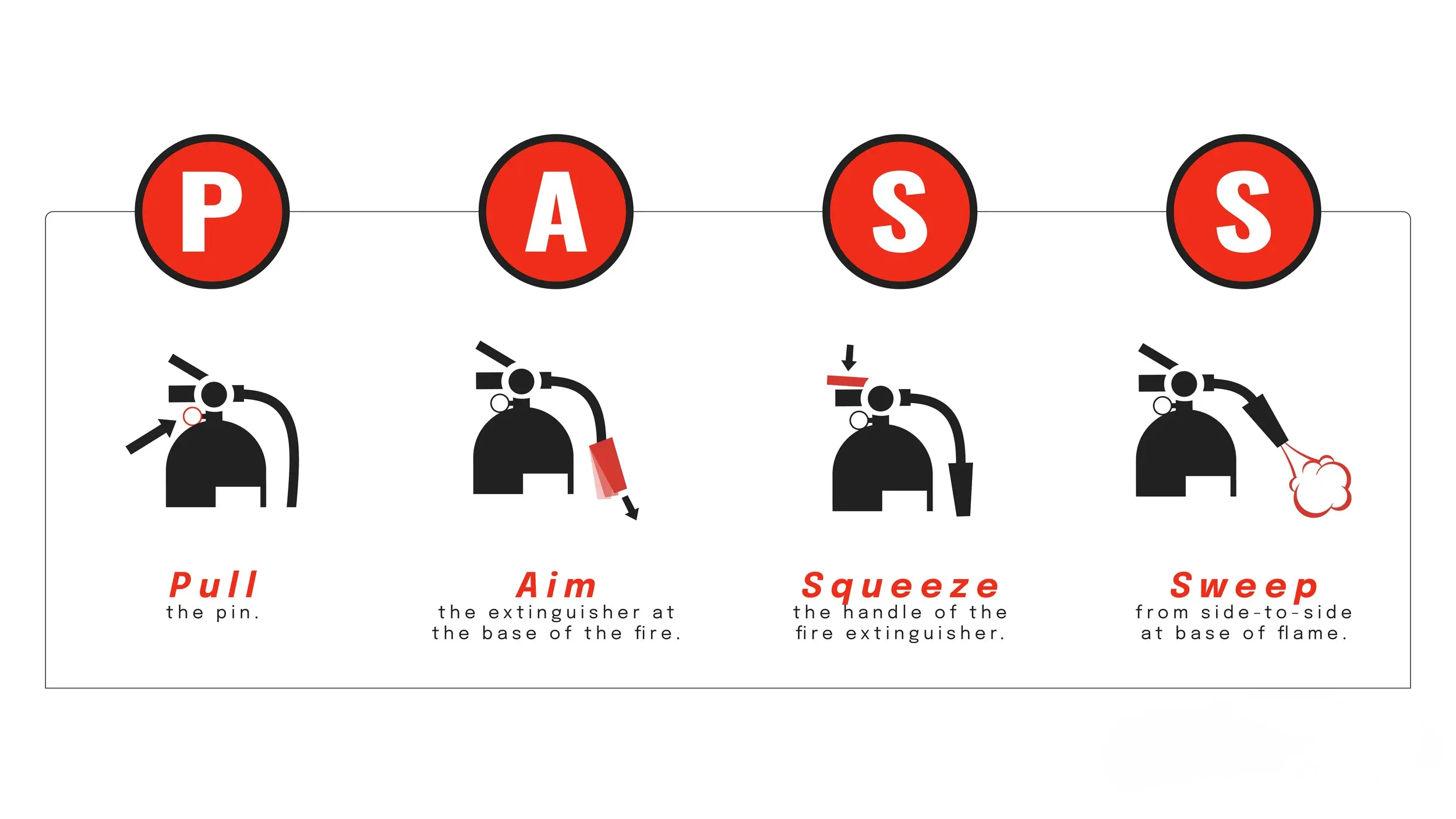
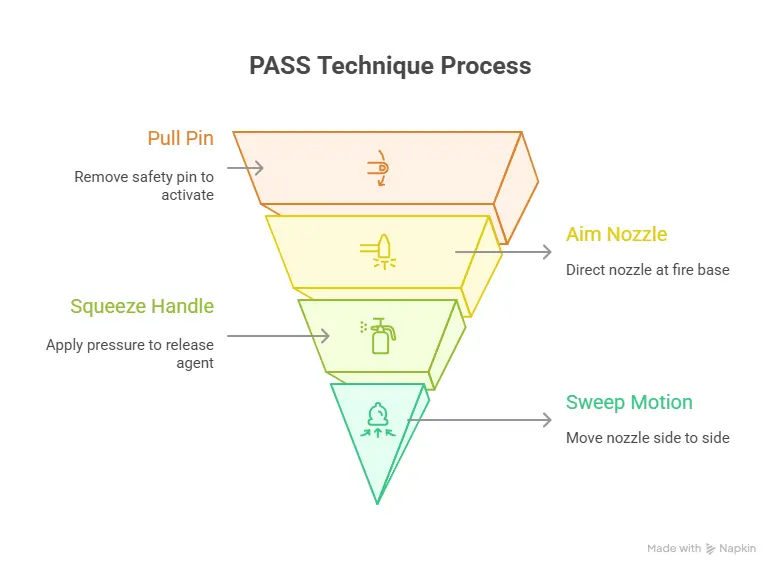
PASS stands for Pull, Aim, Squeeze, and Sweep. These actions are not theoretical. They are the same steps taught in Saudi Civil Defense training programs and referenced across international fire safety standards. When applied correctly, they allow trained individuals to suppress small fires before they escalate beyond control.
From a workplace fire safety perspective, understanding this method is not optional. It is part of practical fire safety compliance and a direct requirement in many inspections and audits conducted across the Kingdom.
Why the PASS Method Matters More Than the Equipment Itself
Fire extinguishers are widely available across offices, factories, residential towers, and retail spaces in Saudi Arabia. However, fire extinguisher inspection data consistently shows that equipment alone does not guarantee safety. Improper use, hesitation, or panic can render even a perfectly maintained extinguisher ineffective.
The PASS method exists to eliminate guesswork during high-stress situations. It simplifies action into a sequence that can be recalled under pressure. Studies and training reports from Civil Defense-aligned programs show that individuals trained in PASS respond faster, maintain safer distances, and disengage earlier when conditions worsen.
This approach aligns closely with fire risk assessment principles, where human response is evaluated alongside equipment placement and system design. In other words, PASS bridges the gap between tools and behavior.
PASS Fire Extinguisher Use Within Saudi Fire Safety Standards
Saudi Arabia’s fire safety framework is built on a combination of local and international references. The Saudi Building Code, Civil Defense requirements, and adapted NFPA guidelines all emphasize correct usage alongside availability.
According to guidance published by Saudi Civil Defense–aligned safety authorities, extinguishers must not only be installed correctly but supported by documented training and drills. This is where the pass fire extinguisher concept becomes enforceable rather than theoretical.
Fire safety regulations increasingly require proof that staff understand extinguisher operation. Inspectors may ask direct questions during audits, and failure to demonstrate knowledge can result in penalties or corrective notices. This shifts PASS from a “nice-to-know” concept into a compliance requirement.
The Role of PASS in Workplace Fire Safety Culture
A strong safety culture is not built on posters or signage alone. It is built through repeatable actions that people trust. PASS offers a shared language that aligns teams during emergencies.
In environments such as offices, warehouses, and mixed-use facilities, trained individuals often hesitate because they fear making mistakes. PASS reduces this fear by providing a clear mental checklist. This clarity directly supports workplace fire safety objectives, especially in environments with high staff turnover or mixed experience levels.
Organizations that integrate PASS into onboarding, drills, and refresher sessions consistently report better engagement during fire safety training. This is supported by insights shared in regional safety blogs such as Arabian Tool’s fire safety guidance, which emphasize behavioral readiness alongside equipment standards.
Fire Extinguisher Maintenance and the Limits of PASS
It is important to clarify a critical point early: PASS does not compensate for poor equipment condition. Even perfect technique fails if extinguishers are expired, depressurized, or incorrectly rated.
Regular fire extinguisher maintenance ensures that when PASS is applied, the equipment responds as expected. This includes monthly visual checks and annual professional servicing conducted by qualified contractors. Without this foundation, training loses its effectiveness and exposes organizations to unnecessary risk.
DARS frequently highlights this relationship between training and maintenance when supporting clients through compliance audits and safety upgrades. PASS is the human side of the equation, while maintenance ensures the technical side performs reliably.
PASS and Fire Protection Systems: Where Manual Action Fits
Modern buildings rely on layered fire protection systems, including alarms, suppression systems, and evacuation routes. PASS sits within this ecosystem as a first-response action for early-stage incidents.
It is not intended to replace automated systems or professional firefighting response. Instead, it buys time. It prevents escalation. It protects evacuation paths. In many cases, it prevents business interruption altogether.
Understanding this role helps organizations avoid misuse. PASS should only be applied when conditions are safe, exits are clear, and the fire remains manageable. Training programs in Saudi Arabia emphasize this decision-making process, reinforcing when to act and when to withdraw.
Certification, Training, and Compliance Expectations in KSA
In Saudi Arabia, fire extinguisher certification and training are increasingly formalized. Employers are expected to provide structured programs that include practical demonstrations, not just theoretical briefings.
Civil Defense-approved courses often incorporate live or simulated PASS demonstrations. These sessions are designed to build muscle memory and reduce hesitation. Businesses that neglect this step risk failing compliance checks tied to fire safety compliance obligations.
Authoritative safety guidance published by Saudi government safety portals reinforces the importance of practical readiness in both residential and commercial settings.
Common Misunderstandings Around PASS Fire Extinguisher Use
One recurring issue observed across facilities is the belief that knowing PASS means one must always intervene. This is incorrect and potentially dangerous. PASS is a tool, not an obligation.
Training emphasizes distance control, awareness of smoke behavior, and continuous exit access. When these conditions are not met, evacuation takes priority. Understanding this balance is part of responsible fire safety behavior and is reflected in modern fire safety standards applied across Saudi developments.
This distinction becomes even more important in high-density urban environments, where delayed evacuation can have severe consequences.
How DARS Approaches PASS Within a Broader Safety Strategy
At DARS, PASS is not treated as an isolated concept. It is integrated into a wider framework that includes risk assessment, equipment planning, training, and ongoing support.
Clients are guided to understand not only how to use extinguishers, but why specific types are installed, where they are placed, and how they align with Civil Defense approvals. This holistic approach ensures that when PASS is applied, it is effective, compliant, and safe.
Applying the PASS Fire Extinguisher Method in Real Workplace Scenarios
Understanding the theory behind pass fire extinguisher use is only half the equation. The real challenge begins when smoke appears, alarms sound, and people are forced to react under pressure. This is where many safety plans fail, not because equipment is missing, but because application breaks down in real-world conditions.
Early-Stage Fires and the Critical Window for Action
Most workplace fires do not start as catastrophic events. They begin small, often unnoticed, and grow rapidly within minutes. Electrical faults, overheated equipment, or minor fuel leaks are common triggers in offices, warehouses, and mixed-use buildings across Saudi Arabia.
The PASS method is designed specifically for this early stage. When applied within the first moments, it can interrupt the fire triangle before conditions become uncontrollable. This timing element is a key focus of modern fire safety regulations, which emphasize early intervention paired with immediate evacuation readiness.
Fire safety audits conducted in major Saudi cities repeatedly highlight that delays of even thirty seconds can render manual suppression ineffective. PASS, when practiced, reduces hesitation and shortens response time.
Matching PASS to the Right Fire Extinguisher Type
One of the most overlooked aspects of pass fire extinguisher training is extinguisher selection. PASS assumes the correct extinguisher is already in hand. Using the wrong type can worsen the situation and violate fire safety compliance requirements.
In Saudi workplaces, the most common extinguisher types address Class A, B, and C fires. Offices and residential towers typically rely on dry powder units, while data rooms and electrical areas may use CO₂ extinguishers. PASS remains the same, but the outcome depends entirely on compatibility.
Civil Defense guidance stresses that staff must understand not only how to use extinguishers, but which fires they should never attempt to suppress. This understanding forms a core part of effective fire extinguisher inspection and training programs.
Authoritative guidance on extinguisher classification and use is outlined clearly by NFPA-aligned safety resources, which are widely referenced in Saudi compliance frameworks.
Distance, Positioning, and the Psychology of Control
PASS is often taught as a mechanical sequence, yet its effectiveness depends heavily on positioning and situational awareness. Standing too close, aiming too high, or losing sight of exit paths are common errors observed during drills.
Experienced trainers emphasize maintaining a safe distance while advancing only if the fire responds positively. This approach supports both personal safety and workplace fire safety objectives, ensuring that intervention does not trap the responder.
Psychologically, PASS gives individuals a sense of control in chaotic moments. This perceived control reduces panic and improves decision-making, provided training reinforces the importance of withdrawal when conditions change. Fire safety standards consistently stress that no extinguisher use should compromise safe evacuation.
Integrating PASS into Fire Risk Assessment Processes
Effective fire risk assessment goes beyond identifying hazards and installing equipment. It evaluates how people interact with those systems during emergencies. PASS plays a direct role in this evaluation.
Risk assessors increasingly look at training records, drill frequency, and staff confidence levels when reviewing sites. The presence of extinguishers alone no longer satisfies inspection criteria. Inspectors want evidence that occupants understand their role during early-stage incidents.
This shift reflects a broader trend in fire safety regulations toward behavior-based compliance. Organizations that treat PASS as part of their risk assessment strategy are better positioned to meet regulatory expectations and reduce incident severity.
Training Programs That Actually Work Under Pressure
Many organizations conduct fire safety training as a checkbox exercise. Slides are shown, attendance is recorded, and the session ends without meaningful engagement. Unfortunately, this approach rarely translates into effective action during real incidents.
Successful programs focus on repetition and realism. Practical demonstrations, scenario-based discussions, and refresher sessions help embed the PASS method into long-term memory. This aligns with insights shared by regional safety educators such as LifeCo’s Saudi compliance resources, which stress experiential learning.
Training also needs to reflect the specific risks of each site. A manufacturing facility requires a different focus than a corporate office. Tailoring PASS instruction to actual fire risks improves relevance and retention.
Documentation, Audits, and Fire Safety Compliance
From a compliance perspective, PASS training must be documented. Attendance records, drill schedules, and refresher timelines are increasingly reviewed during Civil Defense audits.
Fire safety compliance in Saudi Arabia is not static. As urban density increases, enforcement becomes stricter. Organizations that cannot demonstrate structured training and regular fire extinguisher maintenance often face corrective actions or fines.
Digital tracking systems are now commonly used to log inspections, training sessions, and certification updates. These tools help organizations maintain readiness while simplifying audit preparation.
Guidance on national safety obligations can be found through official Saudi safety portals such as the Civil Defense safety instruction platform.
PASS Within Complex Fire Protection Systems
In modern buildings, PASS does not operate in isolation. It complements alarms, sprinklers, and emergency communication systems. Understanding this relationship prevents misuse and reinforces correct priorities during emergencies.
For example, if sprinklers are active and smoke density increases rapidly, PASS may no longer be appropriate. Training must clarify that manual suppression is secondary to life safety once conditions escalate.
Fire protection systems are designed with redundancy, but human judgment remains a critical variable. PASS training improves this judgment by setting clear boundaries for action.
Lessons Learned from Common Failures
Post-incident reviews frequently reveal similar patterns. Extinguishers were present, alarms worked, yet intervention failed due to hesitation or incorrect application. These failures highlight gaps in training rather than equipment.
Organizations that review incidents openly and adjust training accordingly see measurable improvements in response quality. PASS becomes more than a technique; it becomes part of organizational learning.
DARS often supports clients in reviewing such gaps, aligning training content with real operational risks rather than generic scenarios.
Preparing for Advanced Application and Continuous Improvement
By this stage, it becomes clear that pass fire extinguisher knowledge must evolve beyond basic awareness. It must be reinforced, contextualized, and integrated into broader safety management systems.
Elevating PASS from Training to Strategy in Fire Safety Management
By this point, the concept of pass fire extinguisher is no longer just a method to remember during drills. It becomes clear that PASS is a decision framework that sits at the intersection of people, systems, and leadership. Organizations that treat it this way move beyond basic compliance and into proactive fire safety management.
From Individual Skill to Organizational Readiness
Most safety programs stop at individual capability. A few trained employees know how to use extinguishers, and the responsibility ends there. High-performing organizations take a different approach by viewing PASS as an organizational competency.
This means ensuring that knowledge is distributed, refreshed, and supported by systems that make correct action easier. Clear signage, logical extinguisher placement, and realistic drills all reinforce PASS behavior without relying on memory alone.
This approach aligns with modern interpretations of fire safety standards, which increasingly focus on systemic resilience rather than isolated compliance tasks. When PASS becomes part of daily awareness, response quality improves naturally.
Using Audits as Improvement Tools, Not Threats
Fire safety audits are often perceived as stressful events focused on penalties and shortcomings. In reality, audits provide valuable insight into how PASS is understood and applied across an organization.
Inspectors frequently observe staff behavior during walkthroughs. Simple questions such as where to stand, when to withdraw, or how to identify extinguisher types reveal gaps that paperwork alone cannot hide. These observations directly influence audit outcomes tied to fire safety compliance.
Organizations that prepare for audits by testing real understanding rather than rehearsing answers tend to perform better. PASS becomes a diagnostic tool, highlighting whether training has translated into practical readiness.
Leadership’s Role in PASS Effectiveness
Fire safety is often delegated to facility teams, yet leadership behavior strongly influences outcomes. When managers treat PASS training as a formality, employees follow suit. When leaders actively participate in drills and discussions, engagement rises significantly.
This leadership involvement reinforces the idea that fire safety is a shared responsibility. It also normalizes decision-making under pressure, reducing fear of taking appropriate action when seconds matter.
In Saudi organizations undergoing rapid expansion, leadership-driven safety culture becomes a competitive advantage. It supports compliance while protecting people, assets, and brand reputation.
PASS as a Risk Reduction Metric
Advanced fire risk assessment frameworks increasingly incorporate behavioral indicators. PASS proficiency can be measured through drills, scenario evaluations, and response times.
Rather than viewing training as binary, organizations can assess confidence levels, accuracy of extinguisher selection, and adherence to safety boundaries. These metrics provide insight into real preparedness, not just theoretical knowledge.
This data-driven approach aligns with broader trends in workplace fire safety, where continuous improvement replaces one-time certification. PASS becomes a living metric rather than a static skill.
Aligning PASS with Fire Extinguisher Maintenance Programs
Even the most effective training fails if equipment reliability is compromised. PASS optimization must therefore run parallel to robust fire extinguisher maintenance programs.
Regular inspections ensure that pressure levels, seals, and accessibility support immediate action. When employees trust the equipment, hesitation decreases. This trust is built through visible maintenance practices and transparent communication.
Guidance on integrated maintenance and inspection protocols is widely available through authoritative safety bodies such as NFPA-aligned resources, which influence many Saudi compliance models.
Technology, Documentation, and Continuous Readiness
Digital tools now play a growing role in sustaining PASS effectiveness. Inspection logs, training records, and drill reports can be centralized and reviewed over time.
These systems help organizations identify patterns, such as departments that require refresher training or locations where extinguisher access is suboptimal. Over time, this data supports smarter investment in training and infrastructure.
Saudi regulators increasingly expect this level of organization, especially in large or high-risk facilities. Documentation is no longer just proof of compliance; it is evidence of active safety management.
PASS in High-Density and High-Risk Environments
Urban growth in Saudi Arabia has introduced complex fire safety challenges. High-rise buildings, industrial zones, and mixed-use developments require rapid, coordinated responses during incidents.
In such environments, PASS must be clearly contextualized. Employees need to understand when intervention supports evacuation and when it creates additional risk. This clarity reduces confusion during emergencies involving multiple alarms or simultaneous hazards.
Fire protection systems are designed to manage scale, but human response remains critical during the earliest moments. PASS training tailored to these environments improves alignment between people and systems.
Common Pitfalls in Long-Term PASS Implementation
Organizations sometimes assume that once PASS is taught, the job is done. Over time, staff changes, layouts evolve, and risks shift. Without updates, training relevance declines.
Another common issue is overconfidence. Employees may attempt suppression beyond safe limits, misunderstanding PASS as a mandate rather than a conditional option. This reinforces the need for continuous reinforcement of boundaries and decision points.
Addressing these pitfalls requires periodic review and honest evaluation. PASS must adapt alongside the organization it serves.
DARS’s Long-Term View on PASS and Fire Safety
At DARS, PASS is treated as part of a broader safety ecosystem. It is introduced through training, reinforced through maintenance practices, and evaluated during audits and reviews.
Clients are guided to see PASS not as an isolated lesson, but as a reflection of how well their organization balances preparedness, compliance, and human behavior. This perspective supports sustainable safety outcomes rather than short-term compliance wins.For organizations seeking a deeper understanding of fire safety strategy and compliance in the Kingdom, DARS’s resources within its fire safety articles and guidance provide further context.