

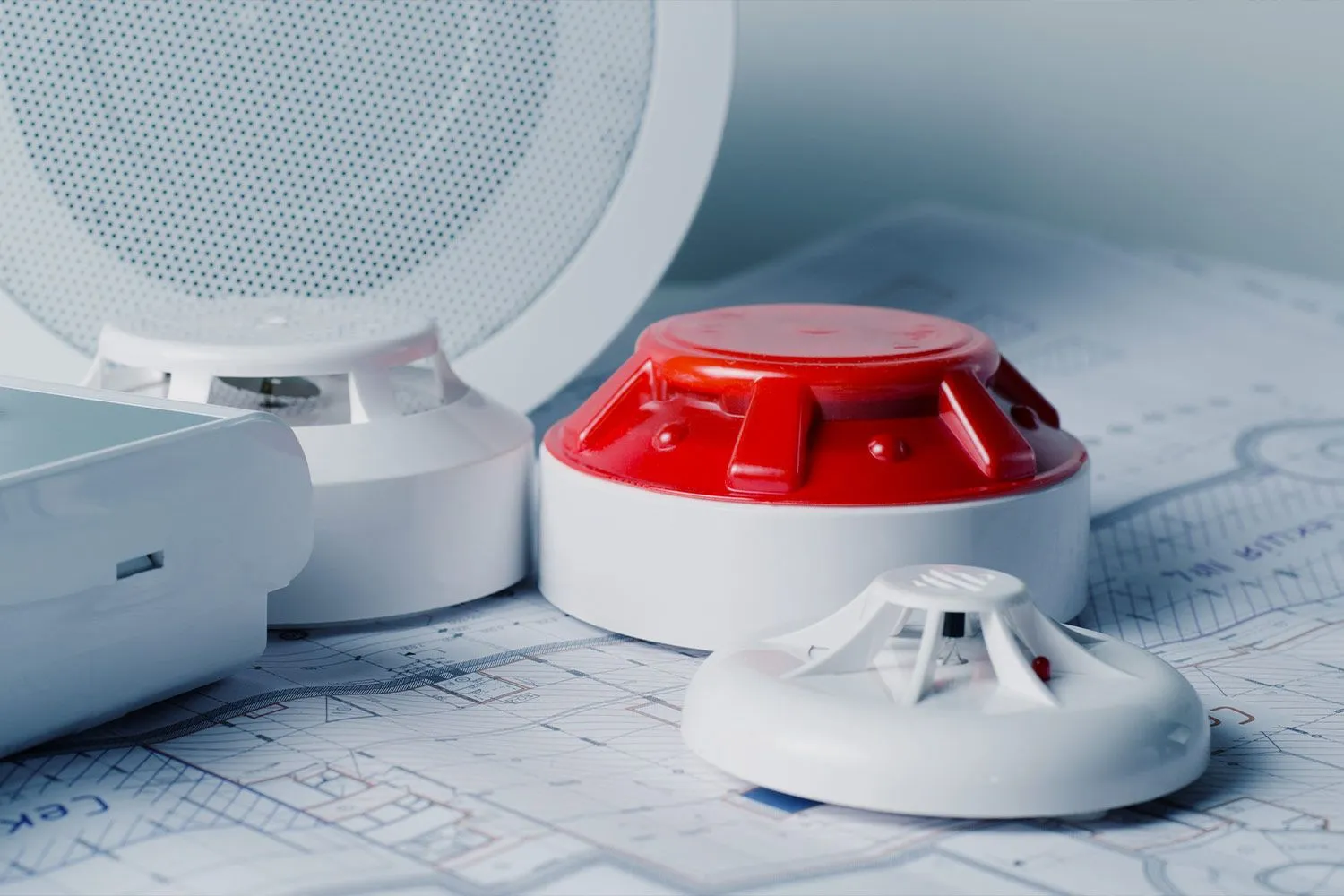
Types of Fire Alarm Systems: A Practical Guide for Modern Building Safety
Fire alarm systems are no longer viewed as optional building add-ons. They are core components of modern fire protection systems, shaping how facilities detect threats, respond to emergencies, and protect occupants long before a fire escalates. For commercial and industrial environments in particular, choosing the right system type directly affects life and property protection, regulatory approval, and long-term operational resilience.
From the perspective of experienced professionals at DARS, understanding the types of fire alarm systems is not about memorising definitions. It is about matching technology to risk, usage, and compliance realities on the ground, especially in regions where building fire safety regulations are tightly enforced and continuously evolving.
What Is a Fire Alarm System?
At its core, a fire alarm system is an integrated network of devices designed to detect fire-related events and alert occupants, operators, and emergency responders. These systems monitor environmental changes such as smoke, heat, or flame, then translate those signals into warnings or automated responses.
What distinguishes modern systems is their role beyond alerts. Fire alarms often act as control hubs, triggering fire suppression solutions, coordinating with automatic sprinkler systems, unlocking exits, or shutting down ventilation to slow fire spread. In this way, they sit at the intersection of detection, response, and risk containment.
In regulated environments, fire alarm systems must align with NFPA compliance frameworks and local authority requirements, ensuring they perform reliably under real-world conditions rather than theoretical scenarios.
Why Understanding System Types Matters
Not all buildings face the same fire risks. A warehouse storing raw materials, a hospital with vulnerable occupants, and a data centre hosting critical infrastructure all require different detection strategies and response timelines.
Understanding the types of fire alarm systems helps decision-makers achieve three essential objectives. First, it ensures early and accurate detection tailored to the environment. Second, it supports fire risk mitigation by reducing false alarms while maintaining sensitivity. Third, it enables code-compliant installations that satisfy civil defence approvals without overengineering or unnecessary cost.
Selecting the wrong system type often leads to operational disruption, maintenance challenges, or compliance delays. Selecting the right one creates a safety framework that works quietly in the background, ready only when needed.
Core Components Shared Across Fire Alarm Systems
While system architectures differ, most fire alarm systems are built from a consistent set of core elements working together.
Detectors serve as the system’s sensory layer, identifying smoke, heat, or combustion particles. Manual call points allow occupants to trigger alerts when human judgment precedes sensor activation. Control panels act as the system’s brain, interpreting signals and deciding which actions to execute. Notification devices then translate decisions into audible and visual alerts across the building.
These components are designed to integrate with wider commercial fire protection infrastructure, including suppression systems, emergency lighting, and access control. Their effectiveness depends not only on quality hardware, but also on professional system design and disciplined maintenance.
Classification of Fire Alarm Systems
Fire alarm systems are commonly classified based on how detection and control functions are structured. This classification determines how information flows, how faults are identified, and how scalable the system becomes over time.
Conventional Fire Alarm Systems
Conventional systems divide a building into zones, with detectors wired in groups. When an alarm is triggered, the control panel identifies the affected zone but not the exact device. This approach remains popular in smaller facilities where simplicity and cost efficiency are priorities.
However, conventional systems offer limited diagnostic detail. In environments where rapid response precision matters, this limitation can slow investigation and recovery, particularly in large or complex sites.
Addressable Fire Alarm Systems
Addressable systems assign a unique identity to each device. When an alarm occurs, the control panel pinpoints the exact detector or call point involved. This precision dramatically improves response speed, fault identification, and system scalability.
In facilities requiring high operational continuity or strict industrial fire safety standards, addressable systems have become the preferred choice. Their ability to integrate seamlessly with building management systems further strengthens their role in modern safety strategies.
How Fire Alarm Systems Interact with Suppression Technologies
Fire alarm systems rarely operate in isolation. In many facilities, they serve as the trigger mechanism for active suppression measures. Once detection thresholds are met, the alarm system can initiate automatic sprinkler systems, gas-based suppression, or deluge systems depending on the risk profile.
For example, in environments using dry or pre-action sprinkler configurations, alarm confirmation sequences are essential. Detection must be accurate before water is released, preventing unnecessary damage while ensuring timely response. This coordination highlights why system selection must consider not only detection needs, but also downstream response mechanisms.
Authoritative guidance from organisations such as the National Fire Protection Association outlines how alarm systems should integrate with suppression technologies to maintain performance consistency and regulatory alignment.
Regulatory Context and Compliance Considerations
Fire alarm systems are governed by layered regulatory frameworks. International standards such as NFPA codes establish technical benchmarks, while local authorities enforce region-specific requirements related to installation, testing, and certification.
In Saudi Arabia, for example, systems must align with civil defence approval processes and the Saudi Building Code, reinforcing the importance of code-compliant installations delivered by licensed contractors. Documentation, commissioning tests, and ongoing inspections form part of the system’s legal lifecycle, not just its technical design.
Failure to align alarm system selection with regulatory expectations can delay occupancy permits or expose organisations to operational risk long after installation is complete.
The Role of Fire Alarm Systems in Risk Strategy
Fire alarm systems should be viewed as strategic risk tools rather than compliance checklists. When designed correctly, they reduce uncertainty during emergencies, support evacuation efficiency, and limit secondary damage caused by delayed response.
They also contribute to organisational resilience by integrating with broader fire protection systems, enabling coordinated actions rather than isolated alerts. This integrated approach is particularly critical in large commercial or industrial facilities where manual intervention alone is insufficient.
Insights from global safety bodies such as the U.S. Fire Administration consistently emphasise the value of layered detection and response strategies anchored by reliable alarm systems.
Preparing to Explore System Types in Detail
Understanding the foundational structure and purpose of fire alarm systems sets the stage for deeper exploration. Each system type exists for a reason, shaped by risk environment, building usage, and regulatory expectations.
Conventional Fire Alarm Systems
Conventional fire alarm systems represent the earliest structured approach to electronic fire detection and remain in use today, particularly in small to mid-sized buildings. These systems divide a facility into zones, with each zone containing multiple detectors connected to a single circuit.
When an alarm is triggered, the control panel identifies the zone where the event occurred rather than the specific device. This level of detail is often sufficient in simple layouts such as low-rise offices or small retail spaces, where rapid physical inspection is feasible. Their straightforward architecture also makes them easier to install and maintain in environments with limited technical complexity.
However, as building size and risk increase, conventional systems reveal their limitations. Reduced location accuracy can slow response times, especially when integrated with commercial fire protection strategies that depend on precise activation sequences.
Addressable Fire Alarm Systems
Addressable fire alarm systems have become the standard for complex and high-occupancy facilities due to their precision and flexibility. Each detector, call point, and module is assigned a unique digital address, allowing the control panel to identify exactly where an event originates.
This level of detail transforms emergency response. Maintenance teams can locate faults quickly, responders can target affected areas immediately, and system performance data can be monitored continuously. In environments prioritising building fire safety and operational continuity, these advantages are critical rather than optional.
Addressable systems also integrate seamlessly with automatic sprinkler systems, access control, and building management platforms. Their scalability makes them particularly suitable for hospitals, airports, industrial plants, and large commercial developments governed by strict NFPA compliance requirements.
Wireless Fire Alarm Systems
Wireless fire alarm systems use radio frequency communication instead of hardwired connections between devices. They are often deployed in buildings where structural constraints, heritage preservation, or phased construction make traditional cabling impractical.
The primary advantage of wireless systems lies in installation flexibility. They can be implemented with minimal disruption, making them suitable for occupied facilities such as hotels or healthcare environments. Modern wireless systems also meet international performance standards, offering reliability comparable to wired alternatives when designed correctly.
Despite these benefits, wireless systems require careful signal planning and ongoing battery management. In large-scale or high-risk environments, they are typically used as part of hybrid solutions rather than standalone deployments within industrial fire safety strategies.
Hybrid Fire Alarm Systems
Hybrid systems combine wired and wireless components to deliver a balanced solution tailored to complex buildings. This approach allows designers to leverage the reliability of wired connections in critical areas while using wireless devices in locations where cabling is impractical.
Hybrid architectures are particularly effective in retrofit projects, phased expansions, or facilities with mixed-use zones. They support gradual system growth without requiring full replacement, aligning well with long-term fire risk mitigation planning.
From a regulatory standpoint, hybrid systems must still meet the same code-compliant installations standards as fully wired solutions. Proper documentation and testing are essential to ensure consistent performance across both communication methods.
Aspirating Smoke Detection Systems
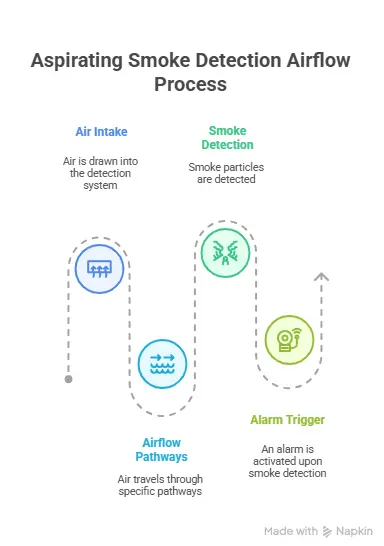
Aspirating smoke detection systems represent a specialised category designed for environments requiring extremely early fire detection. Instead of waiting for smoke to reach a ceiling-mounted detector, these systems actively sample air through a network of pipes and analyse it for microscopic combustion particles.
This technology is commonly used in data centres, clean rooms, and critical infrastructure facilities where even minor fire incidents can cause significant disruption. Early detection allows intervention before flames develop, supporting advanced fire suppression solutions that minimise damage and downtime.
While aspirating systems are not suitable for every building, they play a vital role within layered fire protection systems where risk tolerance is exceptionally low.
Beam Detection Systems
Beam detection systems use projected light beams to detect smoke over large open spaces. When smoke interrupts or obscures the beam, the system triggers an alarm. This approach is particularly effective in warehouses, atriums, and manufacturing halls with high ceilings.
Compared to point detectors, beam systems cover wide areas with fewer devices, reducing installation complexity in expansive spaces. They are often integrated into commercial fire protection designs where traditional detectors would be difficult to access or maintain.
However, beam detectors require precise alignment and can be sensitive to building movement or environmental changes. Professional installation and periodic recalibration are essential to maintain accuracy and regulatory acceptance.
Voice Evacuation and Alarm Communication Systems
In modern safety design, detection alone is not enough. Voice evacuation systems enhance traditional alarms by delivering clear, intelligible instructions during emergencies. Instead of relying solely on sirens, these systems guide occupants through controlled evacuation processes.
Voice systems are particularly valuable in large public buildings where panic can escalate risk. By providing calm, directional messaging, they support orderly movement and improve overall life and property protection outcomes.
These systems are commonly integrated with addressable fire alarms and broader emergency communication platforms, reinforcing the shift toward intelligent, human-centric building fire safety solutions.
Integration with Broader Fire Safety Infrastructure
Across all system types, integration is the defining factor of effectiveness. Fire alarm systems must communicate seamlessly with suppression equipment, emergency lighting, elevators, and security systems to create a coordinated response.
For example, alarm activation may trigger sprinkler zones, shut down ventilation, or unlock exit routes automatically. This orchestration transforms individual technologies into unified fire protection systems rather than isolated components.
Preparing for System Selection and Design
Understanding the technical differences between fire alarm system types is only the first step. Real-world selection requires evaluating building usage, occupancy density, environmental conditions, and future expansion plans.
Assessing Building Risk and Usage
Every fire alarm system should be designed around how a building is actually used. Occupancy levels, movement patterns, and operational hours all influence detection strategy and alarm response requirements.
A warehouse operating around the clock presents different challenges than an office building with predictable occupancy. Industrial facilities may introduce heat, dust, or vibration that affect detector performance, making industrial fire safety considerations essential during system design. In contrast, public buildings require alarm clarity and evacuation control to support safe occupant movement.
Accurate risk assessment ensures the selected system contributes meaningfully to fire risk mitigation, rather than creating nuisance alarms or blind spots that undermine trust in the system.
Matching System Type to Application
Once risk is defined, system type selection becomes clearer. Conventional systems may suit compact layouts with limited complexity, while addressable or hybrid systems provide the control and scalability required for larger or evolving facilities.
Critical environments such as hospitals, data centres, or industrial plants often require layered detection approaches. In these cases, fire alarms must integrate seamlessly with fire suppression solutions and automatic sprinkler systems, ensuring coordinated action without unnecessary delays or damage.
Selecting the right system type is not about hierarchy. It is about functional fit, future flexibility, and ensuring the alarm system strengthens overall building fire safety rather than operating in isolation.
Regulatory Alignment and Compliance Planning
Fire alarm systems exist within strict regulatory frameworks. Compliance is not a one-time approval, but an ongoing responsibility that spans design, installation, testing, and maintenance.
International standards such as NFPA codes provide the technical foundation, while local authorities enforce region-specific requirements related to certification and documentation. Achieving NFPA compliance and meeting civil defence expectations requires professional system design, licensed installation, and traceable testing records.
Authoritative guidance from resources like the Saudi Building Code reinforces the importance of early compliance planning, preventing costly redesigns or approval delays later in the project lifecycle.
Installation Quality and System Integrity
Even the most carefully selected system can fail if installation quality is compromised. Cabling integrity, device placement, and panel configuration directly affect system reliability and response accuracy.
Professional installers understand how detector spacing, environmental conditions, and integration logic influence real-world performance. Their role extends beyond physical installation into commissioning, where system behaviour is tested under simulated conditions to verify readiness.
High-quality, code-compliant installations protect not only occupants, but also asset value by reducing false alarms, system downtime, and unnecessary maintenance interventions.
Maintenance as a Performance Strategy
Fire alarm systems are living systems. Their effectiveness depends on consistent maintenance rather than passive existence. Dust accumulation, battery degradation, or software drift can all compromise performance if left unchecked.
Routine inspections and functional testing ensure alarms remain sensitive without becoming disruptive. Maintenance programs also support long-term life and property protection by identifying issues before they escalate into failures during emergencies.
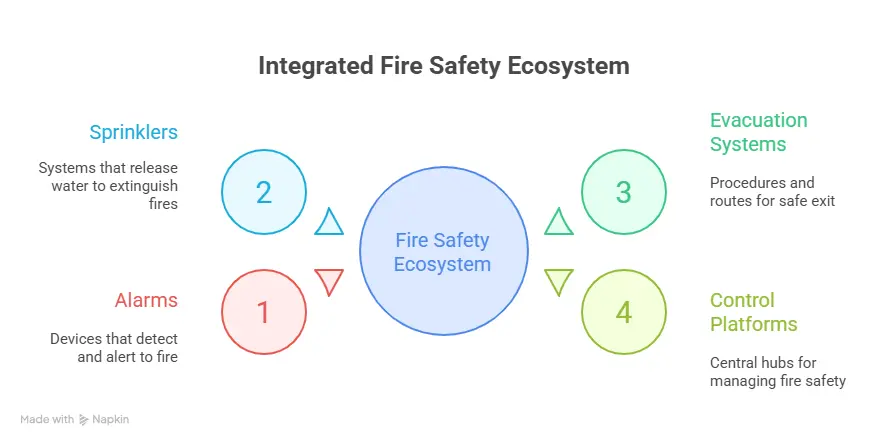
Integrating Fire Alarms into a Unified Safety Ecosystem
Modern safety strategies treat fire alarm systems as part of a broader ecosystem rather than standalone tools. Integration with sprinklers, emergency lighting, access control, and building management systems allows coordinated response rather than fragmented reactions.
For example, alarm activation can initiate controlled evacuation messaging, trigger suppression zones, and isolate affected areas simultaneously. This orchestration strengthens commercial fire protection outcomes and reduces reliance on manual intervention during high-stress events.
Planning for Future Growth and Adaptability
Buildings evolve. Tenants change, layouts expand, and operational needs shift over time. Fire alarm systems must be designed with this reality in mind.
Scalable architectures such as addressable or hybrid systems allow expansion without full replacement. Software-driven panels support configuration updates as risks change, protecting long-term investment while maintaining compliance.Future-ready planning aligns fire alarm systems with broader business continuity goals, reinforcing their role as strategic assets within fire protection systems, not fixed infrastructure.