
Fire Alarm System Manufacturers: How the Right Choice Shapes Safety, Compliance, and Long-Term Reliability in Saudi Arabia
Introduction: Why Fire Alarm System Manufacturers Matter More Than Ever
In Saudi Arabia’s rapidly evolving built environment, fire alarm system manufacturers play a role that goes far beyond supplying panels and detectors. Their systems form the first line of defense for life and property protection, especially in large-scale commercial and industrial developments shaped by Vision 2030. From mixed-use towers to logistics hubs and industrial plants, early detection is no longer a technical detail; it is a regulatory, operational, and moral responsibility.
Fire detection and alarm systems are now tightly linked to Saudi Civil Defense approvals, SBC 801 requirements, and HCIS mandates. This means that selecting the right manufacturer directly impacts whether a project passes inspection, remains operational, and continues to protect occupants long after handover. At DARS, experience on the ground has shown that manufacturer selection is one of the most underestimated yet decisive safety decisions in any project lifecycle.
The Growing Role of Fire Alarm Systems in Saudi Arabia’s Urban Expansion
Saudi cities are expanding vertically and horizontally at an unprecedented pace. With this growth comes complexity: higher occupant density, mixed-risk facilities, and interconnected infrastructure. In this context, commercial fire alarm systems are no longer standalone installations. They must integrate with suppression systems, building management platforms, and emergency response protocols while meeting strict fire safety standards.
The Saudi Civil Defense has reinforced these expectations through clear inspection frameworks and digital verification platforms. According to industry directories such as SourceSecurity, approved systems must demonstrate reliability, traceability, and compliance across every component. This shift has placed fire alarm system manufacturers under closer scrutiny, elevating certified fire alarm systems from a preference to a requirement.
Understanding What Fire Alarm System Manufacturers Actually Provide
A common misconception is that manufacturers only supply hardware. In reality, reliable fire alarm manufacturers deliver complete ecosystems that include detection logic, communication protocols, scalability options, and long-term compatibility with evolving codes. Panels, detectors, sounders, and interfaces must function as a unified system, especially in large or phased developments.
This is why experienced fire protection companies prioritize manufacturers with proven track records in the region. Systems that are designed for international markets but not adapted to Saudi regulations often fail during approval or create operational gaps later. Manufacturers that align their technology with local civil defense compliance requirements reduce risk at every project stage, from design coordination to final commissioning.
Global Versus Local Manufacturers: Understanding the Landscape
The Saudi market brings together global leaders and strong regional players, each serving different project needs. International brands such as Honeywell Notifier and Siemens are known for advanced addressable systems, voice evacuation capabilities, and large-scale integration. These solutions are often specified for airports, hospitals, and high-rise developments where complexity and scale demand advanced intelligence.
At the same time, local and regional suppliers have grown significantly in capability. Companies operating through approved distributors offer systems that are tailored to Saudi inspection processes and local operational realities. Platforms such as the IBS-MN fire alarm solutions portal highlight how regional expertise complements global technology, especially when projects require faster approvals and on-ground technical support.
Why Certification Is Non-Negotiable in Manufacturer Selection
In Saudi Arabia, certification is not a marketing claim; it is a legal and operational gatekeeper. Fire alarm system manufacturers must provide products that are listed under recognized international bodies such as UL and FM while also being accepted by Saudi authorities. Without this alignment, even technically sound systems can be rejected during inspection.
Civil defense compliance today involves more than paperwork. Products are verified through digital platforms and cross-checked against approved listings. As outlined by the Saudi Civil Defense and reinforced across professional forums, uncertified components can lead to costly delays, redesigns, or even full system replacement. This is why DARS consistently emphasizes certification as the foundation of industrial fire safety strategies.
Fire Alarm Systems as a Long-Term Operational Asset
Beyond installation and approval, fire alarm systems remain active throughout a building’s life. Manufacturers that invest in system longevity, backward compatibility, and spare-part availability offer far greater value over time. Poor-quality systems may pass initial inspection but often lead to false alarms, system downtime, and expensive maintenance cycles.
Industry analysis published by regional fire safety platforms shows that false alarms are among the most common operational complaints in commercial buildings. In most cases, the root cause is substandard detection logic or incompatible components. Choosing manufacturers known for reliable fire alarm manufacturers practices significantly reduces these risks while supporting consistent compliance with fire safety standards.
Addressable and Conventional Systems: A Manufacturer-Driven Decision
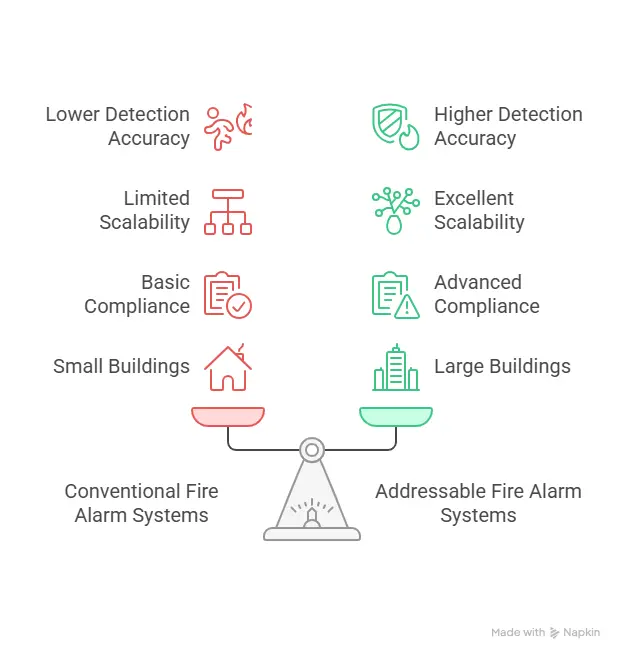
The choice between addressable and conventional systems is often framed as a budget decision, but in reality, it is heavily influenced by manufacturer capability. Addressable systems allow precise identification of devices and zones, making them essential for large facilities and complex layouts. Conventional systems, while simpler, are increasingly limited to smaller or low-risk facilities.
Manufacturers with strong addressable portfolios are better positioned to support future expansions and regulatory changes. As highlighted by Saudi-based fire alarm solution providers, many Vision 2030 projects now mandate addressable systems as a baseline requirement. This trend further reinforces the importance of working with manufacturers that understand both present and future regulatory expectations.
The Strategic Role of Contractors in Manufacturer Selection
While manufacturers produce the systems, licensed contractors are responsible for applying and developing them on-site. At DARS, systems are implemented in full alignment with approved manufacturer guidelines, Saudi building codes, and Civil Defense requirements. This contractor-manufacturer relationship ensures that systems perform as intended, not just on paper but in real-world scenarios.
Manufacturers that provide strong technical documentation, training, and commissioning support enable contractors to deliver higher-quality outcomes. This collaboration directly affects inspection success, maintenance efficiency, and long-term system reliability. It also bridges the gap between theoretical compliance and practical life and property protection.
Looking Ahead: How Manufacturer Choice Shapes Future Compliance
Saudi regulations continue to evolve alongside urban development. Digital inspections, smarter buildings, and integrated safety platforms are becoming standard rather than optional. Fire alarm system manufacturers that invest in innovation and regional adaptation are better equipped to meet these future demands.
As projects grow more complex, the margin for error narrows. Manufacturer selection is no longer a procurement task; it is a strategic safety decision. This perspective sets the stage for a deeper examination of leading manufacturers in the Saudi market, how they differ, and how to evaluate them effectively.
Global Leaders and Regional Players
Global Manufacturers Dominating Large-Scale and High-Risk Projects
When it comes to large, complex developments in Saudi Arabia, global fire alarm system manufacturers continue to set the benchmark. Brands such as Honeywell Notifier, Siemens, and Johnson Controls have built their reputation on advanced fire detection and alarm systems that are designed for scale, redundancy, and intelligent response. These manufacturers are commonly specified in airports, hospitals, data centers, and high-rise towers where system failure is not an option.
What differentiates these global players is not only technology, but consistency. Their systems are tested across multiple jurisdictions, aligned with international fire safety standards, and backed by decades of research and development. In Saudi Arabia, this translates into smoother approval processes when systems are correctly supplied and implemented through approved local channels. Platforms such as SourceSecurity highlight how these brands dominate projects tied to national infrastructure and Vision 2030 initiatives.
The Role of Local Distributors in Bridging Compliance and Execution
While global manufacturers design the technology, their success in Saudi Arabia depends heavily on local distributors and integrators. These entities act as the operational bridge between international standards and Saudi Civil Defense requirements. Approved distributors ensure that certified fire alarm systems are supplied, configured, and supported in a way that aligns with local inspection protocols.
Saudi-based providers such as IBS-MN and PEC have built strong portfolios by working closely with manufacturers and authorities. Their familiarity with HCIS requirements, inspection timelines, and documentation processes reduces friction during approvals. This local expertise is often the deciding factor in whether a project progresses smoothly or faces repeated delays during Civil Defense inspections.
Regional Manufacturers and the Rise of Localized Solutions
In recent years, regional manufacturers and suppliers have significantly strengthened their position in the Saudi market. These companies focus on delivering fire safety solutions that are specifically adapted to local building practices, environmental conditions, and regulatory workflows. Rather than competing directly with global brands on innovation, they compete on adaptability, responsiveness, and operational support.
Local manufacturers often excel in mid-sized commercial and industrial fire safety projects where timelines are tight and regulatory clarity is essential. Their systems are frequently designed to meet SBC 801 requirements from the outset, reducing the need for extensive customization. As highlighted by Saudi fire protection directories, this localized approach is increasingly valued in logistics centers, warehouses, and mixed-use developments.
Evaluating Manufacturers Based on Project Type and Risk Profile
Not all projects require the same level of system sophistication, and manufacturer selection should always reflect the specific risk profile of the site. High-occupancy buildings demand advanced detection logic, redundancy, and voice evacuation capabilities, while industrial facilities may prioritize rugged detectors and integration with suppression systems.
Experienced fire protection companies assess manufacturers based on how well their systems align with these operational realities. A manufacturer that performs exceptionally in commercial fire alarm systems may not be the best fit for petrochemical or utility environments. This is why sector experience has become a key evaluation criterion alongside certification and cost.
Technology Trends Shaping Manufacturer Differentiation
Fire alarm system manufacturers are increasingly differentiating themselves through technology rather than hardware alone. Smart diagnostics, remote monitoring, and integration with building management systems are becoming standard expectations rather than premium features. These advancements are particularly relevant in Saudi Arabia, where large portfolios of facilities are managed centrally.
IoT-enabled fire detection and alarm systems allow facility managers to monitor performance, detect faults early, and maintain compliance proactively. Industry analysis from regional safety solution providers shows that these capabilities are now influencing manufacturer selection, especially for operators managing multiple sites across the Kingdom.
Compliance Readiness as a Competitive Advantage
In the Saudi market, compliance readiness has emerged as a defining competitive advantage for manufacturers. Systems that are pre-aligned with Saudi Civil Defense expectations reduce the burden on consultants, contractors, and owners alike. Manufacturers that actively update their documentation and product listings in line with regulatory changes are viewed as lower-risk partners.
This is particularly important as Civil Defense continues to digitize approval and inspection processes. Manufacturers whose systems integrate smoothly into these workflows help projects maintain momentum. DARS’s experience across multiple sectors consistently shows that compliance-ready systems outperform technically superior but poorly localized alternatives.
Cost Structures and the Real Price of Manufacturer Choice
Cost is often the most visible factor in manufacturer selection, yet it is rarely the most important. While initial system prices can vary widely, the total cost of ownership tells a very different story. Manufacturers that offer lower upfront pricing may introduce higher long-term costs through frequent faults, limited spare parts, or complex maintenance requirements.
Industry benchmarks referenced by Saudi fire safety solution providers indicate that investment in reliable fire alarm manufacturers often results in lower lifecycle costs. Reduced false alarms, faster inspections, and simplified maintenance contracts offset higher initial expenditures. This long-term perspective is essential for developers and operators focused on asset performance rather than short-term savings.
Manufacturer Support and Post-Installation Performance
The relationship with a manufacturer does not end at commissioning. Post-installation support, firmware updates, and technical training play a critical role in system reliability over time. Manufacturers that provide structured support programs enable contractors and facility teams to maintain systems in line with evolving fire safety standards.
In Saudi Arabia, annual maintenance contracts are closely scrutinized during inspections. Manufacturers that support clear testing protocols and documentation make it easier for facilities to demonstrate ongoing compliance. This operational reliability is a key reason why certain manufacturers maintain long-term dominance in the market.
Aligning Manufacturer Selection with Vision 2030 Objectives
Vision 2030 projects emphasize sustainability, resilience, and smart infrastructure. Fire alarm system manufacturers that align with these goals are better positioned to support future developments. Energy-efficient devices, scalable architectures, and digital readiness are increasingly part of tender requirements for public and private sector projects alike.
Manufacturers that understand this strategic direction contribute not only to compliance, but to national development objectives. This alignment strengthens their position within large-scale programs and reinforces their value beyond technical specifications.
Choosing the Right Fire Alarm System Manufacturer: A Practical, Risk-Focused Approach
Manufacturer Selection as a Strategic Safety Decision
By the time a project reaches the specification stage, the choice of fire alarm system manufacturers should already be guided by risk, regulation, and long-term operational thinking. In Saudi Arabia, this decision directly influences not only Civil Defense approval but also the building’s ability to operate safely for years to come. Treating manufacturer selection as a procurement shortcut often leads to compliance issues that surface late, when changes are most expensive.
From DARS’s experience, the most successful projects are those where manufacturer selection is aligned early with the building’s use, occupancy load, and future expansion plans. This strategic alignment ensures that fire detection and alarm systems support both immediate inspection requirements and long-term life and property protection objectives.
Reading Regulations Correctly Before Evaluating Manufacturers
One of the most common mistakes in the market is evaluating manufacturers before fully understanding regulatory obligations. Saudi Building Code SBC 801, HCIS requirements, and Saudi Civil Defense inspection criteria must shape every technical decision. Fire alarm systems that are compliant in other regions may still fail locally if they are not approved, listed, or documented correctly.
Manufacturers that actively align their products with Saudi fire safety standards remove much of this uncertainty. Their documentation, system architecture, and testing protocols are already structured to satisfy inspection requirements. This regulatory readiness shortens approval cycles and reduces the likelihood of corrective actions during final inspections.
Matching Manufacturer Capability to Building Use
Every building presents a unique risk profile, and fire alarm systems must reflect that reality. A residential tower, a hospital, and an industrial facility each demand different detection strategies, response speeds, and integration levels. Fire alarm system manufacturers that clearly define where their systems perform best provide a critical advantage during specification.
For example, manufacturers specializing in commercial fire alarm systems often excel in zoning logic, occupant notification, and evacuation coordination. Those with a strong industrial fire safety background may focus more on harsh-environment detectors and system resilience. Understanding these distinctions allows decision-makers to avoid over-engineering or under-protecting a facility.
Avoiding the Hidden Risks of Non-Certified Systems
Cost-driven decisions often lead to the selection of systems that appear compliant on the surface but lack full certification. These systems may function during testing yet fail during formal inspection or reinspection. In Saudi Arabia, such failures can result in operational shutdowns, delayed occupancy permits, or forced system replacement.
Industry data shared by regional safety solution providers consistently shows that uncertified components are a leading cause of inspection rejection. Reliable fire alarm manufacturers mitigate this risk by ensuring that every system element is approved, traceable, and supported. This reliability is not a premium feature; it is a baseline requirement in today’s regulatory environment.
The Contractor–Manufacturer Relationship and Its Impact
Even the most advanced fire alarm system will fail if it is not applied and developed correctly on site. This is where the relationship between manufacturers and licensed contractors becomes critical. Manufacturers that provide strong technical support, clear guidelines, and ongoing training empower contractors to implement systems accurately and efficiently.
At DARS, systems are executed strictly as contractors, applying and developing approved solutions without deviation. This disciplined approach relies heavily on manufacturers that respect Saudi regulations and provide clear system architectures. When this relationship is aligned, inspections become verification exercises rather than fault-finding missions.
Long-Term Maintenance and Compliance Sustainability
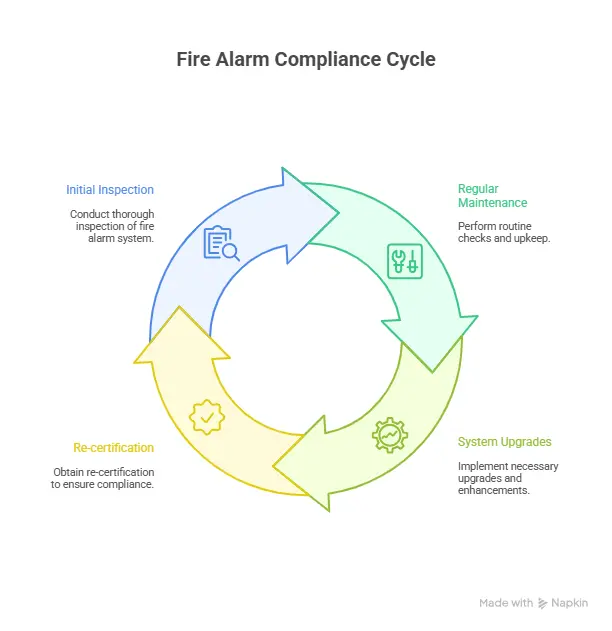
Fire alarm systems do not end at handover. Ongoing maintenance, testing, and documentation are essential to sustaining compliance and operational safety. Manufacturers that design systems with maintenance clarity in mind significantly reduce the administrative and technical burden on facility operators.
Clear fault reporting, accessible spare parts, and consistent firmware updates are indicators of a mature manufacturer. These elements directly support annual maintenance contracts and recurring inspections. Over time, this consistency strengthens compliance records and reinforces the building’s overall safety posture.
Common Pitfalls When Selecting Fire Alarm Manufacturers
Across the Saudi market, several recurring issues emerge when manufacturer selection is rushed or poorly informed. The most common is choosing systems based solely on price without considering certification depth or local support. Another frequent mistake is assuming that global brand recognition automatically guarantees local compliance.
Projects that encounter these pitfalls often face repeated inspections, system modifications, and strained relationships with authorities. Avoiding these outcomes requires disciplined evaluation and collaboration between consultants, contractors, and manufacturers from the outset.
The Role of Fire Alarm Manufacturers in Vision 2030 Projects
Vision 2030 developments demand resilience, scalability, and smart integration. Fire alarm system manufacturers that support digital readiness and system interoperability are better suited to these future-facing projects. Their systems integrate more easily with centralized monitoring platforms and smart infrastructure.
As Saudi Arabia continues to invest in giga-projects and smart cities, the expectations placed on fire detection and alarm systems will only increase. Manufacturers that anticipate these demands and align their solutions accordingly will remain central to national development efforts.
Making an Informed, Defensible Manufacturer Choice
A defensible manufacturer choice is one that can be justified technically, regulatorily, and operationally. It is based on documented compliance, proven performance, and long-term support capability. When challenged during inspection or audit, this choice stands up to scrutiny without compromise.
DARS’s approach emphasizes this defensibility. By prioritizing certified fire alarm systems, proven manufacturer support, and strict regulatory alignment, projects are positioned for smooth approvals and sustainable safety performance.
Conclusion: Building Safety That Endures
Fire alarm system manufacturers are not interchangeable suppliers; they are foundational partners in building safety. In Saudi Arabia’s regulatory and development landscape, their role influences compliance outcomes, operational reliability, and ultimately the protection of lives and assets.
Selecting the right manufacturer requires more than brand awareness or cost comparison. It demands a structured, regulation-led evaluation grounded in real project experience. When this approach is followed, fire detection and alarm systems become dependable safeguards rather than recurring risks, supporting safe, compliant, and future-ready environments across the Kingdom.