
Fire Extinguisher Sign: Why It Matters More Than You Think in Saudi Buildings
Introduction: A Small Sign With a Critical Role
In any emergency, seconds matter. When a fire breaks out, people do not think in procedures or manuals; they react based on what they can see and reach. This is where the fire extinguisher sign plays a decisive role. It is not just a label on a wall, but a visual instruction that guides action under pressure. In Saudi Arabia, where fire safety enforcement is strict and inspections are frequent, these signs are directly tied to both safety outcomes and regulatory approval.
From a commercial building safety perspective, fire extinguisher signs support fire safety compliance by ensuring that extinguishers are instantly identifiable, even in smoke-filled or low-visibility environments. Saudi Civil Defense inspections focus heavily on signage visibility, placement accuracy, and language requirements. Missing or poorly installed signs can delay approvals, trigger violations, and expose occupants to unnecessary risk.
What Is a Fire Extinguisher Sign?
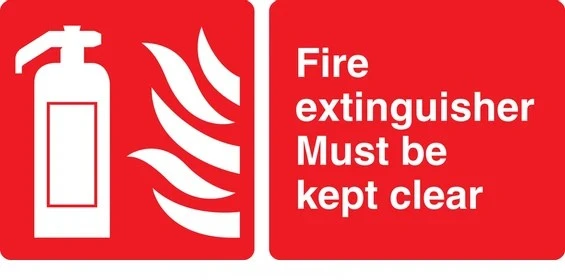
A fire extinguisher sign is a standardized visual marker that identifies the exact location of a fire extinguisher within a building. Its primary function is immediate recognition. During an emergency, people do not search for equipment; they follow visual cues. The sign acts as that cue, cutting through panic and confusion.
Under emergency signage standards, these signs typically use a red background with a white extinguisher pictogram, sometimes accompanied by text in Arabic and English. In Saudi Arabia, bilingual signage is not a preference but a requirement, especially in commercial and mixed-use facilities. The design is intentionally simple to ensure universal understanding, regardless of language or training level.
Evidence from fire incident reports consistently shows that faster fire extinguisher location identification reduces fire spread in its earliest stages. When occupants can spot equipment immediately, they are more likely to intervene before evacuation becomes the only option. This makes signage a core part of emergency preparedness planning, not a secondary accessory.
Why Fire Extinguisher Signs Are Mandatory in Saudi Arabia
Saudi Arabia operates under a tightly regulated fire safety framework led by Civil Defense and the Saudi Building Code. Fire extinguisher signs are mandated under building safety regulations, particularly SBC 801, which governs fire protection systems in buildings. Compliance is not limited to having extinguishers installed; their locations must be clearly marked and visible from appropriate distances.
Civil Defense inspections assess signage as part of broader occupational safety requirements. Inspectors verify height, line of sight, illumination, language, and durability. A missing sign can be treated as seriously as a missing extinguisher, because both lead to the same outcome: delayed response during a fire.
According to guidance derived from Civil Defense regulations and industry interpretation, signage must remain visible even when furniture layouts change or partitions are added. This aligns with international principles found in NFPA guidance on fire safety signage, which Saudi standards often reference and adapt. The local application, however, adds stricter enforcement and documentation requirements.
Standard Design Features of Fire Extinguisher Signs
Fire extinguisher signs are not designed creatively or stylistically. Their effectiveness depends on consistency and familiarity. In Saudi Arabia, accepted designs follow globally recognized visual language while complying with local mandates.
Most approved signs share three essential characteristics:
- A red background that signals fire-related equipment
- A white extinguisher pictogram for instant recognition
- Arabic text, often paired with English, to meet local language rules
These features support hazard communication systems within buildings by reducing interpretation time. In environments such as hospitals, factories, or high-rise offices, where staff and visitors come from varied backgrounds, standardized signage removes ambiguity.
Materials also matter. Signs are often reflective or photoluminescent to maintain safety signage visibility during power outages or smoke conditions. This design choice directly supports evacuation and initial response efforts.
Placement Rules That Influence Safety Outcomes
Placement is where many facilities fail compliance checks. Even a correctly designed sign loses its value if positioned incorrectly. Saudi regulations specify that fire extinguisher signs should be mounted above the extinguisher, typically between 1.5 and 2 meters from the finished floor level, ensuring visibility over crowds or furniture.
Signs must also align with extinguisher distribution rules, especially in corridors and near exits. This supports logical movement patterns during emergencies and reinforces workplace fire protection planning. When people move toward exits, they should encounter extinguishers that are clearly marked along the way.
Clear placement improves inspection outcomes and reduces the need for corrective actions during Civil Defense audits. Industry discussions and safety blogs often emphasize that inspectors assess visibility from multiple angles, not just from directly in front of the extinguisher.
Fire Extinguisher Signs as Part of a Larger Safety System
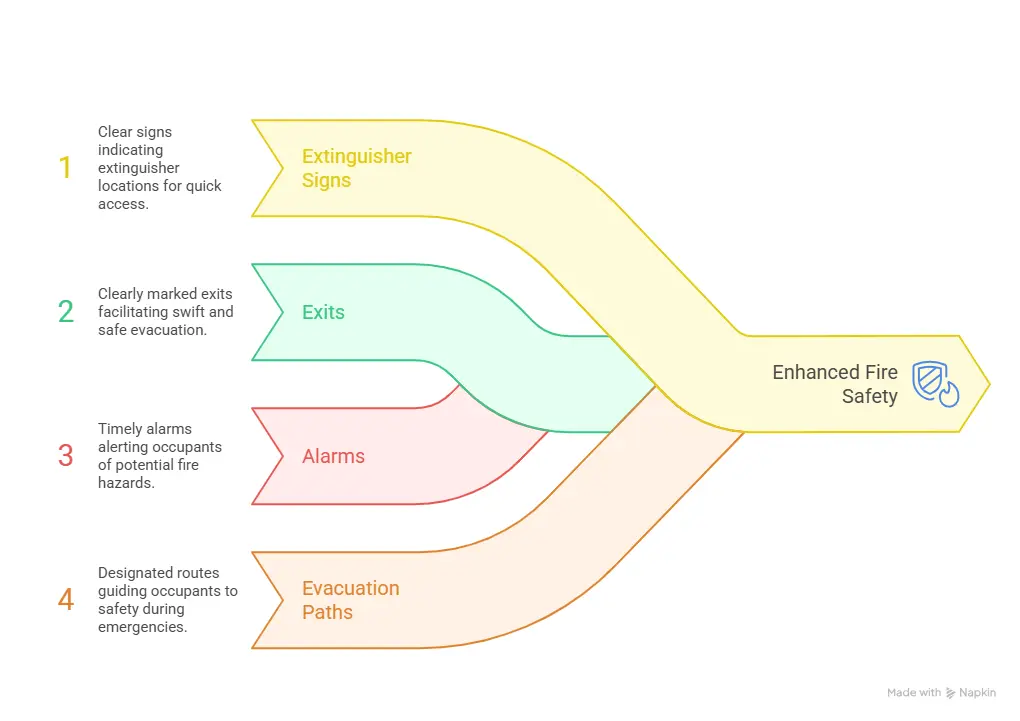
It is a mistake to view fire extinguisher signs in isolation. In well-designed facilities, they integrate with alarms, exit signs, and evacuation maps to form a cohesive safety environment. This interconnected approach reflects modern commercial building safety thinking, where visual cues guide decision-making under stress.
DARS often advises clients to treat signage as a system rather than a checklist item. When fire extinguisher signs align visually and spatially with exit signage and emergency lighting, occupants move more confidently and efficiently. This consistency also simplifies training and orientation programs for staff.
From a regulatory standpoint, integrated signage demonstrates proactive compliance. Inspectors are more likely to view facilities favorably when safety elements clearly follow a unified logic rather than appearing as last-minute additions.
The Role of Fire Extinguisher Signs in Inspections and Audits
Civil Defense inspections are not limited to equipment presence. Inspectors assess whether safety measures function as intended in real scenarios. Fire extinguisher signs are evaluated for clarity, condition, and relevance to the installed extinguisher type.
For example, signs may need to indicate specific extinguisher classes in high-risk environments. This supports accurate use and reduces the risk of applying the wrong agent during a fire. Such details reflect a deeper level of fire safety compliance, beyond surface-level installation.
Facilities that fail signage checks often face delays in certification or requests for corrective action. These delays can affect project handovers, occupancy permits, and operational timelines. From a business perspective, proper signage protects both people and progress.
Linking Safety Signage to Long-Term Risk Reduction
Beyond compliance, fire extinguisher signs contribute to long-term risk management. Clear signage reduces dependence on memory or training alone, which can fade over time or vary among staff. Visual systems remain constant, reinforcing correct behavior day after day.
This is why safety consultants increasingly link signage quality to incident prevention metrics. When combined with training and maintenance, signs become part of a preventive culture rather than a reactive measure. This mindset aligns with global best practices discussed in resources such as international fire safety signage guidance and adapted locally through Saudi standards.
Fire Extinguisher Sign Types Used in Saudi Buildings
As facilities move from planning into execution, the question is no longer whether a fire extinguisher sign is required, but which type is appropriate. In Saudi Arabia, signage selection is closely tied to building function, occupancy level, and inspection expectations. Civil Defense inspectors assess not only presence, but suitability, meaning the wrong sign can be treated as non-compliance even if one is installed.
The most common fire extinguisher sign used across the Kingdom is the standard location sign, designed to clearly mark where the extinguisher is mounted. These are typically rectangular, red, and positioned above the equipment. Their role is simple but essential: instant visibility that supports rapid response and reinforces workplace fire protection protocols in everyday operations.
In more complex facilities such as hospitals, factories, and logistics hubs, directional fire extinguisher signs are frequently required. These signs guide occupants toward extinguishers that may not be directly visible, especially in long corridors or partitioned spaces. From a building safety regulations standpoint, directional signs reduce confusion and improve fire extinguisher location identification during emergencies.
Material Choices and Their Impact on Compliance
Material selection is often underestimated, yet it plays a direct role in safety signage visibility and inspection outcomes. Saudi regulations emphasize durability, clarity, and performance under emergency conditions. A sign that fades, cracks, or detaches over time may fail inspection even if its design is correct.
Photoluminescent materials are increasingly favored in commercial building safety projects. These signs absorb ambient light and glow in darkness, ensuring visibility during power outages or smoke-filled conditions. Their use aligns with emergency signage standards and is commonly recommended in stairwells, basements, and high-risk zones.
Reflective signs are another accepted option, particularly in well-lit environments. They rely on external light sources to remain visible and are often used in offices or retail spaces. DARS typically evaluates lighting conditions, emergency power availability, and building layout before recommending one material over another, ensuring both compliance and practical effectiveness.
Installation Methods That Meet Saudi Inspection Criteria
Even the right sign can fail if installed incorrectly. Installation is where design intent meets real-world conditions, and Saudi Civil Defense inspectors pay close attention to execution. Fire extinguisher signs must be securely mounted, unobstructed, and positioned at a consistent height throughout the facility.
Wall-mounted rigid signs are the most common installation method, offering durability and alignment with long-term maintenance plans. In temporary or modular spaces, high-quality self-adhesive signs may be used, provided they meet material and adhesion standards. Inspectors often test stability during audits, especially in high-traffic areas.
Height and alignment are critical. Signs must sit above the extinguisher and remain visible from expected approach angles. Poor placement, such as positioning signs behind doors or decorative elements, undermines hazard communication systems and often results in corrective action requests during inspections.
Fire Extinguisher Signage and Extinguisher Type Matching
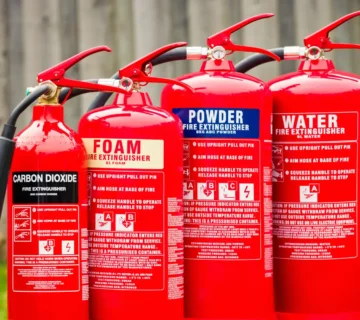
In many facilities, different fire risks require different extinguisher types. While the fire extinguisher sign primarily marks location, advanced compliance practices include aligning signage with extinguisher classification. This is especially relevant in industrial environments where misuse could worsen a fire.
Clear visual cues help occupants identify whether an extinguisher is suitable for electrical, flammable liquid, or general fires. This supports occupational safety requirements by reducing decision-making time and minimizing incorrect use. Although not always mandatory, this practice reflects a higher standard of fire safety compliance and is often viewed positively during audits.
International guidance, such as that found in NFPA fire extinguisher standards, reinforces the value of clear identification and user guidance. Saudi regulations echo this logic by emphasizing clarity, consistency, and risk awareness in safety systems.
Common Compliance Mistakes Observed in Saudi Facilities
Despite clear regulations, many facilities repeat the same signage errors. One frequent issue is installing signs that are too small or visually weak to be noticed from a distance. In busy commercial spaces, competing visual elements can easily overpower poorly designed signs.
Another common mistake is language omission. Saudi inspections typically require Arabic text, and in many cases bilingual Arabic-English signage is expected. Facilities relying on imported signage without proper localization often face delays during approval stages.
Maintenance-related failures also surface regularly. Signs that are faded, cracked, or missing due to renovations are treated as non-compliant. Fire safety compliance is ongoing, not a one-time achievement, and signage must evolve with space changes and wear over time.
Integrating Fire Extinguisher Signs Into Broader Safety Planning
High-performing facilities do not treat fire extinguisher signs as isolated elements. Instead, they integrate them into broader emergency preparedness planning that includes evacuation routes, alarm systems, and staff training. This systems-based approach improves real-world outcomes and simplifies compliance management.
When signage, lighting, and equipment placement follow a unified logic, occupants move more intuitively during emergencies. This consistency also reduces training complexity and supports faster onboarding for new staff. From a regulatory perspective, integrated systems demonstrate intent and competence, both of which influence inspection results.
DARS frequently advises clients to review signage whenever space usage changes. Renovations, layout adjustments, or occupancy shifts can all affect visibility and effectiveness. Proactive reviews help maintain compliance and prevent last-minute corrections before inspections.
Supplier Selection and Certification Considerations
Not all signage suppliers understand Saudi regulatory requirements. Choosing a supplier without local expertise can result in signs that look correct but fail inspection due to missing certifications or improper specifications. This risk is particularly high in large-scale commercial or industrial projects.
Certified suppliers ensure materials, dimensions, and language meet current building safety regulations. They also stay updated on changes to standards, reducing the risk of retroactive corrections. Working with experienced providers supports smoother approvals and more predictable project timelines.
Authoritative guidance on compliant fire safety materials can be found through Saudi regulatory platforms such as SASO technical regulations, which outline requirements for fire control materials and equipment. Aligning procurement decisions with these references strengthens compliance from the outset.
Preparing for the Final Layer of Compliance
By this stage, the technical and practical dimensions of fire extinguisher signs become clear. Design, material, placement, and integration all contribute to whether signage performs its role during emergencies and inspections. Facilities that address these elements systematically reduce both safety risk and operational friction.
However, compliance does not end with installation. Ongoing inspection, maintenance routines, and documentation play a decisive role in sustaining approval status and protecting occupants over time. These operational considerations often determine whether a facility passes inspections consistently or struggles with recurring violations.
Maintenance Practices That Sustain Compliance Over Time
Once fire extinguisher signs are correctly installed, the real test begins. Compliance in Saudi Arabia is not a one-off milestone tied to project handover, but an ongoing responsibility. Civil Defense inspections can occur periodically, and signage condition is always assessed as part of broader fire safety compliance reviews.
Regular visual checks are essential. Signs must remain clean, legible, securely mounted, and unobstructed. Dust buildup, fading due to sunlight, or damage during renovations can all reduce safety signage visibility. From an inspection perspective, a damaged sign communicates neglect, even if the extinguisher itself is fully functional.
DARS typically advises aligning signage checks with routine fire extinguisher inspections. This creates a single, efficient process that supports workplace fire protection while reducing the risk of missed issues. When signage and equipment are reviewed together, compliance becomes systematic rather than reactive.
Inspection Readiness and Civil Defense Expectations
Saudi Civil Defense inspections focus on how safety systems perform in realistic conditions. Inspectors often assess whether a person unfamiliar with the building could locate a fire extinguisher quickly by following visual cues alone. This makes fire extinguisher sign clarity and placement central to inspection outcomes.
Inspectors evaluate consistency across the facility. Signs should follow the same height, design logic, and language format throughout the building. Inconsistent signage creates confusion and can be flagged as a weakness in hazard communication systems, even if individual signs meet technical specifications.
Facilities that pass inspections smoothly often document their signage strategy as part of their safety records. This documentation demonstrates intent, planning, and alignment with building safety regulations. It also simplifies re-inspections and helps facility managers maintain continuity when staff changes occur.
Cost Considerations and Value Beyond Price
From a procurement standpoint, fire extinguisher signs are relatively low-cost items. In Saudi Arabia, pricing typically varies based on material, size, and certification, but the financial impact is minimal compared to other fire safety systems. The real cost lies in non-compliance, not in the sign itself.
Facilities that choose uncertified or poorly manufactured signs often face replacement costs after failed inspections. These indirect expenses include delays, rework, and potential penalties. When viewed through a commercial building safety lens, investing in compliant signage from the start delivers measurable operational value.
DARS approaches signage as part of a broader risk management strategy rather than a standalone purchase. By aligning signage decisions with long-term emergency preparedness planning, organizations protect both people and project timelines.
Adapting Signage as Buildings Evolve
Buildings are not static. Layouts change, tenants move, and functions evolve over time. Each of these changes can affect the effectiveness of existing fire extinguisher signs. A sign that was once perfectly placed may become obscured or misleading after a renovation.
Proactive facilities review signage whenever physical changes occur. This practice supports occupational safety requirements and demonstrates responsible facility management. It also reduces the likelihood of last-minute corrections before inspections, which are often more costly and disruptive.
Integrating signage reviews into change management processes ensures that safety systems evolve alongside the building, rather than lag behind it.
The Role of Training and Awareness
While fire extinguisher signs are designed to guide untrained individuals, their effectiveness increases when combined with basic awareness. Facilities that include signage explanations in safety inductions reinforce recognition and appropriate response.
Training does not replace signage, but it amplifies its impact. When employees understand why signs are placed where they are, they are more likely to notice missing or damaged signage and report it. This shared responsibility strengthens workplace fire protection culture.
From an inspection standpoint, trained staff who can explain safety measures often leave a positive impression. It signals that fire safety compliance is embedded into daily operations rather than treated as a box-ticking exercise.
Aligning Signage With Saudi Standards and Global Best Practice
Saudi regulations are firmly aligned with international fire safety principles, while applying stricter enforcement and localization requirements. Fire extinguisher signs reflect this balance. They follow global visual conventions while incorporating Arabic language and Saudi Building Code mandates.
Facilities that align with both local and international guidance are better positioned for long-term compliance. Authoritative resources such as Saudi Building Code documentation and Civil Defense fire safety guidance provide clarity on evolving expectations and inspection priorities.
DARS continuously monitors these developments to ensure that recommended signage solutions remain compliant as standards evolve. This forward-looking approach helps clients avoid retroactive changes and maintain uninterrupted operations.
Why Fire Extinguisher Signs Deserve Strategic Attention
It is easy to underestimate the importance of a fire extinguisher sign because of its simplicity. Yet simplicity is precisely what makes it powerful. In moments of stress and urgency, clear visual guidance can prevent escalation and protect lives and property.
From a regulatory perspective, signage represents an organization’s commitment to safety and responsibility. From an operational perspective, it supports faster response and clearer decision-making. These outcomes align directly with the goals of emergency preparedness planning and risk reduction.
Facilities that treat signage strategically, rather than as an afterthought, consistently perform better during inspections and real incidents alike. This mindset separates compliant buildings from resilient ones.
Final Thoughts and Practical Takeaways
A fire extinguisher sign is more than a regulatory requirement. It is a functional safety tool that bridges design intent and human behavior. In Saudi Arabia’s strict regulatory environment, its role is amplified by enforcement, inspections, and high expectations for clarity and consistency.
Organizations that invest in proper design, material selection, placement, and maintenance create safer environments and smoother approval processes. These efforts also reflect positively during audits and demonstrate alignment with national safety priorities.