
Introduction to Class D Fire Extinguishers
In industrial environments where metals are processed, stored, or handled daily, fire risks take on a very different dimension. Unlike conventional fires involving paper, liquids, or electrical systems, combustible metal fires behave unpredictably and can escalate within seconds. This is where a class d fire extinguisher becomes not just useful, but absolutely essential.
From an industrial safety perspective, these extinguishers are not optional tools. They are part of a broader workplace fire protection strategy that aligns with global and regional regulations. In Saudi Arabia, this is particularly important as industrial growth continues under Vision 2030, increasing exposure to hazardous material fire risks across sectors such as manufacturing, petrochemicals, and aerospace.
According to the NFPA 10 Standard for Portable Fire Extinguishers, selecting the correct extinguisher for each fire class is critical to preventing escalation. This principle becomes even more important when dealing with metals, where using the wrong agent can worsen the situation instead of controlling it.
What Is a Class D Fire Extinguisher?
A class d fire extinguisher is specifically designed to handle fires involving combustible metals such as magnesium, titanium, sodium, potassium, and aluminum. Unlike traditional extinguishers, it uses dry powder agents that do not react violently with metals.
How It Works
The mechanism behind these extinguishers is both simple and highly specialized. When applied, the powder forms a crust over the burning metal. This crust isolates the fire from oxygen, effectively stopping the combustion process.
This approach is part of advanced metal fire suppression techniques, where the goal is containment rather than aggressive extinguishing. Metals burn at extremely high temperatures, and direct suppression methods like water or foam can cause explosions or spread molten material.
Key Extinguishing Agents
Different metals require different suppression agents, which is why these extinguishers are considered specialized fire extinguishers.
- Sodium chloride-based powders (most common)
- Copper powder (used for lithium fires)
- Graphite-based agents (for high-temperature applications)
Each of these agents is designed to handle specific Class D fire hazards, ensuring that the suppression method does not trigger further chemical reactions.
Understanding Class D Fire Hazards
To fully understand the importance of a class d fire extinguisher, it is necessary to explore the nature of the fires it is designed to combat.
What Makes Metal Fires Different?
Metal fires are fundamentally different from other fire classes. They burn hotter, spread faster, and react unpredictably when exposed to conventional extinguishing agents.
For example, using water on a sodium fire can cause a violent reaction, releasing hydrogen gas and intensifying the fire. This is why standard extinguishers like ABC or CO₂ are ineffective and dangerous in these scenarios.
The Occupational Safety and Health Administration (OSHA) highlights that improper fire response is one of the leading causes of industrial fire escalation. This reinforces the need for correct equipment selection.
Common Metals Involved in Class D Fires
In industrial settings, several metals are known to pose significant fire risks:
- Magnesium (common in automotive and aerospace manufacturing)
- Titanium (used in aviation and medical industries)
- Sodium and potassium (found in chemical processing plants)
These materials are often present in high-risk fire environments, where even a small ignition source can lead to catastrophic outcomes.
Why Standard Extinguishers Fail in Metal Fires
One of the most common misconceptions in fire safety is assuming that any extinguisher can handle any fire. In reality, this assumption can lead to severe consequences.
The Limitations of ABC and CO₂ Extinguishers
ABC extinguishers are effective for general fires but fail completely in combustible metal fires. Instead of suppressing the fire, they can spread burning particles.
CO₂ extinguishers, while useful for electrical fires, do not provide the cooling or isolation needed for metal fires. In some cases, they can even intensify the combustion process.
This is why industries rely on advanced fire suppression solutions tailored to specific risks rather than generic tools.
Real-World Implications
In industrial facilities across Saudi Arabia, incorrect fire response has led to equipment damage, production downtime, and safety incidents. This is particularly critical in sectors like oil and gas, where metals are frequently exposed to high temperatures.
The Saudi Building Code (SBC) emphasizes the importance of risk-based fire protection systems. This includes selecting the right extinguisher type based on the materials present in the environment.
Applications of Class D Fire Extinguishers in Saudi Arabia
The role of a class d fire extinguisher becomes more evident when looking at its real-world applications across industries.
Industrial Use Cases
These extinguishers are commonly found in:
- Metal fabrication plants
- Aerospace manufacturing facilities
- Chemical processing industries
In these settings, they are part of integrated industrial fire safety systems, designed to minimize risk and ensure rapid response.
Laboratory Environments
Laboratories handling reactive metals also require smaller, portable Class D extinguishers. These environments may not face large-scale fires, but the risks are equally severe due to confined spaces and sensitive materials.
Fire Safety Compliance Standards in Saudi Arabia
Compliance is a critical aspect of fire safety, especially in regulated markets like Saudi Arabia. Organizations must adhere to both local and international standards to ensure safety and avoid penalties.
Key Regulations
Fire safety in Saudi Arabia is governed by a combination of standards, including:
- SASO 1467 regulations
- Civil Defense requirements
- NFPA guidelines
These standards ensure that fire safety compliance standards are met across all industrial facilities.
According to Saudi Civil Defense, facilities must conduct regular risk assessments and ensure proper placement of extinguishers in high-risk zones.
Why Compliance Matters
Compliance is not just about avoiding fines. It directly impacts operational safety, employee protection, and business continuity.
Companies that invest in proper workplace fire protection systems, including Class D extinguishers, are better positioned to prevent incidents and maintain operational efficiency.
Placement and Installation Best Practices
Proper placement of a class d fire extinguisher is just as important as selecting the right type.
Strategic Placement
Extinguishers should be installed near:
- Metal storage areas
- Workstations handling combustible metals
- High-temperature processing zones
They must also be clearly visible and easily accessible, ensuring quick response during emergencies.
Environmental Considerations
Storage conditions play a key role in maintaining extinguisher performance. These units must be protected from moisture and extreme temperatures to prevent powder clumping or pressure loss.
For more guidance on implementing fire safety systems, DARS provides tailored solutions through its fire protection services, helping businesses align with regulatory requirements and operational needs.
How to Use a Class D Fire Extinguisher Safely and Effectively
Understanding how to use a class d fire extinguisher is just as important as having one available. In high-risk industrial environments, improper use can escalate a situation rather than contain it. Unlike standard extinguishers, Class D units require a more controlled and deliberate application process.
The Correct Application Technique
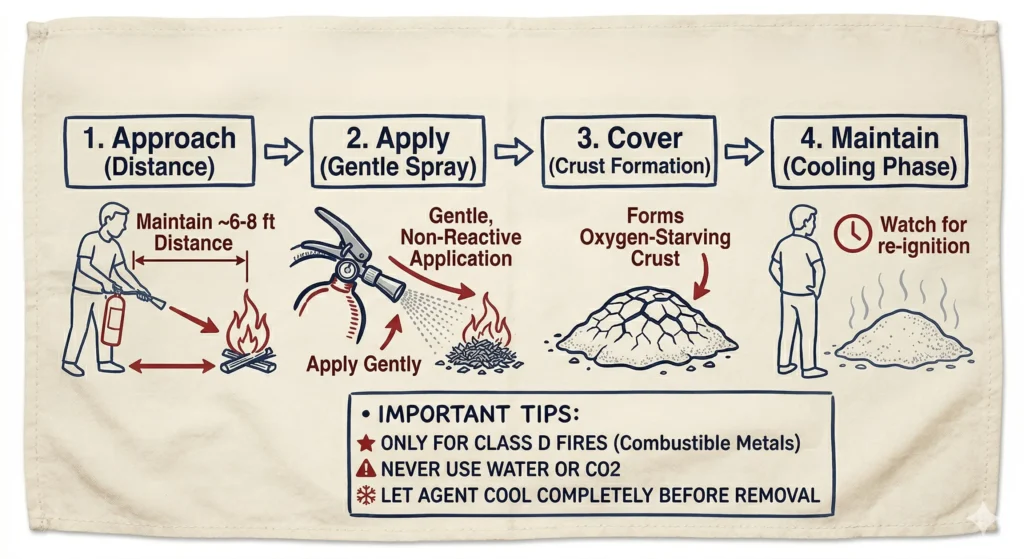
The process begins with maintaining a safe distance, typically around three to four meters from the fire source. The operator must apply the powder gently, allowing it to settle over the burning metal rather than forcefully dispersing it. This method ensures the formation of a protective crust that isolates oxygen.
This controlled approach is central to effective metal fire suppression, where the goal is not to extinguish aggressively but to stabilize the reaction. Rushing the process or applying excessive force can scatter burning particles, increasing the spread of the fire.
Critical Safety Precautions
When dealing with combustible metal fires, safety protocols must be strictly followed. Operators should always wear appropriate personal protective equipment (PPE), including heat-resistant gloves and face shields. The surrounding area must be isolated to prevent exposure to others.
It is equally important to understand what not to do. Water, foam, or CO₂ must never be used on metal fires, as these can trigger violent chemical reactions. In Saudi Arabia, emergency response protocols also require immediate communication with Civil Defense authorities, ensuring professional intervention when needed.
Maintenance and Inspection of Class D Fire Extinguishers
Owning a class d fire extinguisher is only effective if it remains in optimal working condition. Maintenance is a critical component of workplace fire protection, particularly in environments exposed to heat, dust, and industrial wear.
Routine Inspection Requirements
Regular inspections help identify potential issues before they become critical. These inspections typically include checking pressure levels, verifying the condition of the nozzle, and ensuring that the powder remains free-flowing.
Environmental factors in Saudi Arabia, such as high temperatures and humidity, can impact extinguisher performance. This makes routine checks even more essential, especially in outdoor or semi-exposed industrial settings.
According to NFPA 10 maintenance guidelines, extinguishers should undergo periodic professional servicing to maintain compliance and functionality.
Signs That Maintenance Is Needed
There are several indicators that a Class D extinguisher may require servicing. These include visible corrosion, pressure loss, or signs of powder clumping inside the unit. Even minor damage to valves or hoses can compromise performance during an emergency.
Organizations that prioritize fire safety compliance standards often implement scheduled maintenance programs to ensure readiness at all times. This proactive approach reduces the risk of equipment failure during critical moments.
Cost Considerations and Procurement in Saudi Arabia
Investing in a class d fire extinguisher is not just a safety decision but also a strategic one. Businesses must consider cost, quality, and compliance when selecting the right equipment.
Typical Cost Range
In Saudi Arabia, Class D extinguishers typically range between SAR 1,500 and SAR 3,000, depending on size, agent type, and manufacturer. Larger industrial units designed for factories tend to be more expensive due to their capacity and durability.
While cost is a factor, it should never outweigh performance and compliance. Choosing substandard equipment can lead to higher long-term costs, including potential safety incidents and regulatory penalties.
Selecting the Right Supplier
Sourcing extinguishers from certified suppliers is essential to ensure compliance with SASO and NFPA standards. Reputable providers offer products that are tested, labeled, and approved for use in industrial environments.
Organizations looking to strengthen their fire safety infrastructure often rely on experienced providers like DARS, which offers tailored solutions through its risk assessment services. These services help identify specific fire risks and recommend the most suitable equipment.
Limitations of Class D Fire Extinguishers
While a class d fire extinguisher is highly effective for metal fires, it is not a universal solution. Understanding its limitations is essential for building a comprehensive fire safety strategy.
Scope of Use
These extinguishers are designed exclusively for Class D fire hazards. Using them on other types of fires, such as flammable liquids or electrical systems, will not produce effective results.
This specificity is what makes them part of a broader category of specialized fire extinguishers, each designed for a particular risk. Relying solely on one type of extinguisher can leave gaps in fire protection coverage.
Response Time and Coverage
Class D extinguishers are most effective in the early stages of a fire. Large-scale metal fires may require additional suppression systems to achieve full containment.
This is why many facilities integrate these extinguishers into advanced fire suppression solutions, combining them with detection systems and automated responses. This layered approach ensures faster and more effective fire management.
Integrating Class D Extinguishers into Industrial Fire Safety Systems
Modern industrial facilities are moving beyond standalone tools toward integrated safety frameworks. A class d fire extinguisher plays a critical role within these systems, but it must be supported by additional layers of protection.
The Role of Risk Assessment
Effective fire safety begins with identifying potential risks. Facilities handling reactive metals must conduct detailed assessments to determine where extinguishers should be placed and what additional systems are required.
This process aligns with global best practices outlined by the International Organization for Standardization (ISO), which emphasizes risk-based safety planning.
Combining Detection and Suppression
In high-risk environments, early detection systems are just as important as suppression tools. Sensors, alarms, and automated responses work together to identify fires at their earliest stages.
By integrating industrial fire safety systems, organizations can reduce response times and minimize damage. This approach is particularly valuable in sectors where even a small fire can disrupt operations significantly.
Real-World Scenarios and Industry Insights
To fully appreciate the importance of a class d fire extinguisher, it is helpful to consider real-world applications. In Saudi Arabia, industries such as oil and gas, manufacturing, and aerospace frequently deal with reactive metals.
Industrial Case Example
In a metal fabrication facility, a small ignition source can quickly escalate into a full-scale fire if not handled correctly. Using a standard extinguisher in such a scenario could spread molten metal, increasing the risk.
However, with the correct use of a Class D extinguisher, the fire can be contained at its source. This demonstrates the importance of proper equipment and training in managing high-risk fire environments.
Lessons Learned
Industries that invest in proper training and equipment consistently report fewer incidents and faster recovery times. This highlights the value of integrating workplace fire protection into everyday operations rather than treating it as a compliance requirement.
Preparing for the Future of Fire Safety
As industrial sectors continue to evolve, so do the risks associated with them. The growing use of advanced materials and technologies introduces new challenges in fire safety.
Organizations must adapt by investing in advanced fire suppression solutions and ensuring that their teams are trained to handle specialized scenarios. This includes understanding the correct use of a class d fire extinguisher and integrating it into a broader safety strategy.
Regulatory Framework and Long-Term Compliance Strategies
As industries expand and evolve, maintaining compliance with fire safety regulations becomes a continuous responsibility rather than a one-time requirement. The use of a class d fire extinguisher is closely tied to regulatory expectations, particularly in environments exposed to hazardous material fire risks. In Saudi Arabia, this responsibility is reinforced by strict oversight from Civil Defense authorities and alignment with international standards.
Key Regulatory Bodies and Standards
Fire safety compliance in Saudi Arabia is governed by multiple frameworks, ensuring that industrial facilities meet both local and global benchmarks. These include SASO regulations, the Saudi Building Code, and internationally recognized standards such as NFPA.
Organizations are expected to conduct periodic risk assessments, ensure proper equipment placement, and maintain documentation for inspections. According to the NFPA 10 standard, portable fire extinguishers must be selected and installed based on the specific hazards present, reinforcing the importance of using the correct extinguisher type for Class D fire hazards.
Building a Compliance-Driven Culture
Compliance should not be treated as a checklist but as a core part of operational culture. Companies that embed fire safety compliance standards into their daily workflows create safer environments and reduce long-term risks.
This cultural shift involves training employees, conducting regular drills, and ensuring that all safety equipment, including specialized fire extinguishers, is accessible and functional. Over time, this approach leads to improved response times and fewer incidents.
Training and Awareness: The Human Factor in Fire Safety
Even the most advanced equipment cannot compensate for a lack of awareness or training. A class d fire extinguisher requires a specific handling approach, and without proper knowledge, its effectiveness can be compromised.
Importance of Specialized Training
Training programs must go beyond general fire safety education. Employees working in environments with combustible metal fires must understand the unique risks associated with these materials.
This includes recognizing early warning signs, selecting the correct extinguisher, and applying it correctly. Training should also emphasize what actions to avoid, such as using water or inappropriate extinguishing agents.
Creating a Prepared Workforce
Organizations that invest in continuous training create a workforce that is confident and prepared. This not only enhances safety but also supports operational continuity.
For businesses seeking structured training and compliance support, DARS offers tailored solutions through its safety programs and consultation services, helping organizations strengthen their workplace fire protection strategies.
Placement, Storage, and Environmental Considerations
The effectiveness of a class d fire extinguisher is heavily influenced by how and where it is stored. Improper placement can delay response time, while poor storage conditions can compromise performance.
Optimal Placement Strategies
Extinguishers must be positioned in locations where they are immediately accessible during emergencies. This typically includes areas near metal processing equipment, storage zones, and high-temperature workstations.
Visibility is equally important. Clear signage and unobstructed access ensure that employees can locate and use the extinguisher without hesitation.
Storage Conditions and Longevity
Environmental factors such as humidity, temperature fluctuations, and dust can affect the internal components of the extinguisher. In Saudi Arabia’s climate, this becomes even more critical.
Proper storage conditions help maintain the integrity of the extinguishing agent and ensure consistent performance. Organizations that prioritize these factors extend the lifespan of their equipment and maintain readiness in high-risk fire environments.
The Role of Technology in Modern Fire Protection
Fire safety is no longer limited to manual tools and reactive measures. The integration of technology is transforming how industries approach risk management and emergency response.
Smart Monitoring Systems
Advanced monitoring systems can detect changes in temperature, smoke, or chemical composition, triggering early alerts. These systems work alongside extinguishers to create a proactive safety environment.
By combining detection with industrial fire safety systems, organizations can respond to incidents before they escalate. This reduces damage, downtime, and overall risk exposure.
Integration with Suppression Systems
Modern facilities are increasingly adopting integrated solutions that combine detection, suppression, and monitoring. A class d fire extinguisher becomes one component within a larger ecosystem of advanced fire suppression solutions.
This integrated approach ensures that fires are not only contained quickly but also prevented from spreading, providing a higher level of protection for both people and assets.
Common Mistakes to Avoid in Class D Fire Safety
Despite advancements in fire safety, certain mistakes continue to occur in industrial environments. These errors often stem from a lack of awareness or improper planning.
Misidentifying Fire Types
One of the most critical mistakes is using the wrong extinguisher for the fire type. Applying water or foam to a metal fire can worsen the situation, leading to rapid escalation.
This highlights the importance of proper training and clear labeling, ensuring that employees can quickly identify the correct response.
Neglecting Maintenance
Failure to maintain extinguishers is another common issue. Even the most reliable equipment can fail if it is not regularly inspected and serviced.
Organizations that neglect maintenance risk equipment malfunction during emergencies, undermining their entire workplace fire protection strategy.
Strategic Fire Safety Planning for Industrial Growth
As Saudi Arabia continues to expand its industrial sector, fire safety planning must evolve alongside it. The increasing use of advanced materials and manufacturing processes introduces new challenges that require specialized solutions.
Aligning with Vision 2030
The Kingdom’s Vision 2030 initiative emphasizes industrial growth and innovation. With this growth comes increased exposure to hazardous material fire risks, making fire safety a strategic priority.
Organizations must invest in equipment, training, and systems that align with this vision, ensuring sustainable and safe development.
Long-Term Risk Mitigation
Effective fire safety planning is not just about immediate response but also about long-term risk mitigation. This involves continuous assessment, upgrading equipment, and adopting new technologies.
By integrating metal fire suppression strategies into broader safety frameworks, companies can protect their operations and support long-term growth.
Conclusion: The Critical Role of Class D Fire Extinguishers
A class d fire extinguisher is more than just a piece of equipment. It is a critical component of a comprehensive fire safety strategy, particularly in industries dealing with combustible metals.From understanding Class D fire hazards to ensuring compliance with regulations, every aspect of fire safety requires careful planning and execution. Organizations that invest in the right tools, training, and systems are better equipped to handle emergencies and protect their assets.