
Fire incidents rarely announce themselves. They start small, escalate quickly, and often leave people frozen in the moment, unsure of what to do next. This is exactly why understanding how to use a fire extinguisher is not a “nice to have” skill but a core part of fire safety basics, whether at home or in the workplace. From a safety perspective, knowing the correct response in the first seconds can make the difference between control and catastrophe.
At DARS, fire safety is approached as a system, not a single device on a wall. A fire extinguisher is only effective when the person using it understands its limits, timing, and proper technique. This article explains the correct way to use a fire extinguisher, when it is appropriate to do so, and why training and preparation matter long before a fire starts.
Why Knowing How to Use a Fire Extinguisher Matters
Many people assume that owning a fire extinguisher is enough. In reality, incorrect usage often renders it ineffective or even dangerous. Fire extinguishers are designed to control incipient-stage fires, not fully developed ones. Without understanding this distinction, users may attempt to fight fires that should instead trigger immediate evacuation.
According to the National Fire Protection Association (NFPA), portable fire extinguishers are intended to be used by trained occupants when a fire is small and contained, not when flames are spreading or smoke is overwhelming. This aligns with global fire safety guidance promoted by organizations such as the NFPA and the American Red Cross, both of which stress training and judgment over instinct.
Understanding how to use a fire extinguisher correctly is ultimately about protecting lives first, then property. This mindset underpins every fire safety program implemented by DARS across residential, commercial, and industrial environments.
Fire Safety Basics: Before the Fire Even Starts
Effective fire response begins long before smoke appears. Fire safety basics include awareness, preparation, and correct equipment placement. A fire extinguisher that is hidden, expired, or incompatible with the fire type offers little protection.
Every environment should be assessed based on risk. Homes require different considerations compared to offices, warehouses, or factories. This is why professional fire risk assessments, such as those outlined in DARS’s risk management services, form the backbone of any reliable fire safety strategy.
Preparation also includes familiarity. People should know where extinguishers are located, how heavy they are, and whether they are suitable for electrical, liquid, or solid fires. Without this familiarity, panic often replaces action.
Understanding Fire Extinguisher Classes
Fire extinguishers are not universal tools. They are categorized into fire extinguisher classes, each designed to combat specific fire sources. Using the wrong extinguisher can intensify a fire instead of suppressing it.
Class A extinguishers target ordinary combustibles such as paper, wood, and fabric. Class B extinguishers are designed for flammable liquids like fuel or oil. Class C extinguishers are suitable for electrical fires, while Class D and K extinguishers address combustible metals and cooking oils respectively.
International fire safety authorities, including OSHA, emphasize proper classification as a core safety requirement in workplaces. This classification system exists to protect users from dangerous reactions, such as spraying water on an electrical fire.
Recognizing fire extinguisher classes ensures that action taken in an emergency does not create a second hazard.
Fire Extinguisher Types and Their Uses
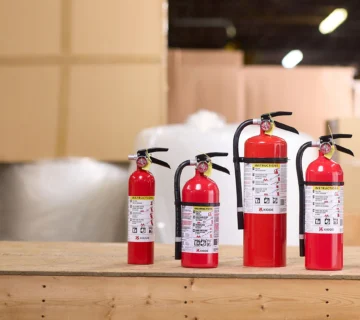
Closely tied to fire classes are fire extinguisher types, which describe the extinguishing agent used inside the unit. Common types include water, foam, dry chemical, CO₂, and wet chemical extinguishers. Each functions differently and is selected based on the environment and expected risks.
Dry chemical extinguishers, for example, are common in workplaces because they cover multiple fire classes. CO₂ extinguishers are often used near electrical equipment due to their residue-free discharge. Kitchens, on the other hand, require wet chemical extinguishers specifically designed for cooking oil fires.
DARS’s approach to selecting fire extinguisher types follows regulatory requirements and operational realities, ensuring compliance with Civil Defense regulations and Saudi Building Code standards, as reflected in its fire safety services.
When to Use a Fire Extinguisher and When Not To
One of the most critical aspects of fire extinguisher safety tips is knowing when to use a fire extinguisher and when evacuation is the only safe option. Fire extinguishers should only be used if the fire is small, the exit path is clear, and the user has been trained.
If smoke is filling the room, the fire is spreading rapidly, or the user feels unsure, evacuation must take priority. This guidance is consistently reinforced by global safety authorities such as the UK Fire and Rescue Services.
Attempting to fight a fire beyond the incipient stage often leads to injury, smoke inhalation, or blocked exits. Fire extinguishers are tools for early intervention, not substitutes for professional emergency response.
The Role of Training in Fire Extinguisher Safety
Training transforms equipment into capability. Without training, even the best home fire safety equipment becomes a false sense of security. Fire extinguisher training teaches not only technique but judgment, confidence, and awareness.
At DARS, training programs focus on practical scenarios, not theory alone. This includes recognizing fire growth stages, choosing the correct extinguisher, and maintaining situational awareness during use. These principles are reinforced across DARS’s projects and documented safety policies, such as those outlined in its fire safety policy.
This emphasis on readiness reflects a broader philosophy: safety systems only work when people understand how to interact with them.
Setting the Stage for Correct Fire Extinguisher Use
From Knowledge to Action: Applying Fire Extinguisher Skills Under Pressure
Understanding theory is only half the equation. When a fire breaks out, the environment changes instantly. Noise increases, visibility drops, and stress levels rise. This is where knowing how to use a fire extinguisher moves from abstract knowledge to a practical life skill
The Correct Way to Use a Fire Extinguisher Starts with Positioning
Before any extinguisher is activated, positioning is key. The user should always stand with a clear exit behind them, never allowing the fire to cut off their escape route. This principle is consistently reinforced by international fire authorities such as the National Safety Council.
Distance also matters. Standing too close can expose the user to heat and smoke, while standing too far reduces effectiveness. Most portable extinguishers are designed to work from a safe operating range, which allows controlled discharge without compromising personal safety.
This simple positioning decision often determines whether a fire can be controlled or whether evacuation becomes the only safe option.
Understanding the PASS Method Fire Extinguisher Technique
The most widely taught technique for fire extinguisher use is the PASS method fire extinguisher approach. It provides a simple, memorable framework that reduces hesitation during emergencies. PASS stands for Pull, Aim, Squeeze, and Sweep, but understanding the intent behind each step is more important than memorizing the acronym.
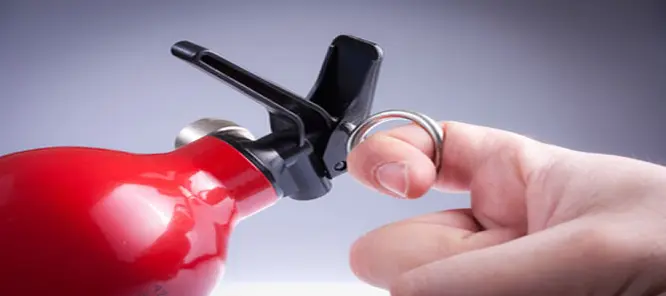
Pulling the pin breaks the tamper seal and prepares the extinguisher for discharge. Aiming at the base of the fire ensures the extinguishing agent targets the fuel source rather than the flames themselves. Squeezing the handle releases the agent, while sweeping side to side ensures even coverage across the burning area.
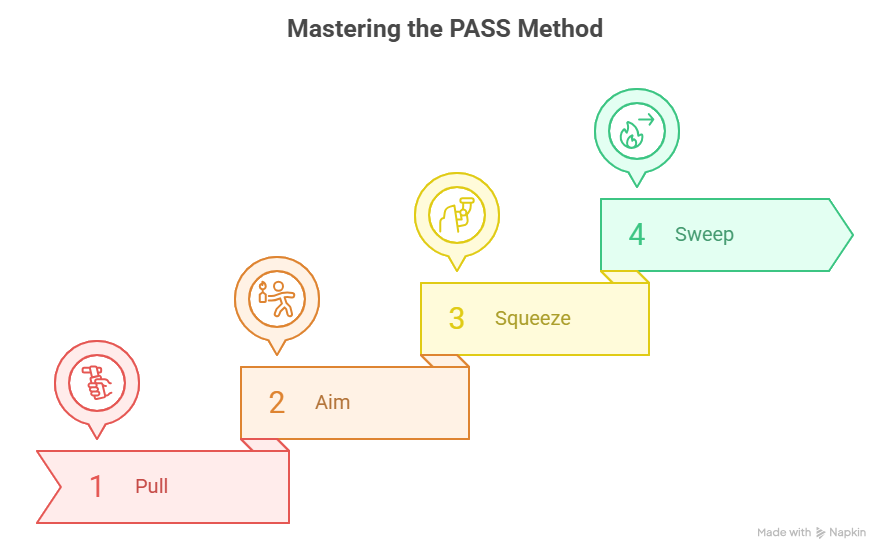
Fire safety professionals emphasize that PASS is not a rigid sequence but a controlled motion that adapts to how the fire responds.
Why Aiming at the Base of the Fire Is Critical
One of the most common misunderstandings in fire response is aiming at flames instead of fuel. Flames are a symptom, not the source. The correct way to use a fire extinguisher always involves targeting the base, where heat and fuel interact.
Authoritative guidance from organizations like the American Fire Safety Association highlights this distinction as a major factor in extinguisher effectiveness. When the base is cooled or smothered, the fire loses its ability to sustain itself.
This principle applies across fire extinguisher types and fire extinguisher classes, reinforcing why training must go beyond basic instructions printed on the cylinder.
Fire Extinguisher Safety Tips During Active Use
Once discharge begins, situational awareness must remain high. Fires can change direction quickly due to airflow, fuel spread, or material collapse. Fire extinguisher safety tips emphasize constant reassessment during use rather than fixed focus on a single spot.
Smoke inhalation is a serious risk, even during small fires. If visibility decreases or breathing becomes difficult, stopping immediately and evacuating is the correct decision. No piece of equipment is worth compromising health or life.
Professional workplace fire safety procedures, such as those aligned with OSHA fire response guidance, consistently prioritize personal safety over property protection.
Managing Different Fire Extinguisher Types During Use
Not all extinguishers behave the same way during discharge. CO₂ extinguishers, for example, release gas at extremely low temperatures, which can cause cold burns if mishandled. Dry chemical extinguishers create powder clouds that reduce visibility, requiring careful movement and awareness.
This is why familiarity with fire extinguisher types is essential before an emergency occurs. DARS’s fire safety approach includes clear labeling, proper placement, and user orientation as part of its broader service offering, ensuring compliance with operational safety standards outlined in its projects portfolio.
Knowing how an extinguisher behaves allows users to anticipate challenges rather than react blindly.
Common Fire Extinguisher Mistakes That Reduce Effectiveness
Even with good intentions, several errors repeatedly undermine fire response efforts. One of the most frequent is attempting to fight a fire that has already grown beyond the extinguisher’s capacity. Another is emptying the extinguisher too quickly without controlled sweeping, leaving fuel sources untouched.
Failing to check pressure levels or expiry dates beforehand is another overlooked issue. An extinguisher that discharges weakly or not at all can create false confidence at the worst possible moment. Guidance from sources such as the UK Health and Safety Executive highlights maintenance as a core safety responsibility.
Avoiding these common fire extinguisher mistakes starts with awareness and regular inspections, not during the emergency itself.
Integrating Fire Extinguisher Use into Workplace Fire Safety Procedures
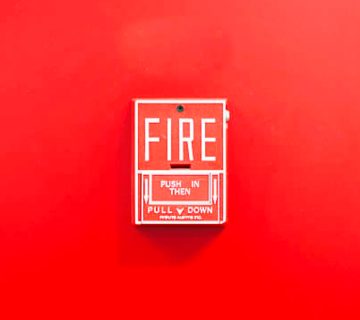
In professional environments, extinguisher use should never be isolated from broader workplace fire safety procedures. Clear roles, alarm activation, and evacuation protocols must work together. One person using an extinguisher while others remain unaware creates unnecessary risk.
This integrated approach is reflected in DARS’s safety frameworks, which align equipment use with structured response plans and regulatory requirements. Fire extinguishers are a component of the system, not the system itself.
Such coordination reduces confusion and supports faster, safer outcomes during incidents.
Transitioning from Action to Aftermath Awareness
Using a fire extinguisher does not end when the flames disappear. Re-ignition is possible, especially if the fuel source remains hot. Monitoring the area, avoiding contact with residue, and reporting the incident are all essential post-use steps.
Fire safety authorities including the International Association of Fire Chiefs stress that any extinguisher use should be followed by professional inspection and replacement.
From Immediate Response to Long-Term Fire Safety Thinking
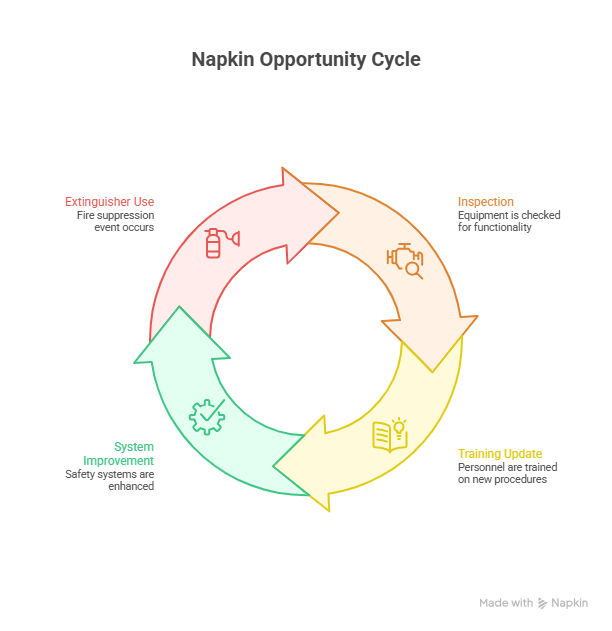
Once a fire has been suppressed and the immediate danger has passed, attention must shift from reaction to responsibility. Using a fire extinguisher is not the final step in fire safety. It is one moment within a much larger system that includes reporting, inspection, learning, and prevention. This is where many organisations and households fall short, assuming the incident is “over” once the flames are gone.
At DARS, post-incident awareness is treated as seriously as the response itself. Every extinguisher discharge, no matter how small the fire, should trigger a review of procedures, equipment readiness, and environmental risks. This mindset transforms isolated actions into sustainable safety practices.
What to Do After Using a Fire Extinguisher
After a fire extinguisher has been used, the area should be monitored closely for signs of re-ignition. Some materials retain heat internally, allowing fires to restart minutes later. Touching or moving burnt items too quickly can also increase risk, especially in electrical or chemical-related incidents.
Fire authorities such as the International Association of Fire Chiefs consistently recommend professional inspection after any fire event. A used extinguisher must be replaced or recharged, and the surrounding area should be assessed by qualified personnel.
This step closes the loop between emergency action and long-term fire safety basics.
Fire Extinguishers as Part of Home Fire Safety Equipment
In residential settings, fire extinguishers often exist alongside smoke detectors, alarms, and escape plans as part of broader home fire safety equipment. However, these elements are frequently treated as separate tools rather than an interconnected system. This disconnect reduces overall effectiveness during real emergencies.
A fire extinguisher placed in the wrong location, such as too close to a stove or hidden inside a cabinet, may be inaccessible when needed. Guidance from the U.S. Fire Administration emphasizes visibility and accessibility as core principles of home fire safety.
When fire extinguishers are integrated thoughtfully into the home environment, they support faster decisions and safer outcomes.
Reinforcing Workplace Fire Safety Procedures After an Incident
In workplaces, extinguisher use should always be followed by documentation and review. This is not about assigning blame but about strengthening workplace fire safety procedures. Reviewing how the incident unfolded helps identify gaps in training, equipment placement, or communication.
Regulatory bodies such as OSHA emphasize continuous improvement as a key component of occupational fire safety. Fire response plans should evolve based on real experiences, not remain static documents.
DARS applies this principle across its safety projects, ensuring that every incident informs better preparation moving forward.
Why Maintenance Is as Important as Knowing How to Use a Fire Extinguisher
Even the most confident user cannot rely on poorly maintained equipment. Fire extinguishers require regular inspection to ensure pressure levels, seals, and discharge mechanisms are intact. Neglecting maintenance is one of the quietest yet most dangerous failures in fire safety systems.
International standards referenced by organisations like the British Standards Institution underline inspection schedules as a legal and safety requirement. Expired or damaged extinguishers often fail silently until the moment they are needed.
DARS’s service model embeds inspection and maintenance into its fire safety offerings, recognising that readiness is a continuous process rather than a one-time setup.
Connecting Fire Extinguisher Use to Fire Prevention
While this article focuses on how to use a fire extinguisher, the ultimate goal of fire safety is prevention. Extinguishers exist because fires occur, but strong prevention strategies reduce how often they are needed. Electrical inspections, safe storage of flammable materials, and staff awareness all play a role.
Fire safety research published by bodies such as the National Fire Protection Association consistently shows that prevention measures significantly reduce fire-related losses. Extinguisher use is the last line of defence, not the first.
Understanding this hierarchy helps organisations and households invest resources where they have the greatest impact.
Training as a Long-Term Safety Investment
Fire extinguisher training should not be treated as a one-off exercise. Skills degrade over time, especially if they are not used regularly. Periodic refreshers help individuals retain both confidence and judgment, particularly under stress.
DARS views training as a living component of fire safety systems, aligned with evolving regulations and operational changes. This approach mirrors best practices promoted by global safety organisations and reflected in DARS’s ongoing work across its fire safety projects.
When training is continuous, response becomes instinctive rather than improvised.
Building a Fire-Safe Culture Beyond Equipment
The most effective fire safety environments are shaped by culture, not hardware alone. A fire-safe culture encourages reporting hazards, respecting procedures, and taking drills seriously. In such environments, fire extinguishers are understood, respected, and used appropriately.
This cultural layer connects everything discussed across all three parts of this guide. Knowing how to use a fire extinguisher, understanding when to use it, and recognising its role within a larger system all reinforce responsible behaviour.
DARS’s philosophy centres on this integration, combining systems, training, and accountability to protect property and lives.
Closing Thoughts: Fire Extinguisher Knowledge as a Shared Responsibility
Learning how to use a fire extinguisher is not reserved for safety officers or emergency responders. It is a shared responsibility that applies to homeowners, employees, and decision-makers alike. When individuals understand their role within a fire safety system, outcomes improve across the board.
This guide has moved from foundational knowledge to practical action and finally to long-term responsibility. Together, these elements form a complete picture of effective fire safety, grounded in preparation rather than reaction.
For organisations and individuals seeking to strengthen their fire safety systems, professional guidance remains essential. DARS continues to support fire safety readiness through compliant systems, structured training, and risk-aware implementation, ensuring that preparedness is built into every environment from the start.