
Fire safety has become a central priority for businesses, industrial facilities, and commercial buildings across Saudi Arabia. As the country experiences rapid development and industrial expansion, organizations must ensure their workplaces meet strict safety standards while protecting people and property. One of the most widely used tools in modern fire suppression solutions is the dry chemical fire extinguisher, a versatile device designed to handle multiple types of fires.
For companies operating in Saudi Arabia, understanding how this equipment works, where it should be installed, and how to maintain it is not just a safety practice. It is a legal and operational necessity. This article explains how dry chemical fire extinguishers function, where they should be used, and how businesses can integrate them into broader fire protection systems to ensure full compliance with national safety regulations.
Understanding the Role of Fire Extinguishers in Modern Safety Systems
Fire extinguishers are often the first line of defense when a fire begins. In many cases, a small fire can be controlled or extinguished within seconds if the correct equipment is available and used properly. This early intervention prevents minor incidents from escalating into catastrophic events.
Within modern fire safety equipment, dry chemical extinguishers stand out because they are capable of addressing several different fire risks at once. Instead of requiring multiple extinguishers for different fire types, organizations can rely on a single multi-purpose unit to protect diverse environments such as offices, warehouses, manufacturing facilities, and vehicles.
From a risk management perspective, this versatility significantly improves emergency fire preparedness. Businesses gain a practical and efficient safety solution while also simplifying compliance with safety regulations.
What Is a Dry Chemical Fire Extinguisher?
A dry chemical fire extinguisher is a portable fire suppression device that uses powdered chemicals to extinguish flames. The powder interrupts the chemical reaction occurring during combustion while also separating the fuel from oxygen. By disrupting this process, the extinguisher rapidly stops the fire from spreading.
Most dry chemical extinguishers used in Saudi Arabia rely on monoammonium phosphate powder, which is effective against several fire classes. According to industry sources, this chemical works by coating the burning material and cutting off the oxygen supply while neutralizing the chain reaction that sustains the fire.
These extinguishers typically range between 4 kg and 10 kg, although larger wheeled units are available for industrial facilities where higher risk levels require greater capacity.
Businesses seeking detailed information about fire equipment types can review resources such as the guide on fire extinguisher types in Saudi Arabia which explains how different extinguishers are applied across various environments.
Because of their versatility, dry chemical extinguishers dominate many sectors of the Saudi market, particularly in workplaces where multiple fire hazards exist.
How Dry Chemical Extinguishers Stop Fires
To understand the effectiveness of this equipment, it is helpful to examine how combustion works. Fires rely on three essential elements often referred to as the fire triangle:
- Heat
- Fuel
- Oxygen
If any one of these elements is removed, the fire cannot continue. Dry chemical extinguishers attack this triangle by disrupting the chemical reaction that occurs during combustion.
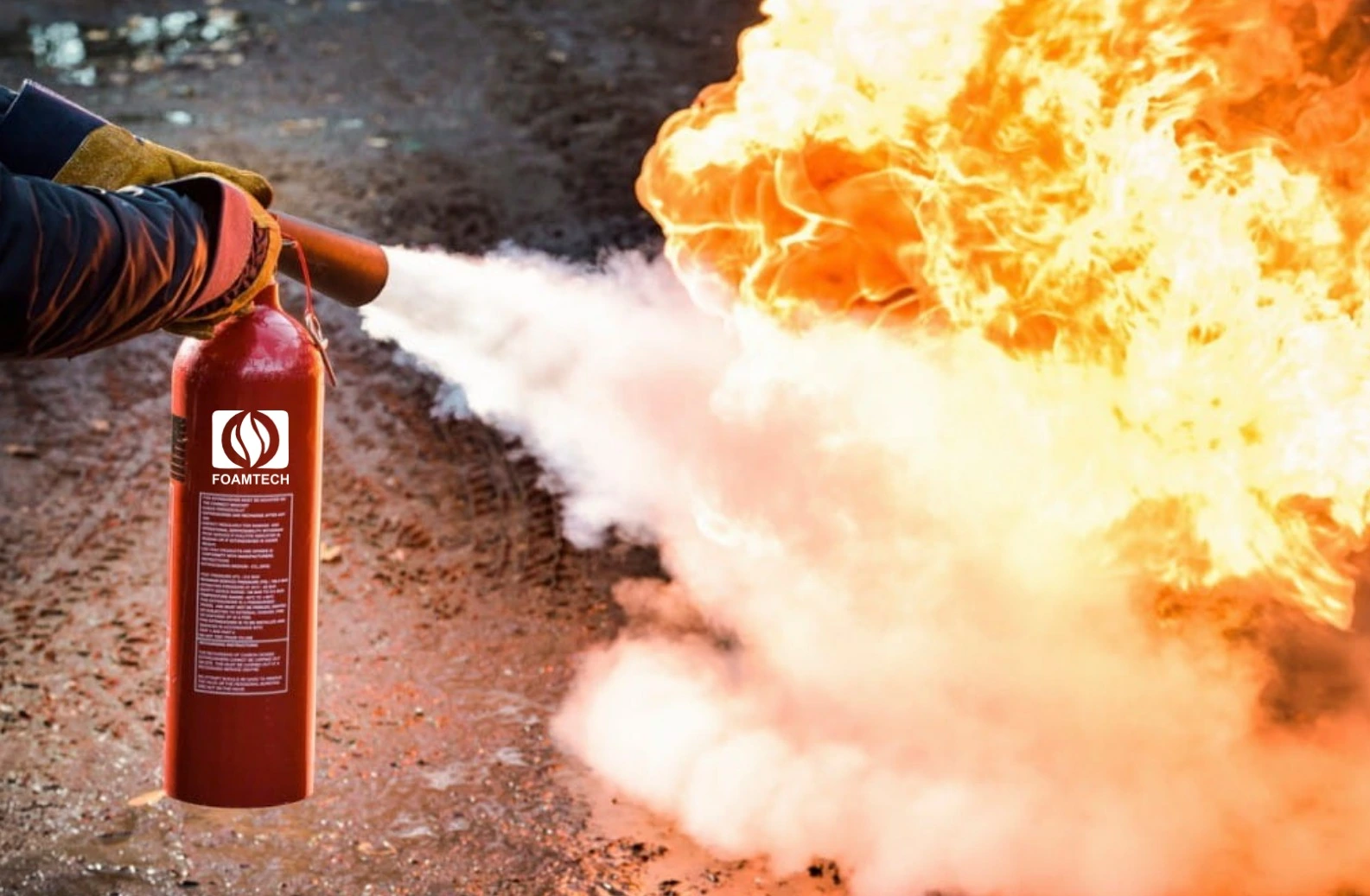
When the extinguisher is activated, pressurized gas propels the powder through the nozzle. The powder spreads over the burning material, forming a barrier that blocks oxygen while simultaneously interfering with the chemical chain reaction of the fire.
Types of Fires a Dry Chemical Fire Extinguisher Can Handle
One of the defining advantages of the dry chemical fire extinguisher is its ability to address several fire classes. This flexibility makes it particularly useful for businesses where different fire hazards may exist within the same facility.
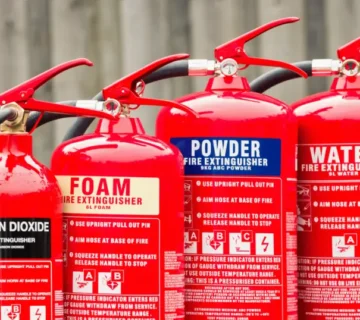
Dry chemical extinguishers are commonly designed for Class A, B, and C fires:
- Class A fires involving solid materials such as wood, paper, and textiles
- Class B fires caused by flammable liquids like fuel, oils, or solvents
- Class C fires involving energized electrical equipment
Because of this broad coverage, dry chemical extinguishers are commonly installed in offices, factories, warehouses, transportation vehicles, and public buildings.
For example, a warehouse storing packaging materials and electronic equipment may face both combustible material fires and electrical fires. Instead of installing multiple specialized extinguishers, a single ABC dry chemical unit can address both risks effectively.
Why Dry Chemical Extinguishers Are Essential for Saudi Businesses
Saudi Arabia’s economic transformation has led to rapid growth in manufacturing, logistics, construction, and commercial development. As these sectors expand, the demand for reliable industrial fire safety solutions continues to increase.
Dry chemical extinguishers provide several advantages that make them ideal for the Saudi environment:
First, they are adaptable to diverse industries. Whether installed in office buildings, industrial facilities, retail spaces, or vehicle fleets, they can protect against multiple fire risks.
Second, they are cost-effective. Compared with specialized extinguishers, dry chemical units provide broad coverage with fewer devices, reducing installation and maintenance costs.
Third, they support regulatory compliance. Saudi safety regulations often require fire protection measures capable of addressing multiple fire hazards within the same facility.
These benefits make dry chemical extinguishers a standard feature of many commercial fire safety standards implemented across the Kingdom.
Saudi Regulations Governing Fire Extinguishers
Fire safety regulations in Saudi Arabia are designed to protect both workers and public spaces. Businesses must comply with strict technical standards for fire equipment, installation, and inspection.
The Saudi Standards, Metrology and Quality Organization (SASO) regulates fire safety equipment under technical regulations such as the SALEEM certification program. These regulations ensure that fire extinguishers meet specific performance and safety criteria before they can be imported or sold.
Organizations can review the official regulations through the SASO technical regulations for fire control equipment which outline compliance requirements for manufacturers and suppliers.
In addition to SASO certification, fire protection equipment must meet the requirements of the Saudi Civil Defense, which conducts inspections and audits to ensure buildings maintain appropriate safety standards.
These regulations are particularly important in multi-risk environments where fire safety compliance is critical to operational approval.
Placement and Installation Requirements
Installing fire extinguishers is not simply a matter of mounting them on a wall. Saudi Civil Defense regulations specify detailed requirements for placement to ensure quick access during emergencies.
In most buildings, extinguishers must be positioned within 20 to 30 meters of travel distance from any point in the facility. This ensures that employees can reach fire suppression equipment quickly when a fire starts.
Extinguishers must also be clearly visible and labeled in both Arabic and English. Proper signage and accessibility are essential elements of effective fire prevention strategies, ensuring employees can identify the equipment immediately during an emergency.
Choosing the Right Size and Capacity
While dry chemical extinguishers are available in various sizes, selecting the correct capacity is essential for effective protection.
Smaller units, such as 4 kg extinguishers, are often used in vehicles and small offices where the risk level is relatively low. Medium-sized 6 kg units are commonly installed in commercial buildings and warehouses, offering greater coverage for moderate fire risks.
Large industrial environments may require 50 kg wheeled extinguishers, which provide extended discharge times and higher capacity for handling larger fires.
Selecting the right extinguisher size should always be part of a broader fire protection systems strategy that considers building layout, occupancy, and fire hazards.
Businesses often consult safety professionals or certified providers to determine the appropriate equipment for their specific environment.
The Importance of Fire Extinguisher Maintenance
Installing a dry chemical fire extinguisher is only the first step in creating a safe environment. For the equipment to function correctly during an emergency, it must be maintained regularly and inspected according to strict safety standards. Without consistent fire extinguisher maintenance, even the most advanced safety equipment can fail when it is needed most.
Maintenance ensures that the extinguisher remains fully pressurized, that the chemical powder inside remains effective, and that the nozzle and discharge system are not obstructed. Over time, environmental conditions such as humidity, dust, and temperature fluctuations can affect the internal components of the device. Regular checks help identify these issues before they compromise performance.
In Saudi Arabia, routine inspection is not only recommended but often required to maintain fire safety compliance with Civil Defense regulations. Businesses that neglect these inspections risk fines, operational disruptions, and increased safety liabilities.
Inspection Schedules for Fire Extinguishers
A structured inspection schedule is essential for maintaining reliable fire safety equipment. In most workplaces, inspections follow three levels: monthly visual checks, semi-annual functional inspections, and annual professional servicing.
Monthly inspections are typically conducted internally by trained staff members. These quick checks confirm that the extinguisher remains accessible, that the pressure gauge indicates normal levels, and that the safety seal remains intact. Any signs of corrosion, leakage, or damage should be reported immediately.
Semi-annual inspections involve more detailed functional assessments. During this process, technicians verify the weight of the extinguisher, check internal pressure, and examine discharge components to ensure the device will operate correctly during an emergency.
Annual servicing must be conducted by certified technicians who are qualified to inspect fire protection equipment according to national regulations. These inspections confirm that the extinguisher continues to meet operational safety standards and remains suitable for the environment in which it is installed.
Organizations looking to maintain compliance with Saudi safety regulations can review inspection guidance through resources such as fire extinguisher inspection requirements in Saudi workplaces, which outlines inspection procedures used across commercial facilities.
Documentation and Compliance Requirements
Beyond performing inspections, businesses must also maintain proper documentation. Safety inspections conducted by the Saudi Civil Defense often require proof that fire prevention strategies and maintenance procedures are being followed consistently.
Inspection records typically include maintenance dates, technician details, equipment serial numbers, and service results. These records are usually stored for at least five years to demonstrate long-term compliance with safety regulations.
Maintaining accurate documentation provides several advantages. It helps organizations identify recurring maintenance issues, track equipment performance, and prepare for regulatory inspections without disruption.
From a risk management perspective, documentation also protects organizations legally. If an incident occurs, detailed maintenance records demonstrate that the company followed recognized commercial fire safety standards.
Training Employees to Use a Dry Chemical Fire Extinguisher
Even the most reliable fire suppression solutions are ineffective if employees do not know how to use them correctly. Workplace training therefore plays a critical role in ensuring rapid and effective emergency response.
Employees must understand when it is safe to use a fire extinguisher and when evacuation is the safer option. In most cases, extinguishers should only be used during the early stages of a fire when it is small and contained.
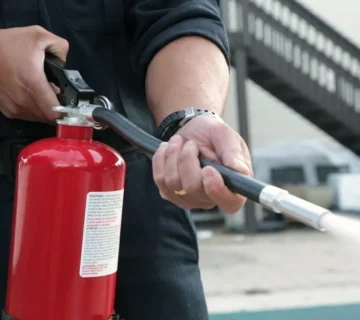
The widely accepted method for operating a fire extinguisher is known as the PASS technique. This approach provides a simple and effective process that employees can remember during stressful situations.
• Pull the safety pin to unlock the extinguisher
• Aim the nozzle at the base of the fire
• Squeeze the handle to release the extinguishing agent
This technique allows the chemical powder to spread directly over the burning material, stopping the fire more effectively.
Training employees to follow this process is a fundamental element of effective workplace fire safety. Regular drills and training sessions help reinforce this knowledge so that employees remain confident during emergencies.
Organizations interested in broader fire safety practices can review additional guidance through the Saudi Civil Defense safety resources which provide information about certified safety service providers.
Integrating Fire Extinguishers into Fire Protection Systems
While a dry chemical fire extinguisher is an important safety tool, it should never function as a standalone solution. Effective fire protection requires a combination of systems designed to detect, contain, and suppress fires quickly.
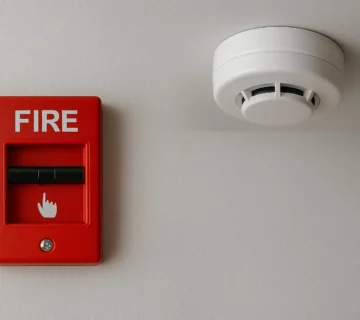
In modern buildings, extinguishers are usually integrated with other fire protection systems, including alarm systems, smoke detectors, emergency lighting, and sprinkler networks. Each component performs a different function, creating multiple layers of protection.
Early detection systems identify fires before they spread. Alarm systems alert occupants and initiate evacuation procedures. Sprinkler systems automatically control flames while firefighters respond. Fire extinguishers provide immediate suppression during the earliest stage of a fire.
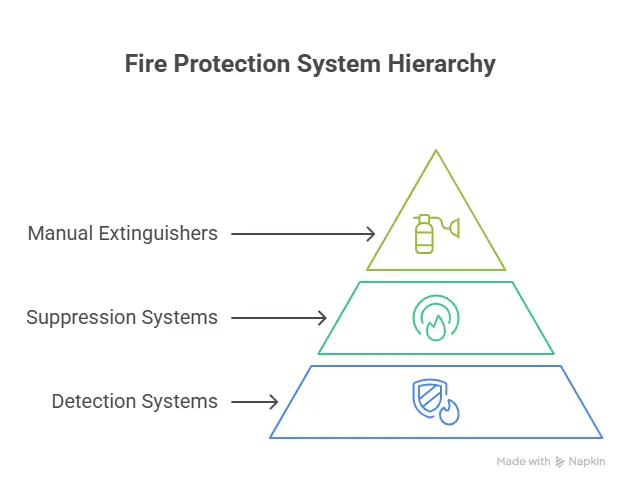
This layered approach significantly improves emergency fire preparedness, ensuring that fires can be controlled quickly and efficiently.
Challenges and Limitations of Dry Chemical Fire Extinguishers
Although dry chemical extinguishers offer many advantages, they also have limitations that organizations should understand. The chemical powder used to extinguish fires can leave significant residue after discharge. This residue may damage sensitive electronics or machinery if not cleaned promptly.
For example, in environments such as data centers or laboratories, alternative extinguishing agents may sometimes be preferred because they leave less residue. However, dry chemical units remain valuable because of their ability to address multiple fire types quickly.
Another limitation involves visibility during discharge. When the powder is released, it can temporarily reduce visibility in the surrounding area. In confined spaces, this may complicate evacuation or firefighting efforts.
Despite these challenges, dry chemical extinguishers remain one of the most practical tools for industrial fire safety and commercial environments where diverse fire hazards exist.
Storage and Environmental Considerations
Proper storage conditions are essential to ensure the long-term reliability of a dry chemical fire extinguisher. In Saudi Arabia, high temperatures and intense sunlight can affect fire safety equipment if it is not installed correctly.
Extinguishers should be mounted in shaded areas whenever possible and kept away from direct heat sources. The recommended storage temperature typically ranges between 0°C and 50°C, ensuring that internal pressure levels remain stable.
Humidity and moisture exposure can also affect extinguisher performance by causing corrosion or powder clumping. For this reason, extinguishers installed in outdoor environments should be protected with weather-resistant cabinets.
Maintaining proper storage conditions supports long-term fire safety compliance and ensures the equipment remains operational throughout its service life.
Cost Considerations for Businesses
From a financial perspective, dry chemical extinguishers are among the most cost-effective forms of fire safety equipment available. In Saudi Arabia, a standard 6 kg ABC dry chemical fire extinguisher typically costs between SAR 150 and SAR 600, depending on the manufacturer and certification level.
Annual servicing costs are usually modest compared with other safety systems. Routine maintenance services often range from SAR 50 to SAR 100 per unit, making regular inspections affordable for most organizations.
Businesses that purchase fire protection equipment from certified suppliers often benefit from additional support services such as installation planning, safety audits, and ongoing maintenance programs.
Companies seeking guidance on fire equipment selection and installation can review industry resources such as fire extinguisher safety requirements in Saudi Arabia which explain regulatory expectations and safety best practices.
Moving Beyond Equipment Toward Fire Prevention
A dry chemical fire extinguisher is one of the most effective tools for controlling fires in their early stages. However, relying solely on suppression equipment is not enough to guarantee a safe environment. Modern organizations must adopt proactive fire prevention strategies that minimize the likelihood of fire incidents before they occur.
Prevention begins with understanding how fires start in commercial and industrial environments. Electrical faults, overheating machinery, improper storage of flammable materials, and human error remain among the most common causes of workplace fires. Addressing these risks through proper planning and training significantly reduces the probability of emergencies.
For businesses in Saudi Arabia, fire prevention is not only a safety concern but also a regulatory expectation. Facilities that integrate prevention planning into their operational procedures demonstrate stronger fire safety compliance and often experience fewer disruptions caused by accidents or inspections.
Building a Culture of Workplace Fire Safety
Effective workplace fire safety depends on people as much as it depends on equipment. Organizations that successfully prevent fires typically invest in employee awareness, safety training, and clear emergency procedures.
Safety culture begins with leadership. When management prioritizes fire safety and allocates resources to proper training, employees become more attentive to potential hazards. Routine safety briefings, evacuation drills, and hazard reporting systems encourage employees to identify risks early.
Education also helps employees understand how safety equipment works. Workers who are familiar with the location and operation of a dry chemical fire extinguisher respond faster and more confidently when incidents occur.
This culture-driven approach strengthens emergency fire preparedness and ensures safety procedures become part of everyday workplace behavior rather than occasional compliance tasks.
Conducting Fire Risk Assessments
One of the most important steps in preventing fire incidents is performing regular fire risk assessments. These evaluations identify potential hazards, determine the likelihood of fire events, and recommend safety improvements before incidents occur.
Risk assessments typically examine several factors, including building layout, electrical systems, machinery operations, storage practices, and emergency evacuation routes. The goal is to create a detailed understanding of how fire could spread within a facility and how it can be controlled effectively.
For example, a warehouse storing packaging materials and chemicals may require additional fire detection systems and strategically positioned dry chemical fire extinguishers. Meanwhile, an office environment may prioritize electrical safety inspections and employee training.
Organizations often conduct these assessments as part of their broader industrial fire safety strategy. This process not only improves safety but also helps businesses align with international safety standards such as those developed by the National Fire Protection Association, which provides widely recognized fire safety guidelines.
The Role of Technology in Modern Fire Protection
Advancements in safety technology are transforming the way organizations approach fire protection. While traditional tools like extinguishers remain essential, modern facilities increasingly rely on integrated digital systems to monitor risks in real time.
Smart detection systems now use sensors to identify smoke, heat changes, or unusual electrical activity. These systems can trigger alarms, activate sprinklers, and notify emergency services automatically. When combined with portable tools like the dry chemical fire extinguisher, these technologies create a powerful safety network capable of responding to incidents within seconds.
Data-driven safety platforms also allow businesses to track inspection records, monitor equipment performance, and schedule maintenance automatically. These digital systems help organizations maintain consistent fire extinguisher maintenance schedules and ensure that safety equipment remains operational.
Technology-driven safety management strengthens fire protection systems, enabling businesses to respond quickly while maintaining regulatory compliance.
Strategic Placement of Fire Safety Equipment
The effectiveness of a dry chemical fire extinguisher depends heavily on how and where it is installed. Strategic placement ensures that employees can reach the equipment within seconds when a fire starts.
Facilities should position extinguishers near high-risk areas such as electrical panels, storage zones for flammable materials, and mechanical equipment. At the same time, they must remain visible and unobstructed so that employees can access them immediately.
Strategic placement also supports commercial fire safety standards, which often require extinguishers to be positioned at specific distances throughout a building. Compliance with these standards improves emergency response time and helps prevent small fires from escalating into large-scale incidents.
Businesses seeking guidance on extinguisher placement and fire safety planning can explore resources such as Saudi Civil Defense certified safety companies which list approved service providers for fire safety installations and inspections.
Long-Term Benefits of Investing in Fire Safety
Organizations that invest in strong fire protection strategies gain benefits far beyond regulatory compliance. Effective safety systems protect employees, safeguard assets, and maintain operational continuity.
A single fire incident can cause significant financial losses, disrupt business operations, and damage a company’s reputation. By implementing comprehensive fire suppression solutions, companies reduce the likelihood of such events and demonstrate their commitment to responsible operations.
Investing in fire safety also improves insurance conditions and helps organizations build trust with clients, employees, and regulatory authorities. In many industries, a strong safety record has become an important competitive advantage.
Businesses working with experienced safety providers can design fire protection strategies tailored to their operations. Companies such as DARS support organizations in implementing complete fire safety solutions that combine compliance, equipment installation, and ongoing maintenance services.
Dry Chemical Fire Extinguishers in the Future of Safety
Despite advances in detection systems and automated suppression technologies, the dry chemical fire extinguisher continues to play a critical role in modern fire safety strategies. Its versatility, affordability, and reliability make it an essential component of safety programs across many industries.
As Saudi Arabia continues its economic expansion, new industrial facilities, commercial centers, and infrastructure projects will require dependable fire protection measures. Portable extinguishers will remain a key element of these safety systems because they allow immediate action before automated systems or emergency services intervene.
Future developments may improve extinguisher efficiency, reduce chemical residue, and integrate digital monitoring systems. However, the fundamental principle will remain the same: rapid suppression of fires at their earliest stage.
Key Takeaways for Businesses
Understanding how to select, maintain, and use a dry chemical fire extinguisher is essential for organizations seeking to protect their facilities and employees. Businesses that prioritize fire safety gain both operational stability and regulatory confidence.
Three core principles guide effective fire protection:
• Prevention through risk assessments, training, and safety culture
• Preparedness through proper equipment installation and employee training
• Protection through regular maintenance and integrated fire protection systems
When these principles are applied together, organizations build a resilient safety framework capable of preventing fires, controlling emergencies, and maintaining compliance with national regulations.
Final Thoughts
Fire safety is a responsibility that every organization must take seriously. While equipment like the dry chemical fire extinguisher plays an essential role in controlling fires, the broader goal is to create environments where fires are less likely to occur in the first place.
By combining reliable fire safety equipment, advanced detection technologies, employee training, and proactive prevention strategies, businesses can build safer workplaces that protect lives and assets.
In rapidly growing economies such as Saudi Arabia, where industrial expansion continues to accelerate, adopting strong fire protection practices is not only a regulatory requirement but also a strategic investment in long-term sustainability and operational resilience.