
Why Automatic Fire Extinguishers Matter More Than Ever
An automatic fire extinguisher is designed to respond when people cannot. Fires do not wait for working hours, trained staff, or perfect timing. A small fault inside an electrical panel, generator enclosure, server cabinet, storage room, or commercial kitchen can develop quickly before anyone notices. This is where automatic protection becomes valuable, because the system activates at the source of risk without waiting for manual intervention.
In Saudi Arabia, fire safety is closely linked to licensing, inspection, and operational continuity. Business owners, contractors, and facility managers are expected to provide the right fire safety equipment for the risks inside their buildings. Under the wider framework of SBC 801, fire protection is not treated as decoration or a last-minute requirement. It is part of how buildings are approved, operated, and maintained.
For DARS, the value of an automatic extinguisher is not only in the cylinder or agent. It is in selecting the right type, installing it in the right location, connecting it to the wider safety strategy, and maintaining it so it remains ready. A unit placed in the wrong area, using the wrong agent, or left without inspection may create a false sense of safety rather than real protection.
What Is an Automatic Fire Extinguisher?
A Self-Activating Fire Protection Device
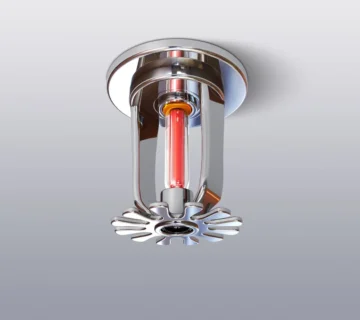
An automatic fire extinguisher is a self-activating unit that discharges a fire suppression agent when heat reaches a specific activation point. Many units use a heat-sensitive glass bulb, fusible link, detection tube, or built-in activation mechanism. When the surrounding temperature rises due to fire, the mechanism releases the agent over the protected area.
This makes it different from a manual portable extinguisher. A manual extinguisher depends on a trained person being present, recognizing the fire, choosing the right extinguisher, and using it correctly. An automatic unit is designed for situations where the fire may start in an unattended or enclosed area, such as a panel board, small machinery space, storage cabinet, server enclosure, generator room, or kitchen hood.
It is important to understand that an automatic fire extinguisher does not replace every other fire protection system in the building. It protects a specific risk area. Sprinklers protect larger building zones, alarms notify occupants, fire-rated construction contains spread, and portable extinguishers support manual response. Automatic extinguishers are strongest when used as part of this complete safety chain.
How the Activation Process Works
The activation process is usually simple but highly effective. The unit is positioned above, inside, or near a defined hazard. When a fire raises the temperature around the activation element, the seal opens and the agent discharges. Depending on the system type, the agent may be dry chemical powder, clean agent gas, wet chemical solution, aerosol, or another approved extinguishing medium.
The agent then works by interrupting the fire process. Dry chemical powder can interrupt the chemical reaction of the flame. Clean agents can suppress fire without leaving heavy residue, making them useful in sensitive electronic environments. Wet chemical systems are used in cooking areas because they are designed to control grease and oil fires through a cooling and smothering effect.
The correct agent is critical. A kitchen fire is not the same as an electrical cabinet fire, and a server room is not the same as a general storage room. This is why DARS treats selection as a technical decision, not a product preference.
Why Automatic Does Not Mean Universal
The word “automatic” can sound like one product can solve every fire risk, but that is not true. Each unit must match the hazard, space size, temperature conditions, ventilation, asset value, and approval requirements. A system that works well in a small electrical enclosure may be completely unsuitable for a commercial kitchen.
Where Automatic Fire Extinguishers Are Commonly Used
Electrical Panels and Control Cabinets
Electrical panels are one of the most common areas where localized automatic suppression can be useful. A fault inside a cabinet may not be visible from outside until smoke or flame has already developed. A direct-to-source fire extinguisher system can help suppress the fire inside the enclosure before it spreads to nearby equipment or building materials.
This is especially valuable in facilities where electrical continuity matters, such as factories, warehouses, hospitals, telecom rooms, and commercial buildings. A small electrical fire can interrupt operations, damage expensive components, and create a wider safety risk if not controlled quickly.
However, the system must be selected carefully. The agent should be suitable for electrical risks, the unit should be properly certified, and the installation should not interfere with cabinet operation, ventilation, or maintenance access. DARS’s role is to help facility teams avoid generic solutions and select protection that fits the actual risk.
Server Rooms and Sensitive Equipment Areas
Server rooms, telecom cabinets, control rooms, and IT spaces often require clean suppression because powder residue can damage equipment and create costly downtime. In these cases, a clean agent fire extinguisher or clean agent-based system may be more suitable than a dry chemical solution.
Clean agents are valued because they can suppress fire without leaving the same level of residue as powder-based agents. Standards such as NFPA 2001 focus on clean agent fire extinguishing systems and are commonly referenced for sensitive environments where electronics, data, and high-value assets need careful protection.
For Saudi businesses, this is not only a safety concern. It is also a business continuity concern. A fire inside a server cabinet can stop operations, affect customer service, damage records, and create recovery costs. The right automatic system reduces the chance that a small electrical incident becomes a major operational failure.
The Risk of Using the Wrong Agent
Using a powder unit in a sensitive electronics area may control the fire but leave the facility with damaged equipment and heavy cleanup. Using a clean agent in the wrong type of hazard may also be ineffective. The correct choice depends on the fire class, asset sensitivity, enclosure size, and approved product data.
Automatic Fire Extinguishers in Commercial Kitchens
Why Kitchen Fire Suppression Is a Special Case
Commercial kitchens are one of the highest-risk areas in many buildings. Heat, grease, open flames, oil, cooking equipment, ventilation hoods, and busy staff movement all create a difficult environment. A small grease fire can spread quickly through a hood or duct if it is not controlled properly.
This is why kitchen fire suppression is treated differently from general fire extinguisher placement. A restaurant, hotel kitchen, café, food court, or central kitchen usually needs a dedicated suppression approach for cooking equipment and exhaust systems. The protection must focus on the cooking line, hood, filters, and ductwork, not just the floor area.
Standards such as NFPA 17A address wet chemical extinguishing systems, while NFPA 96 focuses on ventilation control and fire protection for commercial cooking operations. Together, these references show why kitchens need systems designed for grease, heat, and exhaust hazards.
Wet Chemical Systems and Grease Fires
Wet chemical systems are commonly used for commercial cooking fire protection because they are suitable for fires involving cooking oils and fats. When discharged, the agent helps cool the hot surface and forms a layer that reduces re-ignition risk. This makes it more appropriate for cooking hazards than a basic general-purpose unit.
A professional kitchen system should be installed according to the hood layout, appliance arrangement, nozzle coverage, fuel shutoff requirements, and maintenance access. If cooking equipment changes after installation, the suppression system may also need to be reviewed. Moving a fryer or adding a grill can affect protection coverage.
DARS treats kitchen systems as part of a facility’s overall fire safety compliance. The goal is not simply to place equipment above the cooking line. The goal is to ensure the system matches the actual kitchen operation and remains serviceable after opening.
Main Types of Automatic Fire Extinguisher Systems
Ceiling-Mounted Dry Chemical Units
Ceiling-mounted dry chemical units are often used in small rooms, generator enclosures, mechanical spaces, storage areas, and localized risks where a cost-effective automatic response is needed. These units discharge powder when activated by heat and can be suitable for certain Class A, B, or C fire risks depending on product approval and application.
They are relatively simple compared with larger engineered systems, but they still require correct selection and placement. The protected volume, ceiling height, airflow, obstruction level, and hazard type all influence performance. A unit installed too far from the risk or blocked by storage may not perform effectively.
This is why fire extinguisher installation should not be treated as a casual maintenance task. Even a modular unit needs proper positioning, clear discharge path, readable data plate, and scheduled inspection.
Clean Agent Automatic Units
Clean agent automatic units are used where residue control matters. This can include server cabinets, telecom rooms, control panels, archives, laboratories, and sensitive equipment spaces. Their key advantage is that they can suppress fire while reducing the cleanup and equipment damage associated with powders.
Product certification is especially important in this category. UL fire extinguisher testing and certification covers different extinguisher types, including clean agent and dry chemical products. In Saudi projects, product credibility may also be reviewed alongside requirements from SASO, depending on project and authority expectations.
A clean agent solution should be selected with care. The enclosure size, leakage potential, concentration requirements, ventilation, occupant safety, and system listing all matter. This is why DARS recommends treating clean agent protection as a professional fire engineering decision rather than an online product purchase.
Aerosol and Specialized Compact Units
Aerosol-based systems and compact automatic units may be used in specific enclosed or compact applications, but they require careful review. The product must be approved for the intended hazard and installed according to manufacturer instructions. Unlisted or poorly documented products can create approval problems and unreliable protection.
How Automatic Fire Extinguishers Fit Into a Complete Safety Strategy
Supplementary Protection, Not a Full Replacement
An automatic extinguisher provides localized protection. It can be extremely useful in a defined risk area, but it does not replace manual portable extinguishers, fire alarm systems, sprinklers, emergency lighting, evacuation routes, or required fire-rated construction. Each part of the safety system has a different role.
The NFPA 10 standard addresses portable fire extinguishers as a first line of defense for small fires when properly selected, located, inspected, and maintained. Automatic units can support protection, but manual extinguishers may still be required for trained response and code compliance.
DARS’s approach is to build a balanced safety plan. Automatic suppression protects unattended risks, alarms support notification, manual extinguishers support immediate human response, and maintenance keeps the full system ready.
Civil Defense Approval and Salamah Documentation
Why Approval Should Be Planned Before Purchase
After understanding where automatic extinguishers fit within a wider safety strategy, the next step is approval readiness. In Saudi Arabia, buying the right-looking unit is not enough. The product, installation method, certification, contractor credentials, and maintenance plan must all support the building’s fire safety file. This is especially important for commercial kitchens, electrical rooms, server areas, fuel-related spaces, and facilities that need licensing or renewal through Civil Defense processes.
The Salamah portal plays an important role in safety licensing and documentation. This means facility owners should think beyond the physical unit and ask whether the installation can be documented, inspected, and maintained by an approved safety provider. A missing certificate, unclear data plate, or unapproved product can create delays even when the device appears technically suitable.
DARS approaches automatic extinguisher projects with this approval path in mind. The company does not treat compliance as a final paperwork task. It is part of the selection, proposal, installation, and handover process from the beginning. This helps clients avoid last-minute surprises when they need inspection readiness or commercial license renewal.
Product Certification and Technical Evidence
A compliant automatic fire extinguisher should be supported by reliable product data. This may include manufacturer datasheets, model numbers, fire class suitability, activation temperature, agent type, coverage area, installation instructions, and certification documents. These details allow consultants, facility managers, and inspectors to verify that the device is suitable for the risk it claims to protect.
In many projects, references such as SASO, UL Solutions, or other recognized approval bodies may be used to support product credibility. The key point is not simply to mention a certification logo. The product should have traceable documentation that matches the actual installed unit, including model, agent, capacity, and application.
This is where many low-cost products create problems. Some imported devices may be marketed as automatic suppression solutions but lack clear approvals, reliable test data, or acceptable documentation. In a regulated project, this can lead to rejection, replacement costs, and delayed handover. A professional contractor helps the client avoid these risks before procurement.
The Importance of the Data Plate
The manufacturer’s data plate is not a small detail. It shows technical information such as model, agent type, capacity, pressure, temperature rating, and manufacturing details. If it is painted over, damaged, removed, or hidden after installation, the unit becomes harder to verify during inspection or maintenance.
Choosing the Right Automatic Fire Extinguisher Type
Matching the Agent to the Fire Risk
The most important decision in any fire extinguisher system is not the brand or size. It is the match between agent and hazard. A dry chemical unit may be suitable for some general risks, but it may not be ideal for electronics. A clean agent may protect sensitive equipment, but it may not be the right answer for grease fires. A wet chemical system may be essential for cooking hazards, but it is not intended for every room.
This is why DARS starts with risk identification. The contractor should understand what can burn, where ignition could happen, whether people are present, what assets need protection, and how the space is ventilated. Once the hazard is clear, the system type becomes easier to justify.
For example, a server cabinet may require a clean agent fire extinguisher or clean agent-based localized system because residue control is critical. A restaurant hood may require kitchen fire suppression designed for cooking oils and fats. An electrical enclosure may need direct localized protection that activates inside the cabinet before the fire spreads outward.
Dry Chemical, Clean Agent, and Wet Chemical Applications
Dry chemical automatic units are commonly used because they are practical and cost-effective for certain general hazards. They can be useful in small rooms, mechanical areas, and some enclosed risks. However, dry chemical powder can leave residue, which may damage equipment or require extensive cleanup after discharge.
Clean agent systems are often preferred for electronics, control rooms, telecom cabinets, and other sensitive assets. They suppress fire without the same level of powder residue, which helps reduce downtime and cleanup. However, they require careful design around enclosure size, leakage, concentration, ventilation, and occupant safety.
Wet chemical systems are mainly associated with commercial cooking risks. They are designed to control fires involving hot oils and fats, where ordinary agents may be less effective or may not prevent re-ignition. In kitchens, the system must match the hood, duct, appliances, and fuel shutoff arrangement. If the cooking line changes, the system should be reviewed.
Why One Facility May Need More Than One Solution
A building may need different automatic extinguisher solutions in different areas. A hotel can require kitchen suppression in the cooking area, clean agent protection for server rooms, and localized automatic units for selected electrical or mechanical spaces. Treating the whole building with one product type is rarely the best approach.
Installation Quality and Common Site Mistakes
Why Installation Affects Performance
Even a certified product can fail to protect the space if installed incorrectly. Fire extinguisher installation must follow the manufacturer’s instructions, hazard requirements, clearance rules, and maintenance access needs. The unit must be positioned where it can detect heat and discharge effectively over the risk area.
A ceiling-mounted unit installed too high, too far from the hazard, or blocked by storage racks may not discharge where it is needed. A tube-based system installed poorly inside an electrical cabinet may not detect the fire quickly enough. A kitchen system with misplaced nozzles may leave part of the cooking line exposed. These are not cosmetic errors. They affect the system’s ability to control fire.
DARS treats installation as part of the safety design, not simply a mounting job. The correct position, angle, clearance, and accessibility can make the difference between a system that works and a system that only looks compliant.
Obstructions, Heat Sources, and Environmental Conditions
Automatic extinguishers rely on heat or detection response. If the activation element is blocked, covered by dust, coated with grease, or installed in an area with abnormal heat exposure, performance can be affected. In kitchens, grease buildup can insulate thermal links and delay activation. In industrial spaces, dust and airflow can interfere with discharge patterns.
Environmental conditions also matter. High ambient heat, vibration, humidity, corrosive atmosphere, and poor ventilation can affect product selection and maintenance frequency. A unit selected for a clean indoor office may not be suitable for a generator enclosure or a dusty workshop.
This is why site assessment is important before installation. DARS reviews the actual location, not only the drawing. The real building conditions help determine the right agent, capacity, activation temperature, location, and maintenance plan.
The Risk of Poor Access
If maintenance teams cannot reach the unit easily, inspection may be skipped or delayed. A system hidden above equipment, blocked by stored goods, or installed without safe access may become unreliable over time. Good installation allows both effective discharge and regular service.
Can Automatic Fire Extinguishers Replace Manual Extinguishers or Sprinklers?
Supplementary Protection Within the Code Hierarchy
One common question from facility owners is whether automatic extinguishers can replace manual extinguishers, sprinklers, or fire alarm systems. In most cases, the answer is no. Automatic units provide localized protection for specific risks, but they do not replace full-building systems required by code or Civil Defense expectations.
Manual extinguishers remain important because they allow trained occupants or safety staff to respond to small fires. Sprinkler systems protect larger building areas. Fire alarm systems notify occupants and building teams. Automatic fire extinguishers fill a different role by protecting high-risk or unattended zones before people can respond.
The NFPA 10 standard is a key reference for portable extinguishers, while other standards apply to specialized suppression systems. The important principle is that each system has its own purpose. Removing one layer because another exists can weaken the building’s safety strategy.
When Automatic Units Add the Most Value
Automatic units add the most value in places where the fire may start unnoticed or where early localized suppression can prevent major damage. This includes electrical cabinets, generator enclosures, server areas, machinery spaces, kitchen hoods, storage cabinets, and other compact high-risk areas.
They are also useful where manual response may be delayed. A fire at night, during a holiday, or inside a locked technical room can grow before someone reaches it. Automatic suppression gives the facility an extra layer of early control.
For DARS, the goal is not to oversell automatic units as a universal solution. The goal is to place them where they genuinely reduce risk and support fire safety compliance. This keeps the safety plan realistic, defensible, and useful.
Maintenance Requirements and Long-Term Readiness
Why Maintenance Is Not Optional
An automatic extinguisher is only useful if it remains ready. Over time, pressure can drop, seals can weaken, nozzles can become blocked, activation elements can be contaminated, and cylinders can reach service limits. Without regular inspection, a facility may not know there is a problem until the system is needed.
Maintenance should confirm the unit’s pressure, physical condition, accessibility, mounting, agent condition where applicable, data plate visibility, inspection tag, and discharge path. For kitchen systems, maintenance should also include hood, duct, nozzle, link, and grease-related checks. For clean agent systems, enclosure condition and leakage considerations may also matter.
DARS encourages facility owners to treat automatic extinguisher maintenance as part of the wider fire protection system lifecycle. The same attention given to fire alarms and sprinklers should also apply to localized suppression units.
Annual Maintenance Contracts and Documentation
In Saudi Arabia, safety maintenance is often connected to commercial licensing and inspection readiness. A documented maintenance contract with a qualified provider can support the facility’s compliance file and help avoid neglected system conditions. It also gives the owner a clear service pathway when faults, changes, or upgrades are needed.
Documentation matters because it proves that the system has not simply been installed and forgotten. Service records, inspection tags, certificates, and corrective action reports all help show that the facility is managing fire risk responsibly.
How to Evaluate an Automatic Fire Extinguisher Solution
Start With the Risk, Not the Product
Before choosing an automatic fire extinguisher, the facility owner should begin with the risk area. The question is not “Which unit is available?” but “What kind of fire could happen here, and what type of suppression will control it safely?” This changes the conversation from buying equipment to building a practical safety solution.
An electrical cabinet, kitchen hood, generator enclosure, server room, and storage space all have different fire behavior. The fuel source, ventilation, enclosure size, asset sensitivity, and operating environment must guide the decision. A unit that works well in a mechanical room may not be suitable for a commercial kitchen or data room.
DARS focuses on this risk-first approach because it prevents overgeneralized solutions. The company reviews the location, likely ignition source, space layout, approval requirements, and long-term maintenance needs before recommending a system. This gives the client a stronger basis for both protection and fire safety compliance.
Check the Agent, Coverage, and Activation Method
A good automatic extinguisher solution should clearly define the suppression agent, coverage area, activation temperature, discharge method, and intended fire classes. These details should be visible in the product datasheet and consistent with the actual installation location. If the product information is vague, the client should be cautious.
The activation method also matters. Some units rely on heat-sensitive bulbs, some use fusible links, and others use detection tubing or system-based activation. The right method depends on the protected space. For example, direct tube systems may be useful inside cabinets because they can detect the fire close to the source, while ceiling-mounted units may be better suited to small rooms or enclosures.
This is where technical review becomes important. An automatic unit is not automatically reliable just because it activates without human input. It must activate at the right time, discharge the right agent, cover the right area, and remain serviceable after installation.
Why Product Datasheets Should Be Reviewed Carefully
Product datasheets should not be treated as formal attachments only. They tell the client what the unit is designed to do, where it can be installed, what limitations apply, and how it should be maintained. A mismatch between the datasheet and the site condition can create performance and approval problems.
Common Product Selection Mistakes
Choosing a Cheap Unit Without Reliable Certification
One of the most common mistakes is selecting a low-cost product without checking whether it has reliable certification or acceptable documentation. Some products may look attractive online, but they may lack proper test data, approved application details, or traceable model information. In a regulated facility, this can create serious issues during inspection or maintenance review.
A proper fire extinguisher system should be supported by clear technical documents, installation instructions, service requirements, and certification where applicable. References such as UL Solutions and SASO can help clients understand why product credibility matters, especially when equipment is used in commercial or public facilities.
DARS advises clients to look beyond marketing claims. A device should not be chosen because it says “automatic” on the label. It should be chosen because it is suitable for the fire risk, accepted for the application, properly installed, and maintainable over time.
Using the Wrong Agent for the Space
Another mistake is choosing the wrong agent. Dry chemical powder may be effective for some risks, but it can leave residue that affects electronics, machinery, or sensitive surfaces. A clean agent fire extinguisher can be better for data, control, and electrical environments, but it must be matched to the room or enclosure conditions.
Commercial kitchens require a different approach again. A basic extinguisher cannot replace a proper kitchen fire suppression system designed for cooking oils, hoods, ducts, appliances, and fuel shutoff. Standards such as NFPA 17A and NFPA 96 show why wet chemical systems and kitchen ventilation protection need specialized treatment.
The wrong agent may still discharge, but it may not control the fire properly or may create unnecessary damage. This is why the selection process must be guided by hazard type, not only unit size or price.
Ignoring Future Changes
Facility layouts change. A storage room may become an electrical room, a kitchen may add new cooking equipment, or a server cabinet may expand. If the automatic extinguisher is not reviewed after these changes, the protection may no longer match the risk.
Handover Requirements After Installation
Documentation That Should Stay With the Facility
After fire extinguisher installation, the facility should receive clear documentation. This includes product datasheets, model details, installation records, coverage assumptions, inspection tags, warranty information, maintenance recommendations, and any certificates required for the project file. These documents help the facility prove that the system was selected and installed responsibly.
Documentation also supports maintenance. If the service team cannot identify the agent, model, activation temperature, or manufacturer instructions, inspection becomes less reliable. Good records make it easier to service the unit, replace parts, and verify whether the system remains suitable after site changes.
DARS treats handover as part of long-term safety, not a closing formality. The client should understand what has been installed, what it protects, how often it should be inspected, and what warning signs require immediate service.
Training the Facility Team
Even though the system works automatically, the facility team still needs basic awareness. Staff should know where automatic units are installed, what areas they protect, why they should not be blocked, and when to call for service. This is especially important in kitchens, electrical rooms, storage areas, and technical spaces.
Training also helps prevent accidental damage. A unit should not be painted, covered, moved, obstructed, or removed during renovation without technical review. The data plate should remain visible, and the discharge path should stay clear. These small details can affect both performance and inspection readiness.
For commercial kitchens, staff should also understand the importance of cleaning around hoods, nozzles, ducts, and thermal links. Grease buildup can delay activation or affect discharge coverage, which makes routine cleaning part of the safety culture.
Maintenance Risks That Facility Managers Should Watch
Pressure Loss and Physical Damage
Many automatic extinguishers rely on stored pressure, cylinder condition, seals, and discharge readiness. If pressure drops or the cylinder is damaged, the unit may not discharge correctly. This is why regular visual inspection and scheduled servicing are essential.
Physical damage can happen during daily operations. Equipment may be hit by forklifts, covered by storage, exposed to vibration, or affected by moisture and dust. In technical rooms, panels may be opened and modified without considering the suppression unit inside. These conditions can reduce reliability over time.
DARS recommends treating each automatic extinguisher as active fire safety equipment that needs visibility, access, and maintenance. It should not be forgotten because it is small or localized. Its value appears when a fire starts where people are not present.
Grease, Dust, and Obstruction
Grease and dust are common hidden risks. In kitchens, grease can coat nozzles, links, and hood components. In workshops and warehouses, dust can cover activation parts or interfere with discharge paths. In storage rooms, boxes can block the unit or reduce coverage over the actual hazard.
Obstruction is especially dangerous because the unit may still be present and tagged, giving the impression that the area is protected. But if the agent cannot reach the hazard, the system’s real effectiveness is reduced. This is why housekeeping and safety inspection must work together.
A strong maintenance program should check not only the unit but also the space around it. The protected area, clearance, access, and risk condition should all be reviewed regularly.
Maintenance After Discharge
After any discharge, the area should be inspected, cleaned where needed, and reviewed before the unit is returned to service. The cause of the fire must also be investigated. Replacing or refilling the unit without addressing the ignition source leaves the facility exposed to repeated incidents.
How Automatic Fire Extinguishers Support Business Continuity
Early Control Reduces Downtime
An automatic extinguisher can help control a localized fire before it spreads into a larger incident. This can reduce damage, shorten business interruption, and protect expensive assets. For businesses, this matters because fire damage is not limited to flames. Smoke, residue, water damage, downtime, data loss, and license disruption can all create major costs.
In a server room, early suppression can protect systems that support daily operations. In a kitchen, quick control can prevent a fire from spreading into the hood and duct system. In an electrical panel, localized suppression can reduce the chance of a wider shutdown.
This is why automatic protection should be viewed as part of continuity planning. It protects more than a room. It protects operations, timelines, customers, and reputation.
Supporting Inspections and Licensing
In Saudi Arabia, facility safety is closely connected to licensing and inspection readiness. A documented, well-maintained fire protection system helps businesses demonstrate that they are managing risk responsibly. This is especially important for restaurants, hotels, warehouses, clinics, offices, and public-facing facilities.
Automatic units do not replace the wider safety system, but they can strengthen it. When properly selected and maintained, they show that the facility has considered specific high-risk areas and provided targeted protection. This can support a more complete safety file.
DARS helps clients approach this in a practical way: identify the risk, select the right solution, install it correctly, document it clearly, and maintain it consistently. That is how a small automatic system becomes part of a bigger compliance strategy.
DARS’s Role in Automatic Fire Extinguisher Solutions
From Site Assessment to Installation
DARS supports clients by reviewing the site, identifying high-risk areas, recommending suitable automatic suppression options, and carrying out installation with compliance and maintainability in mind. The company’s role is not to push one product type into every space, but to match the solution to the actual hazard.
Through its safety and security systems services, DARS works with facilities that need practical fire protection for kitchens, electrical rooms, technical spaces, storage areas, and specialized risks. This includes connecting automatic extinguishers with the wider safety strategy of the building.
Clients can also learn more about the company through DARS’s about page or review its project experience to understand how safety systems are applied in real environments.
Long-Term Support and Maintenance
Installation is only the beginning. DARS also helps clients think about inspection, servicing, replacement, documentation, and future changes in building use. This is important because automatic systems must remain ready after handover, not only during the first inspection.
For facilities that need direct support, DARS’s contact page offers a clear way to discuss automatic extinguisher needs, kitchen suppression requirements, or localized protection for technical spaces. The company’s articles section also helps building owners and facility teams stay informed about fire safety topics.
Conclusion: Automatic Protection Works Best When It Is Planned Properly
The Right System Protects the Right Risk
An automatic fire extinguisher can be a powerful line of defense for unattended or high-risk areas. It can respond early, protect valuable equipment, reduce fire spread, and support a stronger safety strategy. But it only works well when the correct agent, unit type, location, and maintenance plan are selected.
Automatic units should not be treated as universal replacements for manual extinguishers, sprinklers, alarms, or other required systems. They are localized protection tools that perform best when integrated into a complete fire safety plan. This is the difference between buying a device and building real protection.
For DARS, the strongest approach is simple: understand the hazard, choose approved equipment, install it correctly, document it clearly, and maintain it continuously. When these steps come together, automatic fire extinguishers become more than safety accessories. They become reliable protection for people, assets, and business continuity.