
Why the Right Fire Extinguisher Type Matters
A fire extinguisher is only useful when it matches the fire it is meant to fight. That may sound obvious, but it is one of the most common safety gaps in buildings. A person may see a red cylinder on the wall and assume the area is protected, but if the extinguisher agent is wrong for the fire class, it can fail to control the fire or even make the situation more dangerous.
This is why many facility owners ask: how many types of fire extinguisher are there, and which one should be used in each area? The answer is not just a product question. It is a safety, compliance, and operational decision. Offices, kitchens, warehouses, server rooms, workshops, fuel areas, and residential spaces all carry different fire risks.
In Saudi Arabia, this matters even more because fire protection is linked to building approvals, Civil Defense inspections, and operational licenses. DARS looks at extinguishers as part of a complete safety and security systems plan, not as isolated equipment placed at random. The goal is simple: the right extinguisher, in the right location, for the right fire risk.
The Short Answer: How Many Types of Fire Extinguisher Are Commonly Used?
The Core Types Most Facilities Need to Know
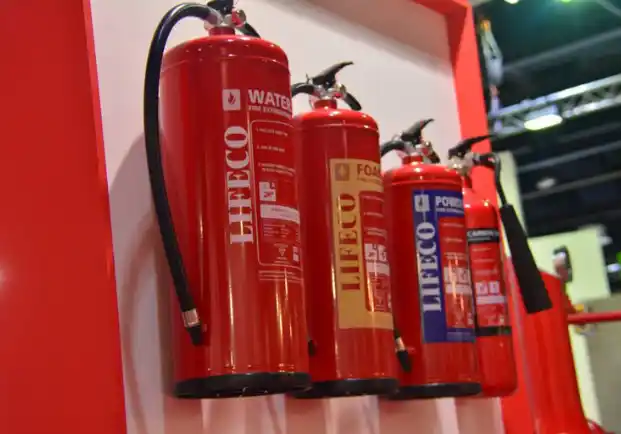
There are five main types of fire extinguishers commonly used in buildings: water, foam, dry powder, carbon dioxide, and wet chemical. In addition, clean agent extinguishers are widely used for sensitive environments such as server rooms, telecom spaces, control rooms, and high-value electrical equipment areas.
Each extinguisher type uses a different agent to fight fire. Some cool the burning material, some smother the flame, some interrupt the chemical chain reaction, and some remove oxygen from the immediate fire zone. This is why selecting an extinguisher is not just about size or price. It is about how the agent behaves when it meets a specific fuel source.
DARS’s role is to help clients move from “we need extinguishers” to “we need the correct extinguishers for each risk.” That difference matters during daily operations, during inspections, and during real emergencies.
Why One Building May Need Several Types
A single building can need more than one extinguisher type. A commercial kitchen may need a wet chemical fire extinguisher, while a nearby electrical room may need a CO2 fire extinguisher or clean agent option. A general office area may need extinguishers suitable for ordinary combustibles, while a workshop or warehouse may need a dry powder fire extinguisher for mixed risks.
This is why a proper fire extinguisher selection guide starts with the building layout and fire risks, not with a product catalogue. The same cylinder cannot be assumed to protect every room. When the wrong extinguisher is placed in the wrong area, the building may look compliant but remain practically under-protected.
The NFPA 10 standard is a key reference for portable fire extinguishers, including selection, distribution, placement, inspection, maintenance, and recharging. In Saudi projects, this technical logic should also align with the wider fire protection framework of SBC 801 and the expectations of Civil Defense processes.
The Common Mistake: Buying by Color or Size Only
Many people choose extinguishers based on what looks familiar or what is already available in the market. That approach is risky. The label, agent, fire class rating, certification, pressure condition, and installation location matter more than appearance.
Understanding Fire Extinguisher Classes
Fire Class Comes Before Extinguisher Type
Before choosing the extinguisher, the fire class must be understood. Fire extinguisher classes describe the type of fuel involved in the fire. This matters because each fuel behaves differently. Wood, petrol, electrical equipment, cooking oil, and metal fires cannot all be handled with the same extinguisher agent.
Class A fires involve ordinary combustibles such as wood, paper, textiles, and some plastics. Class B fires involve flammable liquids such as petrol, diesel, paint, solvents, and certain chemicals. Class C fires involve energized electrical equipment, where the extinguisher must not conduct electricity. Class D fires involve combustible metals, and Class K or F fires involve cooking oils and fats.
This classification helps facility managers select extinguishers with confidence. It also helps contractors place the right equipment in the right areas. DARS uses this risk-based approach to support safer layouts, clearer compliance files, and more practical emergency readiness.
Why Fire Classes Matter in Saudi Facilities
Saudi Arabia’s building environment includes offices, malls, restaurants, warehouses, clinics, towers, fuel stations, factories, and mixed-use developments. Each property type carries different fire risks. A hotel may have kitchens, laundry areas, electrical rooms, guest corridors, storage rooms, and parking levels, all inside one facility.
The Salamah portal supports Civil Defense licensing electronically, which makes safety documentation and maintenance readiness important for many establishments. Extinguishers are not only about emergency response. They are also part of the visible, inspectable fire safety equipment that helps show a facility is being managed responsibly.
When extinguishers are poorly selected or poorly maintained, the problem can appear during inspections, renewals, or real incidents. That is why DARS encourages clients to treat extinguisher selection as part of the wider fire protection system, not as a last-minute procurement item.
Matching Fire Class to Building Use
An office usually has Class A risks, but it may also have electrical equipment. A restaurant has cooking oil risks. A warehouse may have packaging, liquids, machinery, or mixed storage. The extinguisher plan should reflect actual use, not generic assumptions.
Water Fire Extinguisher
Best for Ordinary Combustibles
A water fire extinguisher is mainly used for Class A fires involving ordinary combustible materials such as wood, paper, cardboard, and textiles. It works by cooling the burning material and reducing the heat needed to keep the fire active. In the right setting, it is simple, effective, and familiar.
Water extinguishers can be suitable for offices, schools, residential corridors, storage areas with ordinary combustibles, and certain public spaces. However, they should not be used on energized electrical equipment or flammable liquid fires. Water can conduct electricity, and it can spread some liquid fires instead of controlling them.
This is why placement matters. A water extinguisher in the wrong area may create risk. DARS helps clients identify where water extinguishers are appropriate and where other options are safer.
When Water Is Not Enough
Water is not a universal solution. It is not suitable for grease fires, electrical risks, fuel areas, or sensitive equipment spaces. In buildings with mixed hazards, water extinguishers may be only one part of the plan.
The practical point is simple: water is excellent for the right fuel and dangerous for the wrong one. That is why every extinguisher should be selected according to the area’s real fire risk.
Foam Fire Extinguisher
Useful for Class A and Class B Risks
A foam fire extinguisher is commonly used for Class A and some Class B fires. It helps cool burning materials while forming a smothering layer over flammable liquids, reducing oxygen contact and helping control vapor release. This makes it more versatile than water in areas where liquid risks may exist.
Foam extinguishers can be useful in workshops, loading areas, fuel-related zones, and spaces where ordinary combustibles and certain flammable liquids are both present. However, suitability depends on the exact fuel, product approval, and site conditions. The agent must match the type of liquid and the expected risk.
In Saudi facilities, foam extinguishers should be reviewed carefully for the specific application. A generic “foam is for liquids” mindset is too broad. DARS looks at the actual materials, storage arrangements, and operational environment before recommending placement.
Why Foam Requires Proper Training
Foam extinguishers work best when used correctly. The user should avoid splashing burning liquid and should apply the foam in a way that forms a protective blanket. In busy facilities, staff training is important because even the right extinguisher can be used poorly under stress.
This connects extinguisher selection to the bigger safety culture. Good equipment is necessary, but people also need to know when and how to use it.
Dry Powder Fire Extinguisher
The Versatile Option for Mixed Risks
A dry powder fire extinguisher is often seen as the all-rounder because many ABC powder extinguishers can be used on Class A, B, and C fires. This makes them common in warehouses, construction sites, parking areas, industrial spaces, workshops, and outdoor locations with mixed risks.
Dry powder works by interrupting the chemical reaction of the flame. It can be effective across several common fire scenarios, which is why many facilities rely on it as a broad first-response option. However, broad use does not mean it is always the best choice.
The biggest limitation is residue. Dry powder can be messy, abrasive, and damaging to sensitive equipment. In offices, server rooms, control rooms, or areas with electronics, it may control the fire but create major cleanup and downtime. This is why DARS does not recommend choosing powder only because it covers several fire classes.
Where Dry Powder Makes Sense
Dry powder is often practical in areas where residue is acceptable compared with the risk of fire spread. For example, a construction site or outdoor storage area may benefit from its versatility. A sensitive electronics room, however, may need a cleaner option.
The key is balance. Dry powder can be highly useful, but it should be placed where its strengths outweigh its drawbacks.
CO2 Fire Extinguisher
The Clean Choice for Electrical Risks
A CO2 fire extinguisher is commonly used for electrical risks and certain Class B fires involving flammable liquids. It works by displacing oxygen around the fire and cooling the immediate area as the carbon dioxide expands. Because it does not leave powder or water residue, it is often preferred in electrical rooms, server rooms, control rooms, offices, laboratories, and areas with sensitive equipment.
This makes CO2 valuable in modern Saudi facilities where electrical and digital infrastructure are part of daily operations. A server room fire, for example, is not only a safety incident. It can create data loss, operational downtime, customer service disruption, and expensive equipment damage. A residue-heavy extinguisher may control the flame but leave behind a cleanup problem that extends the business interruption.
DARS often looks at CO2 extinguishers as part of a balanced protection plan for electrical and technical spaces. They are not suitable for every environment, but where they fit, they offer a clean and practical first-response option. The key is to make sure the extinguisher is placed correctly, clearly labeled, accessible, and matched to the actual electrical risk.
Limitations of CO2 Extinguishers
CO2 extinguishers are useful, but they have limitations. They are not usually the best choice for deep-seated Class A fires involving materials like paper, wood, or textiles, because the fire may re-ignite after the gas disperses. They also require caution in small or poorly ventilated spaces because carbon dioxide can reduce oxygen levels around users.
This is why a CO2 extinguisher should not be selected only because it is “clean.” The area must be reviewed properly. If the main risk is electrical equipment, CO2 may be appropriate. If the space contains ordinary combustibles, packaging, fabrics, or mixed storage, another extinguisher type may also be needed.
For DARS, extinguisher selection should always balance safety, asset protection, usability, and compliance. The best extinguisher is not the one with the widest reputation, but the one that fits the fire class and the people who may need to use it.
CO2 vs Dry Powder in Offices
Many offices contain both electrical equipment and ordinary combustibles. This is why a single extinguisher type may not cover every risk. CO2 may protect electrical panels and equipment areas, while other extinguishers may be more suitable for general office materials.
Wet Chemical Fire Extinguisher
Why Kitchens Need a Specialized Extinguisher
A wet chemical fire extinguisher is designed for fires involving cooking oils and fats, often classified as Class K or Class F depending on the system used. These fires are very different from ordinary fires because cooking oils can reach extremely high temperatures and re-ignite if they are not cooled properly. Using the wrong extinguisher can spread the fire or fail to control it.
This is especially important in commercial kitchens, hotels, restaurants, cafés, food courts, catering facilities, and central kitchens. A kitchen fire can move quickly from a pan or fryer into hoods, filters, ducts, and surrounding equipment. A standard extinguisher may not provide the cooling and smothering effect required for hot grease.
Wet chemical extinguishers work by applying an agent that cools the burning oil and forms a protective layer over the surface. This helps cut off oxygen and reduce the chance of re-ignition. In kitchen environments, this makes them a critical part of fire safety equipment, especially when paired with a proper kitchen hood suppression system.
Why Water and Powder Are Not Enough for Grease Fires
Water should never be used on cooking oil fires. When water contacts hot oil, it can instantly turn into steam and throw burning oil outward, making the fire spread violently. Dry powder may knock down flames, but it may not cool the oil enough to prevent re-ignition. This is why wet chemical protection is treated as a specialized requirement, not a preference.
Standards such as NFPA 17A and NFPA 96 help explain why cooking operations require dedicated fire protection logic. For Saudi restaurants and hospitality projects, kitchen fire risk must be taken seriously because it affects safety, licensing, and business continuity.
DARS supports this by reviewing the kitchen layout, equipment type, hood arrangement, and extinguisher placement. The goal is to ensure that staff have the right tools available while the wider kitchen fire suppression system protects the cooking line.
Staff Awareness in Kitchens
Even with the right extinguisher, kitchen staff need basic awareness. They should know where the wet chemical extinguisher is located, what it is used for, and why water should never be used on oil fires. Equipment and training work best together.
Clean Agent Fire Extinguisher
Protection for Sensitive Assets
A clean agent fire extinguisher is used where residue control is a priority. These extinguishers are often selected for server rooms, telecom rooms, control rooms, archives, laboratories, medical equipment spaces, and other sensitive environments. Their main advantage is that they suppress fire without leaving the heavy residue associated with dry powder.
This makes them valuable in buildings where equipment damage may be as costly as the fire itself. A data center, for example, may recover faster from a small fire if the extinguisher controls the flame without coating servers and circuits in powder. In many modern facilities, this is a major operational advantage.
Clean agent extinguishers should still be selected carefully. The agent must be suitable for the fire class, the space, and the assets being protected. Product documentation and certification matter, especially in regulated projects where approval and inspection may require clear evidence of suitability.
Where Clean Agent Options Fit Best
Clean agent extinguishers are not intended to replace every extinguisher in a facility. They are best used where the protected asset is sensitive, expensive, or difficult to clean after discharge. This often includes IT rooms, communication rooms, electrical control panels, and specialized technical areas.
References such as NFPA 2001 provide guidance for clean agent fire extinguishing systems, while product approvals from recognized bodies such as UL Solutions can support confidence in equipment quality. In Saudi projects, these references are useful when evaluating technical suitability and compliance documentation.
DARS’s role is to help clients avoid overuse and underuse. A clean agent extinguisher may be highly valuable in the right place, but unnecessary in a general storage room. Proper placement depends on risk, asset value, and operational sensitivity.
Fire Extinguisher Selection in Saudi Arabia
Compliance Starts With Approved Equipment
In Saudi Arabia, extinguisher selection should consider both fire risk and approval readiness. A product that lacks clear labeling, certification, or documentation may create problems during inspection. This is why building owners should avoid unverified extinguishers, unclear imports, or products without traceable technical information.
The Saudi Standards, Metrology and Quality Organization plays an important role in product standards and conformity in the Kingdom. For fire protection products, facility owners should ensure that extinguishers are sourced through reliable suppliers and supported by proper documentation. This protects the client from compliance issues and poor-quality equipment.
DARS approaches procurement as part of the safety process. The company looks at fire class, product rating, location, inspection needs, and long-term serviceability. A low-cost extinguisher may become expensive if it fails inspection, cannot be maintained, or is not suitable for the actual risk.
Placement and Accessibility
The right extinguisher must also be placed correctly. It should be visible, accessible, properly mounted, clearly labeled, and located near the risk without exposing users to unnecessary danger. If it is hidden behind storage, mounted too high, blocked by furniture, or placed far from the hazard, it may not be useful during an emergency.
Placement should consider travel distance, building layout, room function, and user movement. In many facilities, extinguishers are added after interior work is complete, which can lead to poor locations. A better approach is to plan extinguisher distribution during the safety design stage, before the building is fully occupied.
This is where DARS’s experience helps. Extinguishers are reviewed as part of a complete fire protection system that includes alarms, emergency exits, signage, suppression systems, and maintenance. When the plan is coordinated, the building becomes easier to inspect and safer to use.
The Label Must Stay Visible
The extinguisher label and data plate should never be painted over, scratched off, covered, or hidden. Inspectors and maintenance teams use this information to verify the agent, rating, capacity, service history, and suitability. A damaged label can turn an otherwise functional extinguisher into a compliance problem.
Maintenance and Inspection Basics
Why Extinguishers Cannot Be Installed and Forgotten
A fire extinguisher may sit unused for years, but it still needs regular inspection and maintenance. Pressure can drop, seals can weaken, hoses can crack, labels can fade, and cylinders can be damaged. If these issues are not discovered early, the extinguisher may fail when needed.
The NFPA 10 standard addresses inspection, maintenance, recharging, and hydrostatic testing requirements for portable fire extinguishers. For facility managers, the practical message is clear: extinguisher readiness must be checked, recorded, and maintained over time.
In Saudi Arabia, this also supports licensing and Civil Defense readiness through safety documentation and ongoing service. The Salamah portal is part of the wider digital safety licensing environment, which makes maintenance records and approved service support more important for many commercial facilities.
What Facility Teams Should Watch
Facility teams should pay attention to pressure gauges, physical damage, blocked access, missing pins, broken seals, expired inspection tags, unclear labels, and extinguishers placed in the wrong location. These simple visual checks can prevent bigger problems during audits or emergencies.
However, visual checks do not replace professional maintenance. A qualified safety provider should inspect and service extinguishers according to the required schedule and manufacturer instructions. DARS helps clients keep this process organized so equipment remains ready, documented, and aligned with the building’s risk profile.
Common Fire Extinguisher Selection Mistakes
Treating One Extinguisher as Suitable for Every Risk
One of the most common mistakes in building safety is assuming that one extinguisher type can protect every area. A dry powder fire extinguisher may be useful for mixed outdoor or warehouse risks, but that does not mean it is the best choice for a server room, kitchen, clinic, or office full of sensitive equipment. Each space needs to be reviewed based on what could burn and how the fire could behave.
This is why asking how many types of fire extinguisher exist is only the first step. The more important question is where each type belongs. A water fire extinguisher may be suitable for ordinary combustibles, a CO2 fire extinguisher may be more appropriate around electrical equipment, and a wet chemical fire extinguisher is essential for cooking oil risks. The right choice depends on fire class, building use, asset sensitivity, and user safety.
DARS often sees that extinguisher mistakes happen when procurement is separated from fire risk assessment. A purchasing team may choose a familiar extinguisher model, while the actual site contains several different hazards. A professional review connects the purchase to real-life fire scenarios, which makes the final system safer and easier to justify during inspection.
Ignoring Room Function and Future Use
Another common mistake is choosing extinguishers based on the current layout without considering how the space may be used later. A storage room may become an electrical room. A pantry may become a small cooking area. A general office may add server racks, batteries, or technical cabinets. When the use changes, the extinguisher plan should be reviewed.
Fire protection should follow the risk, not the room name. If a room label says “store” but the space contains flammable liquids, electrical equipment, or high-value electronics, the extinguisher type should reflect that reality. This is especially important in mixed-use buildings, commercial towers, hotels, restaurants, clinics, and warehouses where room functions can shift over time.
DARS’s approach is to treat extinguisher selection as a living part of the building’s fire protection system. The plan should be reviewed whenever layout, occupancy, storage, equipment, or operations change. This prevents a facility from relying on a safety setup that no longer matches its actual risk.
The Risk of False Confidence
A visible extinguisher can make a space look protected, but visibility alone does not equal readiness. If the agent is wrong, the label is damaged, the pressure is low, or the unit is blocked, the facility may have a false sense of safety. This is why inspection, selection, and placement must work together.
How to Build a Practical Fire Extinguisher Plan
Start With a Site Walkthrough
A practical extinguisher plan begins with walking through the facility and identifying real risks. The assessment should consider offices, corridors, kitchens, electrical rooms, storage spaces, workshops, server areas, parking levels, mechanical rooms, and exit routes. Each area may require a different type, rating, size, or placement strategy.
This is where a fire extinguisher selection guide becomes useful. Instead of simply counting how many extinguishers are needed, the guide connects hazards to extinguisher types. It helps the client understand why a foam unit may be better near certain liquid risks, why CO2 may be selected for electrical equipment, and why wet chemical protection is non-negotiable in commercial kitchens.
DARS supports this process by reviewing not only the extinguisher itself, but also access, visibility, signage, travel distance, maintenance requirements, and Civil Defense readiness. A good plan should be easy for users to understand and easy for inspectors to verify.
Match Extinguishers to Fire Classes
The next step is matching fire extinguisher classes to building zones. Class A risks may appear in offices, schools, storage rooms, and residential areas. Class B risks may appear around fuels, paints, solvents, and certain industrial materials. Class C risks appear around energized electrical equipment, while Class K or F risks appear in commercial cooking areas.
This classification prevents dangerous assumptions. For example, a kitchen does not need only a visible extinguisher; it needs the correct extinguisher for hot oils and fats. A server room does not only need a nearby cylinder; it needs an agent that protects equipment without unnecessary residue. A warehouse may need broader coverage because the risk can vary across storage zones.
A professional plan should also consider user behavior. The extinguisher must be located where a trained person can reach it safely, without moving toward heavy smoke, intense heat, or a blocked route. Safety equipment should support response, not place users at greater risk.
Why Placement Is as Important as Type
The correct extinguisher can still fail operationally if it is hidden, blocked, mounted incorrectly, or placed too far from the hazard. Placement should support quick access, clear visibility, and safe approach. This is why extinguisher layout should be planned, not improvised after fit-out.
Product Approval and Documentation in Saudi Projects
Why Approved Equipment Matters
In Saudi Arabia, fire extinguishers should be selected with compliance in mind. Equipment used in commercial, residential, industrial, and public-facing facilities may be reviewed during safety inspections, license renewals, or consultant checks. A unit that lacks clear technical information, approval documentation, or readable labeling can create unnecessary risk for the building owner.
References such as SASO, UL Solutions, and the Saudi Civil Defense Salamah portal highlight the importance of product credibility, documentation, and safety licensing. For facility owners, this means extinguishers should be sourced through reliable channels and supported by proper inspection and maintenance records.
DARS helps clients avoid the trap of low-cost, poorly documented products. A cheaper extinguisher may look acceptable at first, but if it fails inspection or cannot be serviced properly, it becomes a long-term liability. Compliance starts with selection, not after installation.
Labels, Tags, and Service Records
The extinguisher label should remain visible and readable at all times. It identifies the agent, fire rating, capacity, usage instructions, and manufacturer information. Painting over the cylinder, covering the label, scratching the data plate, or hiding the tag can affect both safety and compliance.
Inspection tags and service records are equally important. They show when the extinguisher was checked, whether it passed, and when the next service is due. Without records, facility managers may struggle to prove readiness during inspection or internal audits.
DARS treats documentation as part of the fire safety system. The extinguisher is the physical tool, but the records prove that the tool is suitable, maintained, and ready.
Staff Training and Safe Use
Equipment Works Best When People Understand It
Even the right extinguisher can be ineffective if people do not know how to use it. Staff should understand the basic differences between extinguisher types, where units are located, and when it is safer to evacuate instead of attempting to fight a fire. The goal is not to encourage unnecessary risk, but to support calm and informed decisions.
Training should also explain that extinguishers are meant for small, early-stage fires only. If the fire is spreading, smoke is heavy, the exit route is blocked, or the user is unsure, evacuation and emergency response take priority. A fire extinguisher is a first-response tool, not a replacement for Civil Defense or full suppression systems.
DARS encourages organizations to include extinguisher awareness in their wider safety culture. This is especially important in restaurants, hotels, warehouses, offices, clinics, schools, and industrial facilities where different teams may face different hazards.
Keeping Extinguishers Accessible
Staff should also know that extinguishers must not be blocked, moved, borrowed, hidden, or used as door props. These habits may seem small, but they can reduce safety quickly. A blocked extinguisher is almost the same as no extinguisher when seconds matter.
Facility managers should combine professional maintenance with simple daily awareness. If employees notice low pressure, missing pins, damaged hoses, blocked access, or expired tags, they should report the issue immediately. This keeps the safety system active between scheduled service visits.
How DARS Supports Fire Extinguisher Planning
From Risk Assessment to Installation
DARS helps clients select and place extinguishers based on actual fire risks, not assumptions. This includes reviewing building use, fire classes, room functions, equipment, storage, kitchen operations, electrical areas, and inspection requirements. The result is a more practical plan that supports both emergency readiness and fire safety compliance.
Through its safety and security systems services, DARS supports facilities that need complete fire protection planning, including extinguishers, fire alarms, suppression systems, emergency exits, and maintenance. The company’s role is to turn requirements into clear, usable safety solutions.
Clients can also review DARS’s project experience to understand how safety systems are applied across different building types. For project-specific support, the contact page gives owners, contractors, and facility managers a direct way to request guidance.
Long-Term Maintenance and Compliance Support
Fire extinguisher planning does not end after installation. Extinguishers need inspection, maintenance, replacement, recharging, and documentation. DARS helps clients keep this process organized so equipment remains ready and compliant over time.
This long-term support is especially important for commercial properties, restaurants, hotels, warehouses, offices, and facilities that depend on licensing readiness. A clear maintenance plan reduces the chance of expired tags, damaged labels, missing units, blocked access, or incorrect placement.
DARS also encourages clients to stay informed through its articles section, where fire safety topics can help teams make better decisions. In safety, the right knowledge often prevents costly mistakes.
Conclusion: The Right Extinguisher Depends on the Fire Risk
Understanding Types Is Only the Beginning
So, how many types of fire extinguisher are there? In practical building safety, the main types include water, foam, dry powder, CO2, wet chemical, and clean agent extinguishers. But the number is not the most important point. What matters is matching the extinguisher to the fire class, the room function, the people using it, and the compliance requirements of the facility.
A water fire extinguisher may be right for ordinary combustibles, a foam fire extinguisher may support certain liquid risks, a dry powder fire extinguisher may serve mixed hazards, a CO2 fire extinguisher may protect electrical spaces, and a wet chemical fire extinguisher is essential for cooking oil risks. A clean agent fire extinguisher can be valuable where sensitive equipment needs residue-free protection.
For DARS, extinguisher selection should always be practical, compliant, and risk-based. The right plan protects people, supports inspections, reduces operational disruption, and gives facility teams confidence. Fire safety is not about placing cylinders on walls. It is about making sure the right tool is ready in the right place when it is needed most.